
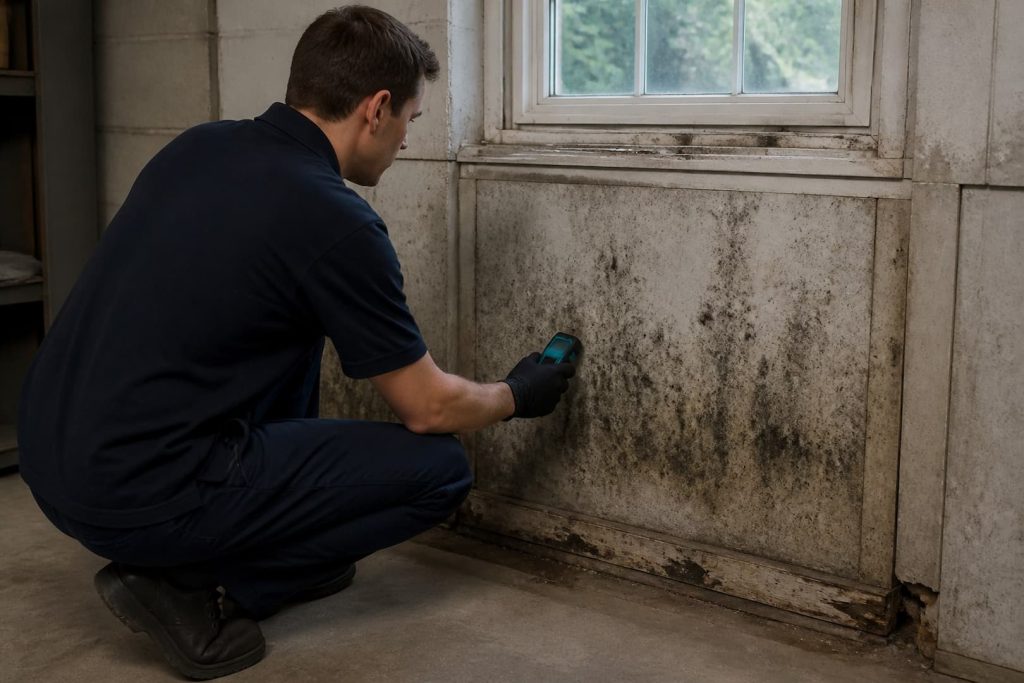
A blue or blue-green patch indoors may be mold, but its color cannot identify a genus or tell you whether the growth is more hazardous than a brown or white colony. Penicillium and Aspergillus species are often described as blue-green, yet many molds change appearance with surface, age, lighting, and moisture. Paint transfer, copper corrosion, dyes, and residue can also create a similar color.
For cleanup, the useful questions are concrete: Is the material actually colonized? What kept it wet? How large and deep is the affected area? Can the substrate be cleaned and dried, or has a porous layer lost integrity? The response should not wait for a color-based label.
Common places to investigate
| Observed location | Possible moisture source | Hidden area worth checking |
|---|---|---|
| Around a window | Condensation, failed flashing, exterior sealant | Sill cavity, insulation, lower wall and trim back |
| Below a sink | Supply, drain, disposal, or countertop seam leak | Cabinet base, toe-kick, wall penetration and subfloor |
| On stored items in a basement | High humidity, seepage, prior flooding | Masonry, floor edge, shelving and wall cavity |
| On attic sheathing | Roof entry, air leakage, bath exhaust | Insulation, penetrations, eaves and duct termination |
| On HVAC surfaces | Condensation, drainage issue, wet liner | Drain pan, coil area, adjacent insulation; assessment by an HVAC professional |
A small visible patch can be the edge of a larger wet assembly, while widespread staining can sometimes be old and dry. Moisture readings, access from the least destructive side, and the history of rain, plumbing, condensation, or flooding help separate those cases.
Health questions without color myths
CDC notes that damp and moldy environments may cause stuffy nose, sore throat, coughing or wheezing, burning eyes, or skin rash in some people; reactions vary. People with asthma or mold allergy may react more strongly, and immune-compromised people or those with chronic lung disease should discuss exposure concerns with a healthcare professional.
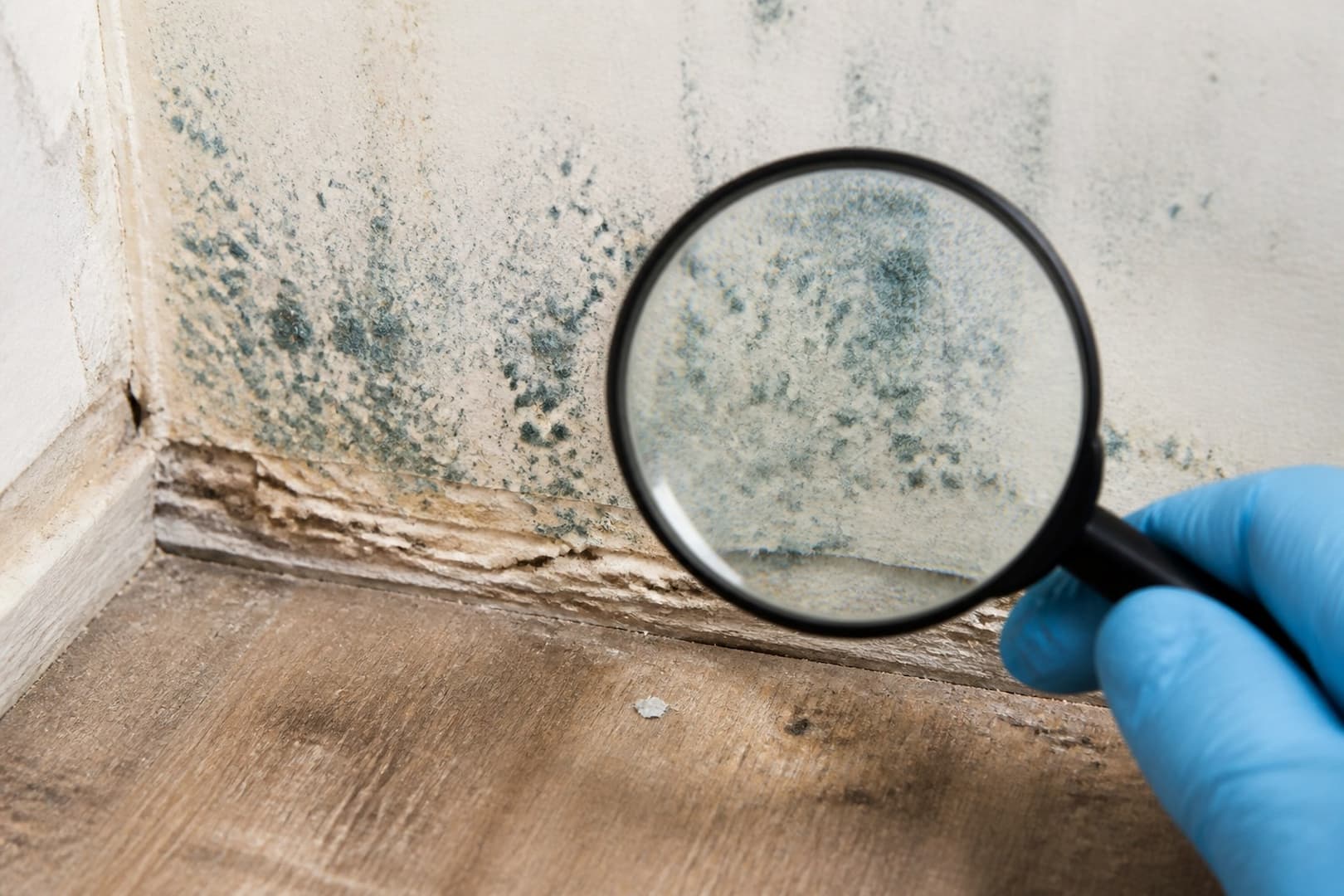
No visual shade establishes exposure or diagnoses a symptom. Avoid “toxic blue mold” claims, home petri-dish interpretations, and universal safe air-count numbers. If symptoms are serious or urgent, seek medical care. Building investigation and medical evaluation answer different questions.
Small-area cleanup
When a limited area on a hard, sound surface follows a brief clean-water event, a homeowner may be able to clean it with detergent and water and dry it completely. Wear appropriate gloves and eye protection, ventilate without blowing contamination toward clean rooms, and follow any product label. Never mix cleaning products.
Porous materials deserve a different decision. Mold growing into drywall paper, ceiling tile, insulation, carpet pad, or swollen particleboard may not be removable by wiping. Sanding, dry brushing, or using an ordinary vacuum can spread settled material. If disturbance is needed, first decide how the work area and pathway will be contained.
When the job exceeds DIY scope
- The affected area is larger than a limited isolated patch or appears in several rooms.
- Growth returns because the moisture source remains unresolved.
- A wall, ceiling, cabinet, or floor cavity is involved.
- Sewage, outdoor flooding, or prolonged stagnant water contributed.
- The HVAC system or lined ductwork may be contaminated.
- Demolition is required or the building contains materials that need regulated handling.
- An occupant has a medical vulnerability that changes work or occupancy planning.
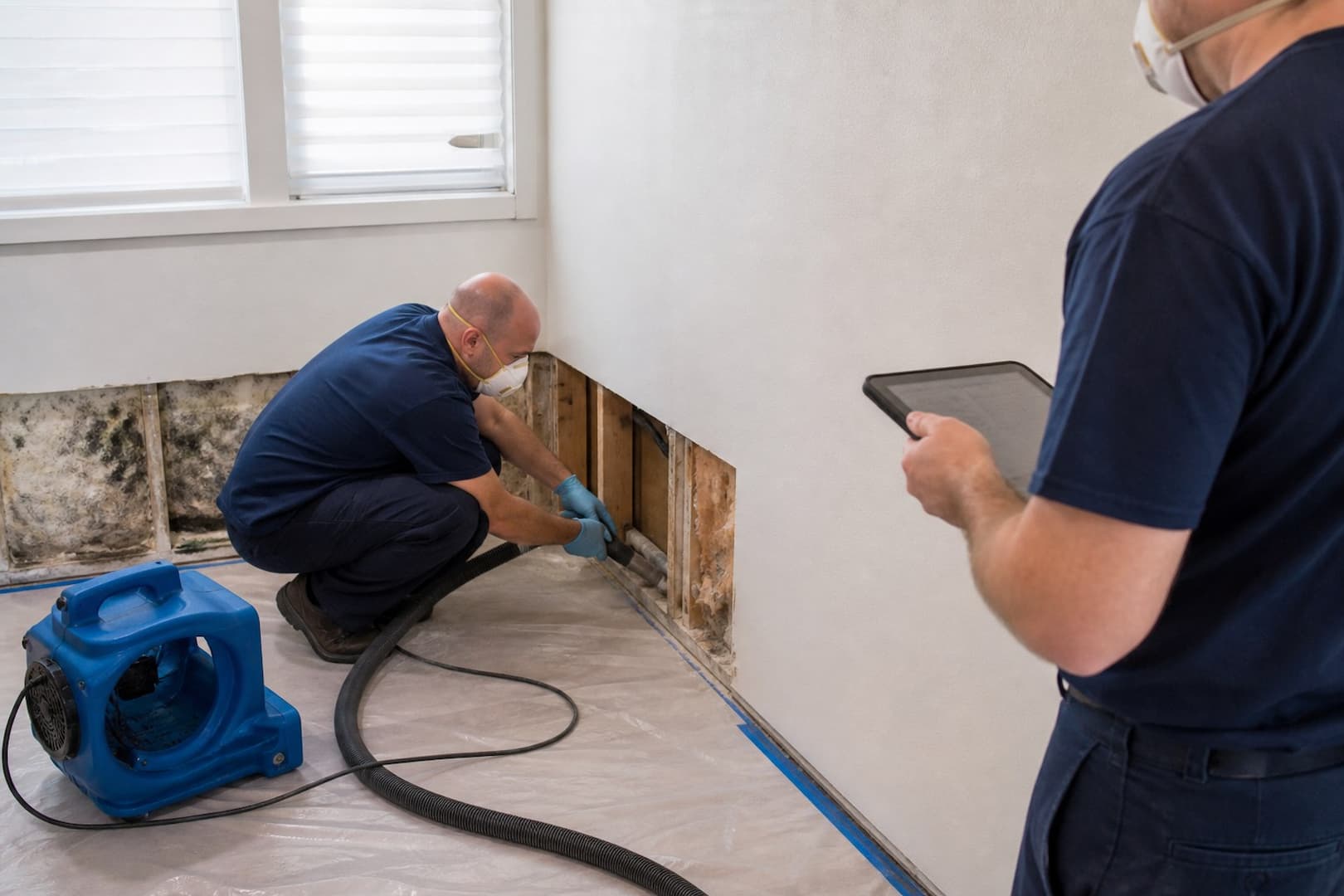
In those conditions, mold inspection and testing can define the moisture path and affected materials. Sampling is selective: it is most useful when the identity of a substance is uncertain or when a specific decision or verification protocol requires data.
What professional remediation should address
- Source correction. The leak, humidity, condensation, or drainage mechanism must have an assigned fix.
- Work-area controls. Containment, pressure strategy, PPE, and access follow the size and disturbance.
- Material decisions. Unsalvageable porous material is removed; sound structural material is cleaned using an appropriate method.
- Detailed cleaning. Dust and residue are removed from the work area and pathway.
- Drying and monitoring. Remaining assemblies reach a documented moisture condition.
- Completion criteria. Visual cleanliness, source correction, and agreed verification precede reconstruction.
Fogging, ozone, encapsulating paint, or a surface antimicrobial does not replace removal of colonized material and correction of moisture. A product may have a narrow supporting role, but the scope should explain what physical work solves the building condition.
Preventing another blue-green patch
Keep humidity controlled, exhaust wet rooms outdoors, maintain condensate drains, repair leaks promptly, and leave air space around cold exterior walls. In basements, manage gutters, grading, bulk water, and slab or wall seepage before relying on a portable dehumidifier. In attics, correct air leakage and exhaust termination as well as roof defects.
Blue mold questions
Does blue mold mean Penicillium?
Not necessarily. Several molds can appear blue-green, and non-mold materials can mimic that color. Only laboratory analysis of a representative sample can identify what was sampled.
Do I need an air test before removal?
Not for every visible problem. If the substance is clearly mold and the scope is visible, moisture correction and remediation may proceed without routine air sampling. Testing should answer a defined question.
Can a cleaned wall be painted immediately?
Only when the source is corrected, the substrate is sound and clean, and the full assembly is dry enough for the coating. Paint is a finish, not a moisture test.
Blue-green growth has look-alikes worth checking
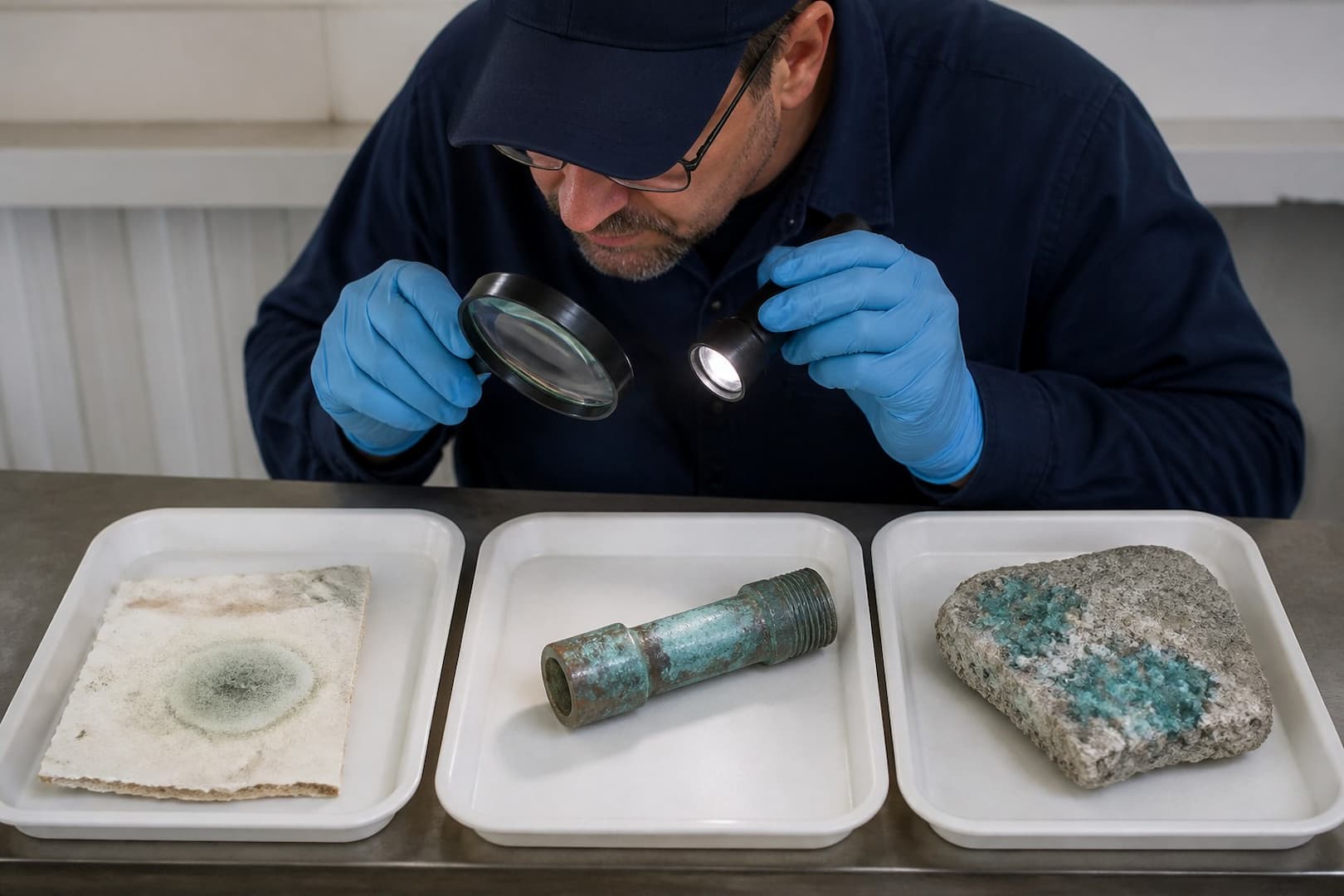
Blue-green color appears in more than fungal growth. Copper corrosion, dye transfer, detergent residue, old paint, and mineral deposits can all create a similar impression. Start with the substrate and moisture history. Fuzzy or dusty growth on damp wood, paper, leather, or food behaves differently from a hard blue-green crust around copper plumbing. A stain that does not change while the surface remains dry may be a finish problem; fresh growth that expands after humidity rises points back to moisture.
| Material and appearance | Useful field question | Likely next step |
|---|---|---|
| Blue-green crust at copper joint | Is the metal pitted or actively wet? | Plumber checks corrosion or leakage |
| Powdery patch on drywall paper | Is the wall wet from the face or cavity? | Map moisture; consider selective access |
| Velvety growth on stored leather or fabric | Was it against a cold wall or damp floor? | Isolate contents and assess cleanability |
| Discoloration in shower grout | Is it on the sealant, grout, or behind failed caulk? | Clean limited surface or repair the wet assembly |
| Patch on painted wood | Is paint intact and wood firm? | Check moisture before choosing cleaning or removal |
Contents need a different decision tree from building materials
A book, upholstered chair, finished cabinet, and painted wall cannot share one cleaning prescription. Value, construction, exposure, and the ability to reach all surfaces matter. Non-porous glass or metal is generally easier to clean than foam, paper, or particleboard. A valuable document may justify a conservator even when an ordinary cardboard box would be discarded. Bag suspect belongings before carrying them through the house, and avoid dry brushing or ordinary vacuuming that releases fine material.
Food is not a restoration project. Discard visibly moldy or questionable food according to public-health guidance rather than cutting around growth. Cosmetics, medicines, and items used by infants deserve conservative handling if packaging was wet or contaminated. Restoration vendors can document condition and refer specialty contents; they should not overpromise recovery of porous items from a photograph.
Do not choose a cleaner before deciding whether the material stays
Cleaning chemistry is secondary to the material decision. Sound, accessible, hard surfaces may be cleaned. Swollen gypsum, crumbling ceiling tile, delaminated composite wood, and deeply affected insulation often cannot be restored by a surface spray. Paint and encapsulants belong after cleaning and drying when the assembly and product specification support them. Applying a coating over damp growth hides evidence and can complicate later removal.
For a limited area, EPA notes that many homeowners can handle roughly less than 10 square feet, but size is not the only boundary. HVAC involvement, sewage, repeated water intrusion, concealed growth, vulnerable occupants, and extensive water damage all push the project beyond a simple surface task. The article on white mold and common look-alikes uses the same moisture-first logic for pale growth.
Storage practices can create a small private microclimate
A box pressed against a cool basement wall can remain damp even when the room-average humidity seems acceptable. Leather shoes in a closed plastic tote may trap moisture from use; cardboard on a slab absorbs moisture at its bottom edge. Leave space around exterior walls, dry belongings before storage, and choose shelving that keeps absorbent items off masonry and floors. Inspect behind the least-moved items, because they often reveal condensation before open surfaces do.
Prevention should target the room, not the color
Blue, green, white, yellow, and black growth all need usable moisture. Track indoor relative humidity, cold surfaces, leaks, and condensation rather than looking for a color-specific product. Leave air space behind furniture on exterior walls. Vent showers and cooking outdoors. Keep stored paper and textiles off basement slabs. If a leak wets porous material, begin drying promptly; EPA emphasizes the 24-48 hour window as a practical mold-prevention target, not a guarantee that every material will be safe at hour 47.
When the source or boundary is uncertain, mold-damage remediation should begin with an assessment of the assembly. A useful proposal explains why each material is cleaned, removed, dried, or left in place. A color name in the estimate is not a scope of work.
Sources and further reading
- U.S. EPA: A Brief Guide to Mold, Moisture and Your Home
- U.S. EPA: Mold Cleanup in Your Home
- CDC: Mold — overview, health effects, prevention and cleanup
- Massachusetts DPH: Mold Cleanup, Repairs, and Excess Moisture Control
When the property needs a closer look
Boston Restoration Group can inspect the affected area, document moisture and material conditions, and explain which restoration step fits the loss. Use the BRG contact page to request service in Greater Boston.