
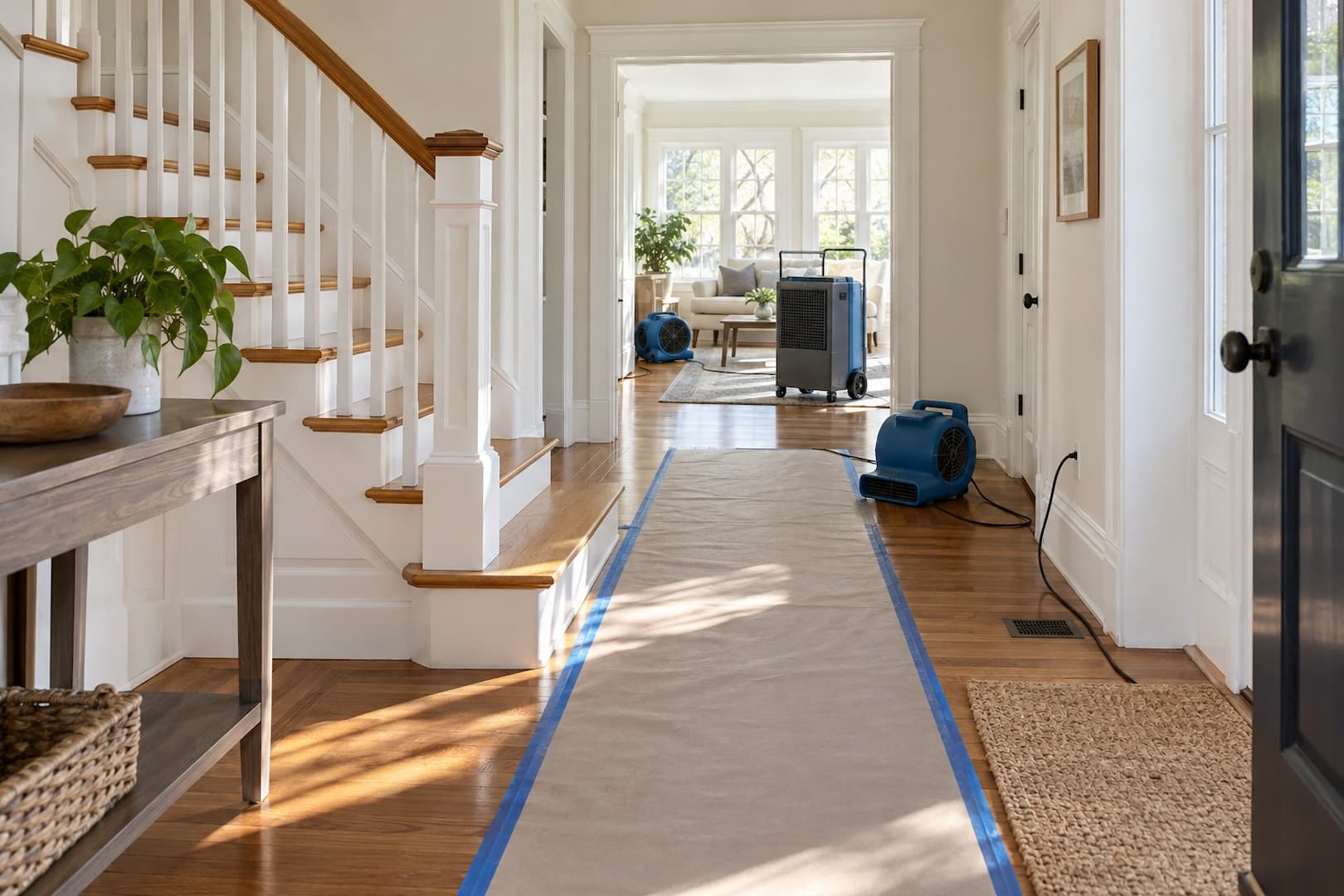
Restoration Company in Wakefield, MA
A damaged property creates two urgent questions: what needs attention now, and when can the space be used again? Boston Restoration Group helps Wakefield homeowners, landlords and businesses answer both. We assess the loss, carry out cleanup and drying, and explain the work that remains before repair or reopening.
The first conversation
Describe the condition before choosing the service
“Water in the basement” is enough to start a call. The next details help determine the response: Is it still coming in? Is the electrical panel nearby? Is there a sewer odor? Can the crew reach the space without crossing a damaged ceiling or stair?
BRG accepts emergency calls around the clock. Give the address and describe any hazards when you call. Dispatch also depends on the team's current workload, so confirm availability directly. If water has reached electrical equipment, keep clear and let qualified responders determine when entry is safe.
Four milestones define a useful recovery plan
01
Limit further damage
Locate the source, assess safety and arrange the required shutoff or building protection. Water extraction can begin when conditions allow. A plumber or roofer may need to correct the failure while restoration work addresses the damage it caused.
02
Set the work boundary
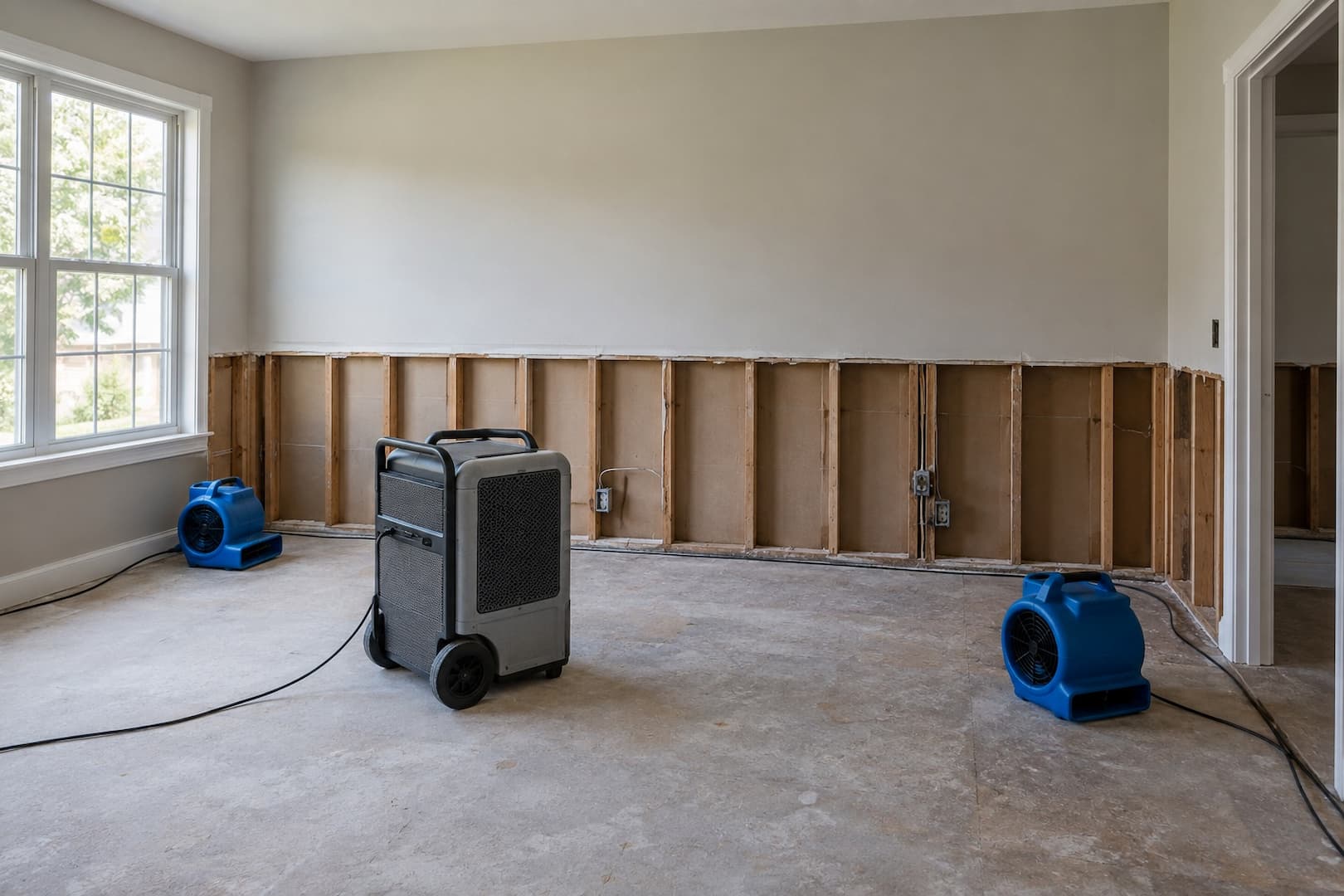
Moisture mapping, residue checks and the building layout help establish what is affected. The team explains what needs removal and how nearby rooms and belongings will be protected. Hidden damage may become clearer after an opening provides access.
03
Check the response
Drying equipment needs follow-up readings. Cleaning needs evaluation of remaining residue or odor. Progress depends on the assembly and the source of damage, so equipment noise or a clean-looking surface cannot stand in for those checks.
04
Release the area for its next use
Review what is complete and what still needs repair. A room ready for wallboard is not necessarily ready for residents or customers. Confirm remaining utilities, finishes and access restrictions before returning it to normal use.
Local conditions, individual assessment
Rainwater questions near the lakes and farther inland
Wakefield's stormwater program addresses runoff across the town. At Veterans Field, the town describes drainage and grading improvements intended to reduce runoff and protect water quality at Lake Quannapowitt. The practical lesson for a damaged property is to investigate how water reached the building, rather than infer the source from its distance to a lake.
A roof leak, a window well and an overflowing drain leave different evidence. Tell BRG whether water appeared during rainfall, after snowmelt or while an appliance was running. A basement away from the shoreline still needs a source assessment.
For repeated exterior entry, the long-term correction may involve drainage or building-envelope work alongside water damage restoration. Keep records of earlier incidents and repairs so the same pattern can be investigated.
The cleanup changes with the loss
Water and sewage
Recoverable water comes out first, followed by attention to retained moisture in walls and floors. Extraction and structural drying are separate parts of the work. Saturated insulation or a damaged floor layer may need removal to reach the wet assembly.
When the source is a drain, toilet or outdoor floodwater, say so at the outset. Sewage cleanup requires contamination controls and decisions about porous materials. Household fans and foot traffic can carry residue into clean space.
Fire and smoke
After the fire department allows entry, BRG evaluates soot, smoke odor and water from suppression. Different residues respond to different cleaning methods. Contents and surfaces need attention before repainting; sealing in a smell does not establish that its source has been removed.
Mold and recurring dampness
Growth behind a cabinet or along a basement wall often calls for a closer moisture investigation. The remediation scope depends on the extent and material involved. Controlled removal, cleaning and source correction may all be necessary. Testing should have a stated purpose, rather than act as a substitute for finding the water.
Storm and ice dam damage
Wind damage or ice dam leakage can open a route into roof and wall cavities. Temporary protection and interior drying need to work together. Report a ceiling that sags or changes shape, and keep out from beneath it. A winter leak that has stopped dripping may still leave wet insulation overhead.
For Wakefield businesses
Plan reopening around the affected space
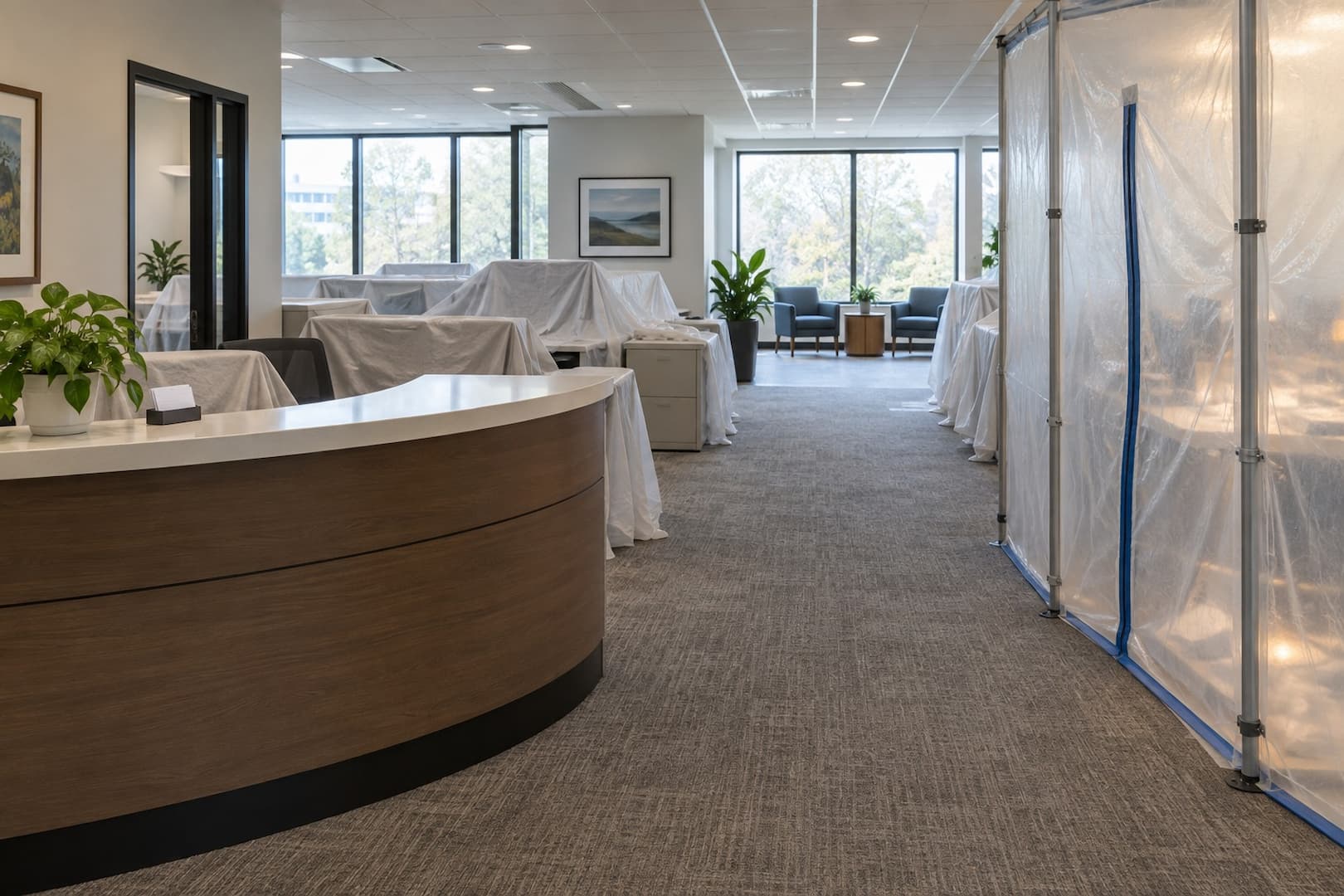
An office leak may stop only part of the operation; smoke or contaminated water can affect a much wider area. Before promising a reopening date, identify the rooms involved, safe entry routes and utilities needed for staff or customers.
BRG's commercial restoration service can account for work zones, contents and access. Tell us about critical records, inventory or equipment before they are moved. If the work extends outside a tenant's leased area, the property manager needs to identify who can approve it.
A staged return may be possible when unaffected areas can remain safely separate. That decision depends on the loss and building conditions. Keep an agreed contact for changes to the work area so staff do not arrive expecting access to a room still under containment.
A home needs a contents plan as well as a drying plan
Before moving furniture or emptying closets, discuss where the items will go. Unaffected belongings need a clean place. Wet or smoke-affected items may need assessment and separate handling. List irreplaceable pieces early, including photographs and paperwork that could be overlooked during a room clearance.
What can be saved depends on the item's construction, what reached it and the damage left behind. Particleboard furniture that has swollen, upholstery affected by contamination and solid wood with surface moisture present different choices. Photograph items before disposal. Ask whether an item is being removed because it cannot be cleaned reliably or because it has lost strength.
Equipment also changes how a home feels and sounds. Mention bedrooms, pets and accessibility needs during planning. The team can discuss routes through the house and safe separation; whether residents can stay depends on hazards and the available living space.

What affects the cost and the calendar?
| Factor | Why it matters | Ask BRG |
|---|---|---|
| Concealed damage | Wet cavities may need access beyond the visible stain. | What could change once the area is opened? |
| Contamination | Cleaning and removal requirements affect labor and disposal. | Which materials can be cleaned reliably? |
| Drying response | Dense or enclosed assemblies may dry at different rates. | What do the latest readings show? |
| Repair scope | Finishes, utilities and material availability shape the remaining schedule. | Which tasks must finish before this room returns to use? |
Keep photos, receipts and the claim number together. BRG can document restoration work for your insurance discussion. The insurer decides coverage under the policy; an estimate does not guarantee payment. Review work authorization and responsibility for costs before approving the scope.
Planning restoration in Wakefield
Can you help when only one room in our office is wet?
Yes. BRG assesses the affected room and the adjoining areas water may have reached. Tell us which operations must continue and who controls access to nearby rooms. The layout and hazards determine whether work can remain limited to one area.
Does living near Lake Quannapowitt mean the damage is a flood loss?
The property's location alone does not establish the water source or insurance category. Describe what entered, where it appeared and what was happening at the time. BRG assesses the damage; your insurer applies the policy to the circumstances.
Why inspect the floor below an upstairs leak?
Water can run through plumbing openings and wall or ceiling cavities before it becomes visible. Checking the next floor helps define the scope and avoid closing wet material inside the building.
Can we return as soon as the drying equipment leaves?
That depends on the work still required. Drying may finish before electrical repairs, reconstruction or cleaning of contents. Before moving people or belongings back, ask which restrictions remain and who will finish each outstanding task.
What should the property manager prepare?
Provide the authorized decision-maker, access contacts, affected unit numbers and known utility issues. Include tenant schedules and any previous leak information. These details help the assessment and reduce delays caused by locked rooms or unclear approvals.
Give us the address and the immediate problem
For restoration in Wakefield, call 617-202-3772. Describe the source if known, the rooms affected and whether anyone is still using the building. For an active fire, gas smell or immediate danger, contact emergency services first.
617-202-3772- Water still running, entering or backing up
- Areas that people need to enter today
- Available keys and the authorized property contact
- Photos from a safe location, if available