

Restoration Company in Topsfield, MA
A stain on the ceiling and water in the basement may need very different responses. Boston Restoration Group helps Topsfield owners trace damage through the building, address wet or contaminated materials and understand when the property is ready for repairs. Emergency calls are answered around the clock.
Follow the damage through the house
The visible stain is a starting point, not the whole scope
Water can travel along framing before appearing in another room. Smoke can move through openings after a small fire. A basement odor can persist after the floor looks clean. The inspection needs to follow those paths and leave sound areas alone.
Above the ceiling
Roof leaks, ice dams and upper-floor plumbing may wet insulation or framing before the ceiling gives any warning. A sagging surface needs a safety assessment. Do not puncture it or stand beneath it to investigate.
Across the living floors
Appliance leaks and bathroom overflows can run under cabinets or between flooring layers. Note where the water first appeared and whether it crossed a doorway. That history helps the crew decide where to check next.
At the lowest level
Ground-level entry, sump trouble or wastewater backup can affect storage and mechanical systems. Tell BRG what the water contacted and whether plumbing use made it rise. Stay out when electricity or contamination makes access unsafe.
Local water conditions deserve a property-specific answer
Topsfield's municipal planning recognizes the Ipswich River, its tributaries and flood hazards. The town also maintains a flood plain district and an Ipswich River protection district. These are useful planning references, not a diagnosis of the water in a particular basement.
A property can have a plumbing loss outside a mapped flood area, or drainage trouble that needs investigation beyond the building. BRG handles the affected interior and identifies source work that belongs with a plumber, roofer, drainage professional or another qualified trade. If outdoor work is proposed near wetlands or protected areas, check the applicable town requirements before that work begins.
Dry the assembly, then repair the finish
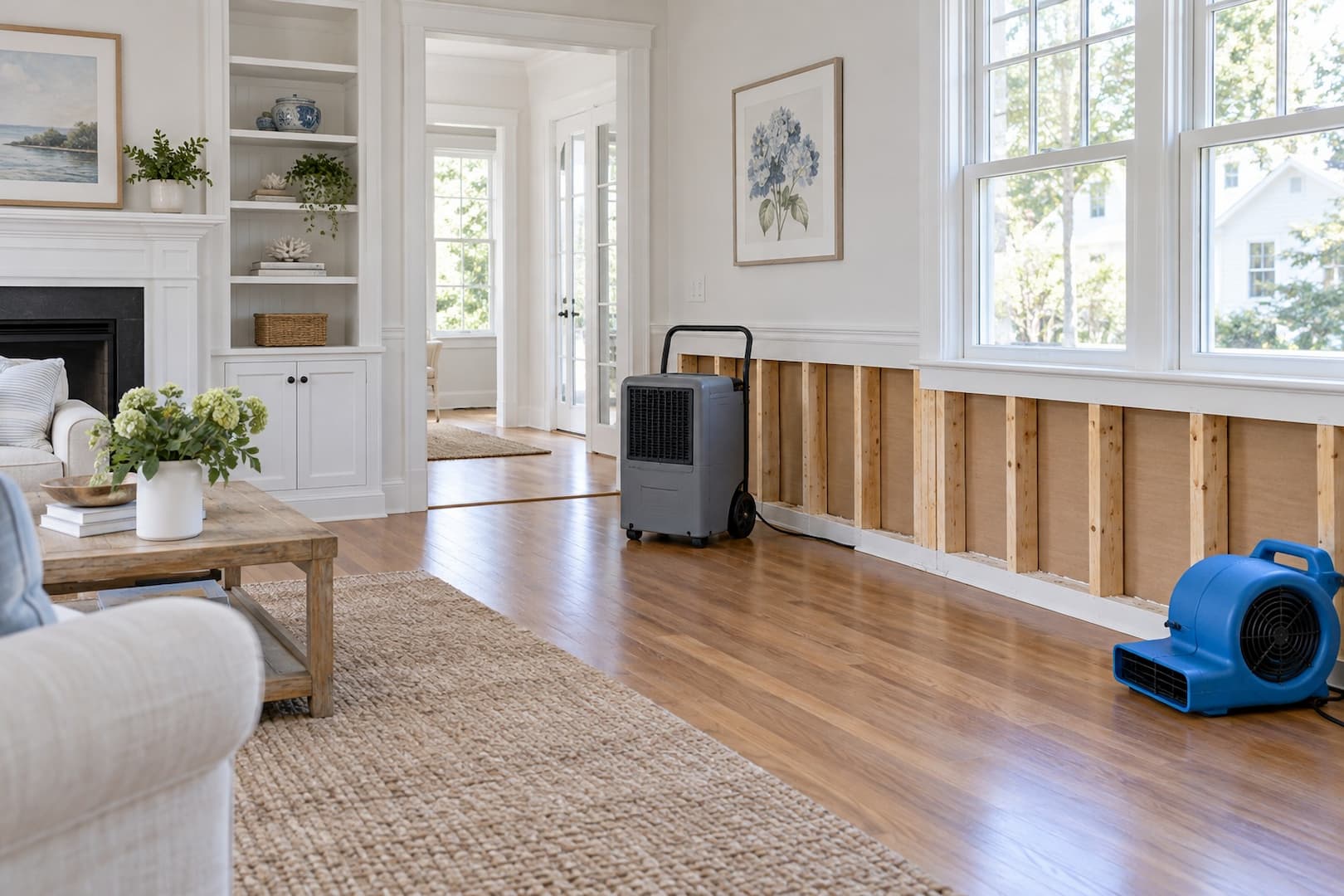
BRG begins water damage restoration by finding the affected boundaries and removing accessible water. Readings may be needed at wall bases, along floor edges, in the subfloor and in the next room. Readings from a sound comparison area help put the wet material in context.
Once the source is controlled, the crew considers which materials can remain. Wet insulation, swollen composite panels or inaccessible floor layers may require selective removal. Where drying in place is practical, air movement and dehumidification work together, with repeat checks showing progress.
Before finishes go back, check the material readings as well as the room conditions. A comfortable-feeling room can still have wet insulation or framing. The handoff should name the areas checked, the openings created and any remaining plumbing, roofing or reconstruction work.
Wastewater requires a separate response
Keep septic backup cleanup separate from septic repair
Topsfield's hazard mitigation plan describes the town's reliance on on-site septic systems. If wastewater backs into a building, stop using affected fixtures and arrange qualified help for the source. Do not assume that pumping the system has cleaned the basement.
Inside the property
BRG can assess contaminated areas, control access, extract wastewater and plan removal, cleaning, disinfection and drying. Porous materials may hold contamination that surface washing cannot reach. Foot traffic and careless movement of contents can spread it to otherwise usable rooms.
At the system
A septic professional determines what is happening in the tank, lines or disposal system. That work and the interior cleanup need coordination. Ask who will confirm that plumbing use can resume, and keep the source repair record with the restoration paperwork.
Read about septic backup cleanup before deciding what to move or discard.
A fire can leave several kinds of damage in one room
Once the fire department permits access, the room may contain soot, wet surfaces, damaged wiring and belongings that need different cleaning methods. BRG assesses the burn area and likely smoke paths. An adjoining closet or stairwell may need attention even if flames never reached it.
Test cleaning helps prevent unnecessary damage to finishes. Wiping soot with the wrong method can smear it into paint, wood or fabric; painting over residue can leave an odor problem underneath. Contents may need cleaning in place, protected relocation or specialist review. Heat-affected appliances and electrical equipment require the appropriate trade's assessment.
Board-up or temporary weather protection may be necessary where the event left the building open. The sequence should account for both smoke cleanup and water from suppression before reconstruction starts.
When the same musty smell keeps returning
A damp basement, a repeated roof stain or condensation in a poorly ventilated area can keep feeding a mold problem. Removing visible growth without resolving that moisture leaves the cause in place.
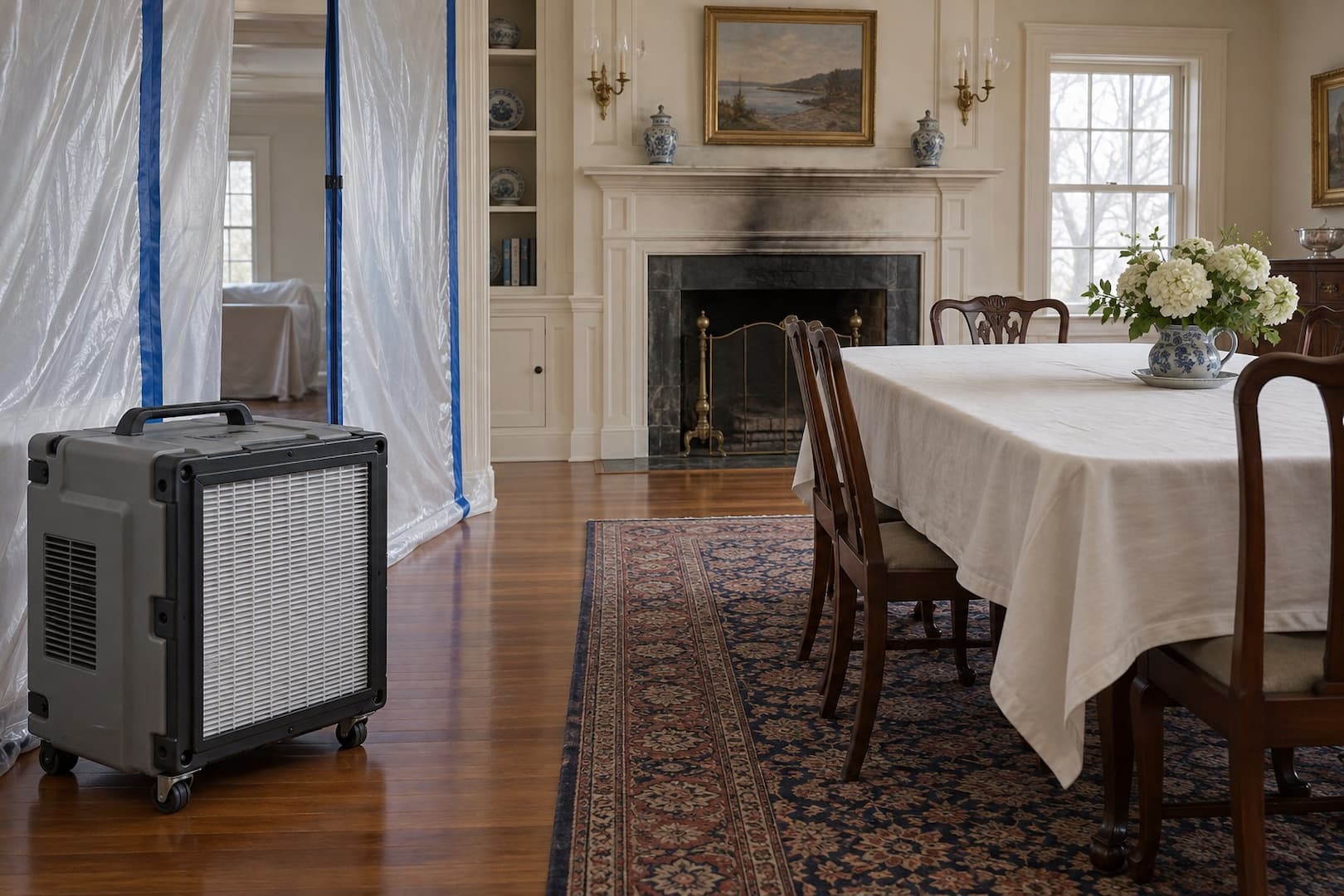
BRG evaluates the affected material and the history of wetting, then sets containment and cleaning or removal around the actual condition. Extensive growth, hidden contamination or sensitive occupants can change the scope and the need for additional evaluation.
Testing is useful when it answers a defined question; it is not a substitute for finding a leak or inspecting visible growth. Before ordering samples, ask a direct question: would the result change the cleanup plan or how completion is checked? Completion criteria should be agreed before the work begins, including any independent review appropriate to the project.
Plan for the days between emergency work and normal use
For a household, that means clear walkways, protected belongings, equipment noise and access to bedrooms or a bathroom. For an office or other business, the plan also needs a decision-maker, staff access and a boundary between operating space and the work area. BRG discusses those limits as part of the scope.
Ask which charges cover emergency cleanup and drying, which cover later repairs, and which trades you will hire separately. Size matters, but so do contamination, access and the materials involved. Keep photographs, scope approvals and changed-condition notes together. The insurer decides coverage; the restoration record explains what happened to the building and what work was performed.
Topsfield restoration: practical questions
Do I need restoration if an ice-dam leak has stopped?
Possibly. Water may remain in insulation, roof decking or a ceiling after the drip ends. The next step is to assess the affected assembly and source repair. Repainting a stain cannot establish whether the material behind it has dried.
Is septic pumping the same as backup cleanup?
No. A septic service addresses the system. Restoration addresses wastewater that entered the building and the materials it affected. Both scopes may be needed, and the source should be resolved before the affected plumbing returns to normal use.
Can mold hide above a ceiling?
Growth can occur on concealed wet material. A stain alone cannot confirm mold, and a clean-looking room cannot rule out a hidden moisture problem. Inspection should follow the leak history and moisture evidence, with controlled access where needed.
How many days will drying take?
BRG can discuss an initial expectation after inspecting the loss. The endpoint depends on readings and material response, not a calendar promise. Insulation, floor layers, contamination and continued leakage can change the duration and scope.
Can I stay home during the work?
That depends on safe utilities, exits, contamination, work-zone separation and access to essential rooms. Explain mobility, sleeping and health concerns early. A restoration assessment cannot replace medical advice or an occupancy decision by the responsible authority.
Tell us where you first noticed the damage
Call 617-202-3772 with your Topsfield address and a description of what changed. A ceiling drip, wet floor, sewage backup or smoke odor is enough to start the conversation. BRG will discuss access, hazards and current availability.
617-202-3772- First affected room and rooms above or below
- Whether the source is stopped
- People, pets and access restrictions