
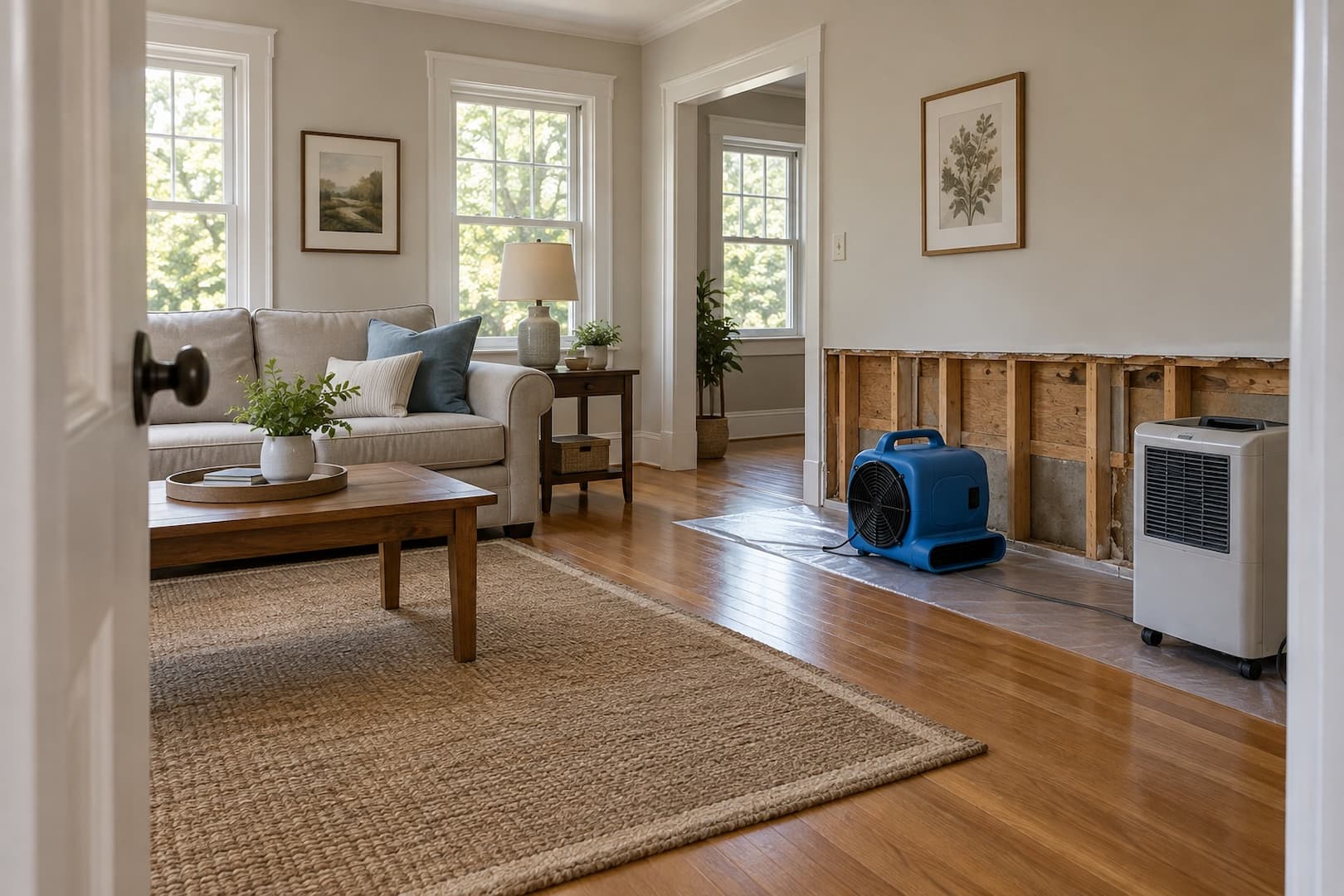
Restoration Company in South Peabody, MA
Water under a basement door, smoke upstairs, or a ceiling that keeps staining all call for different work. Boston Restoration Group helps South Peabody homeowners and property managers find the extent of the damage, protect usable rooms, and plan cleanup through repair. Call any time to discuss the loss.
Start with the source
What happened changes what happens next
A puddle tells you where water collected. It may tell you very little about how it got there. Before choosing equipment or removing a floor, BRG checks the source, the route through the building, and the materials in that route.
Water from a supply pipe or appliance
If you can reach the shutoff safely, stop the supply and arrange plumbing help. Tell us when the leak began and whether it crossed a room or traveled through the ceiling. Water that starts at one fitting can wet insulation, cabinet bases and the floor below before you see it.
Water after rain or melting snow
Describe the entry point: a window well, the wall-to-floor joint, the roof, or an exterior door. We remove water and assess the affected structure; the drainage or roof defect also needs attention. Repeated entry can undo a well-run drying job.
Water from a drain, toilet or unknown source
Keep people and pets out of the affected area and report the source before anyone starts moving wet belongings. Sewage and outdoor floodwater need a contamination assessment. Running a household fan across the mess can spread contamination into rooms that were unaffected.
South Peabody is part of Peabody
Assess the property, not the neighborhood label
South Peabody has its own place in the city's greenway network, including the South Peabody Trail. It remains part of the City of Peabody for municipal services. When you call, the street address helps establish access and the right property contact.
Peabody publishes stormwater information and sanitary sewer overflow notices. Those resources give useful public context, but a city notice cannot tell us what entered your particular basement. A plumbing backup, surface runoff and groundwater seepage may leave similar marks while requiring different cleanup.
Photographs taken from a safe, dry location can help. Include a wider view of the room as well as the wet corner, and tell us if the stain returns only during rain. Save any earlier photos that show the same area before the loss.
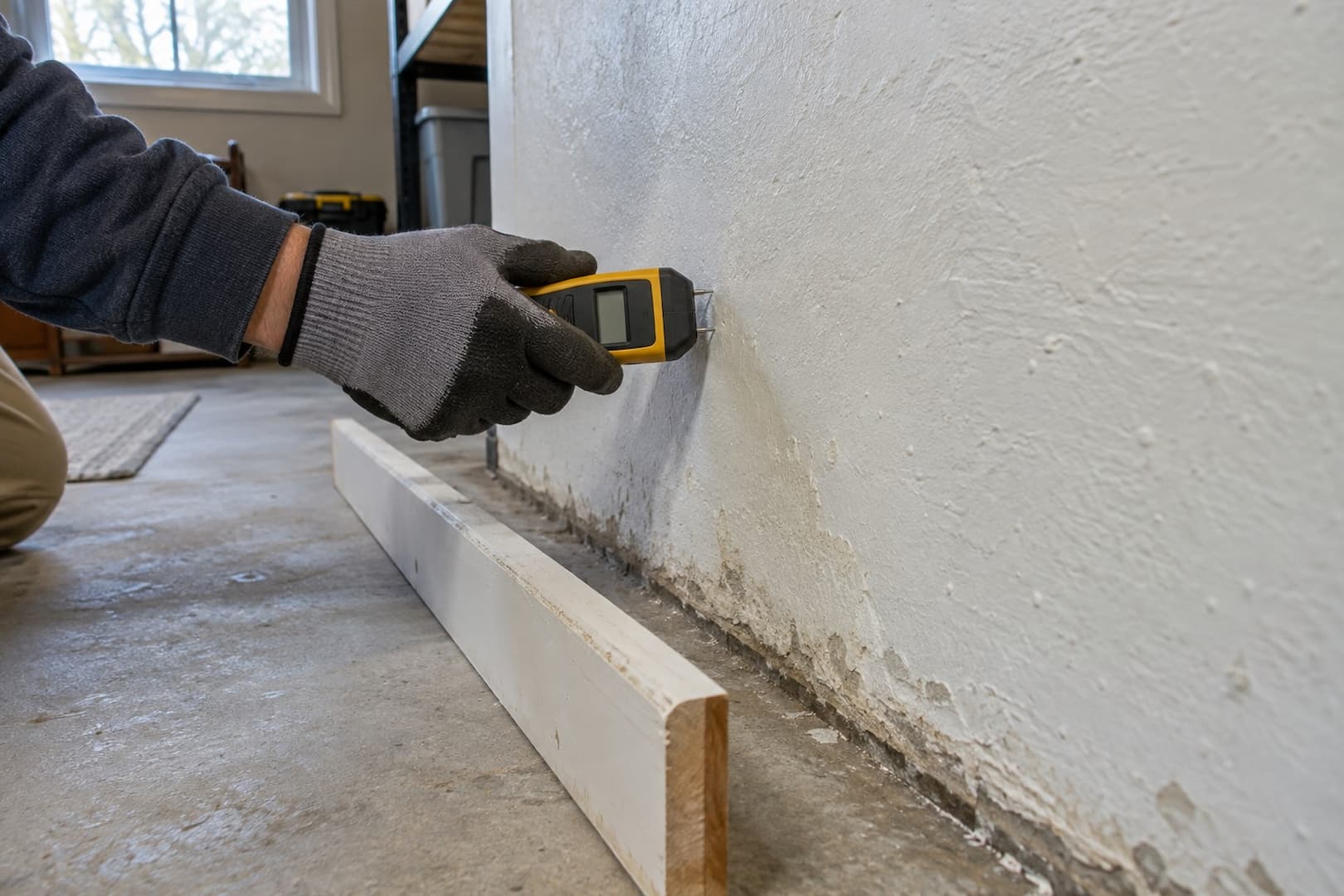
The room can look dry while its layers are still wet
Extraction removes liquid we can recover. Structural drying deals with moisture left inside the building. After water removal, BRG checks adjacent surfaces and concealed areas that the water may have reached. Moisture readings help set the work area and provide a reference for later checks.
A basement with carpet over a slab behaves differently from a kitchen with wood flooring and cabinets. Underlayment, wall insulation and inaccessible cavities can hold moisture after the visible surface dries. Sometimes opening a small area gives enough access; damaged or contaminated material may require removal.
Keep, clean or remove: decisions by material
| Affected material | What BRG evaluates | What the decision may involve |
|---|---|---|
| Drywall and insulation | Water source, loss of strength and wet cavities | Targeted openings or removal of material that cannot be cleaned and dried reliably |
| Wood floor and subfloor | Moisture below the finish, swelling and separation | Drying checks before deciding on refinishing or replacement |
| Carpet and pad | Contamination, backing condition and time wet | Extraction where suitable; removal where the assembly is no longer salvageable |
| Furniture and stored items | Porosity, residue, construction and value to the owner | Separate handling for salvageable items and an inventory of losses |
Tell us which belongings matter most before disposal decisions. Photographs, records and an heirloom may need a different conversation from a replaceable shelf. Keep an item list for your claim. Contaminated belongings need a handling route that avoids clean living space.
When water is only part of the damage
Smoke residue and mold need their own work plan
After a fire or smoke event
Wait for emergency responders to permit entry. After a fire, BRG may need to remove soot from surfaces, treat smoke odor in porous belongings and dry water left by firefighting. BRG assesses those together so one stage of work does not disturb another.
Rubbing soot into painted walls or upholstery can complicate cleaning. We select cleaning methods for the surface and residue, assess contents, and look for odor sources before finishing repairs. See our fire and smoke restoration service.
When growth or a musty odor appears
If a cabinet smells musty or a basement keeps getting wet, have the area checked. It does not identify a mold species or reveal the full extent of growth. The moisture problem and affected materials guide the assessment.
Mold remediation may require containment, controlled removal and cleaning. Painting over the area or adding fragrance leaves the underlying problem unresolved. If testing would answer a specific question, discuss its purpose before ordering it.
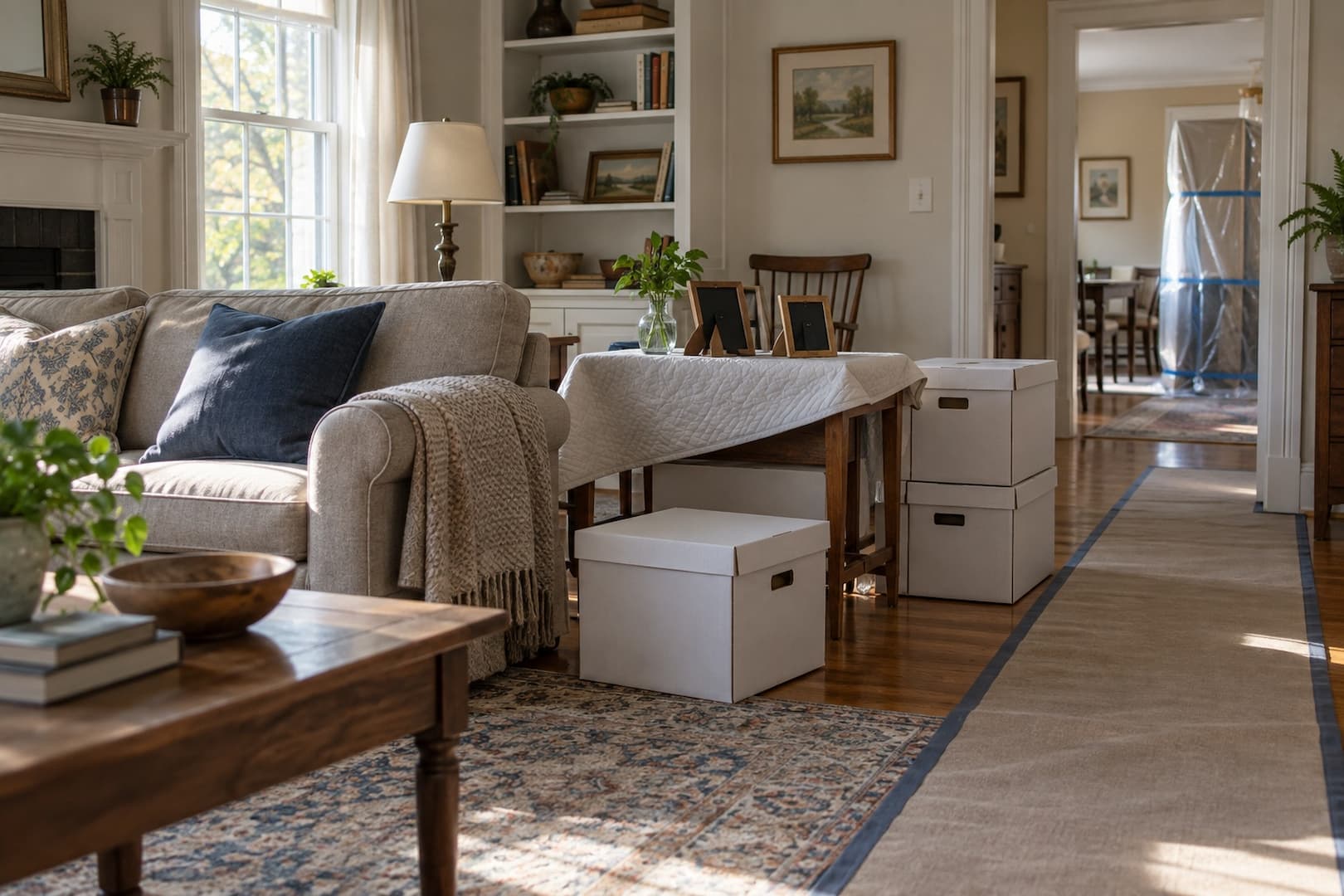
Plan the work around people still using the building
In a rental or occupied home, restoration affects more than the damaged room. Equipment needs power, technicians need access for readings, and residents need a route that avoids the work area. Tell us about children, pets, home offices and anyone who cannot easily use the stairs.
For a shop or office, identify the entrance customers use and the spaces that must remain accessible. BRG's commercial restoration work can address tenant coordination and protection of unaffected areas. Whether part of the building can stay open depends on the actual hazards and layout.
Winter roof leaks bring another access problem: the water may stop when temperatures fall, even though the ceiling remains wet. Interior drying and ice dam damage cleanup need coordination with work that addresses the roof's entry point.
A usable estimate explains the next decision
To estimate the work, BRG needs to know how much material is affected, whether it is contaminated and how the crew can reach it. A small visible stain can conceal a wet cavity; an open basement may be more straightforward to dry. BRG explains the proposed cleanup scope and documents conditions found during the work.
For your insurance discussion
Keep the date you discovered the damage, photos, relevant repair invoices and your claim number. Ask the insurer which documentation it needs and what your policy covers. Use the restoration records when discussing the claim. Your insurer still decides coverage, and your deductible still applies.
Before the walls close
Before anyone closes a wall, review the drying results and confirm that the leak or entry point has been corrected. Then list the repairs still to do. Replacing trim or painting should follow the cleanup and moisture work. Ask who owns each remaining task so a plumbing repair, building repair or contents decision does not get lost between visits.
Questions from South Peabody property owners
Do I need a separate company for a South Peabody address?
South Peabody is part of Peabody. BRG serves the area; provide the complete street address when you call. Our office is in Needham, and the address and current conditions help us discuss access and availability.
Can you check a basement after I have already pumped it out?
Yes. Tell us what entered the basement, how long it stood and what you removed. Pumping out visible water does not show whether wall cavities, flooring or stored contents remain wet. BRG can assess the remaining cleanup and drying needs.
Will every wet wall have to come down?
No single rule fits every loss. The water source, material condition, moisture behind the wall and ability to clean and dry the assembly guide removal. Ask the team to show which areas need opening and explain the reason.
What if the landlord and tenant both need updates?
Identify the person who can authorize work and the person who can provide entry. Share both contacts with BRG. Tenants can also describe when the damage appeared and whether it affects rooms beyond the owner's first report.
Can you quote the whole job from a photo?
A photo helps describe the problem, but it cannot measure hidden moisture or establish every damaged layer. A reliable scope may need an on-site assessment. Cleanup, drying and rebuilding can also have different cost and scheduling needs.
Tell us where the damage started
Call 617-202-3772 for restoration in South Peabody. Give us the address and the first sign you noticed, even if you do not know the cause. Mention any access restriction before the visit so the response can fit the building.
617-202-3772- Whether water is still entering or running
- The affected floor and rooms below it
- Electrical hazards, sewage or an unsafe ceiling
- Your contact and anyone who must approve access