

Restoration Company in Reading, MA
A wet ceiling upstairs can become a flooring problem downstairs. Boston Restoration Group helps Reading homeowners and businesses trace water, smoke and contamination through the building, establish what needs attention, and move toward repairs. Call any time to explain the damage and arrange the next step.
Start with the route
The visible damage may be one room away from the source
A dishwasher leak can travel beneath the kitchen floor before a stain appears below. A bathroom supply line can wet insulation inside a wall. In a finished basement, the first clue may be a swollen door casing well away from the point where water entered.
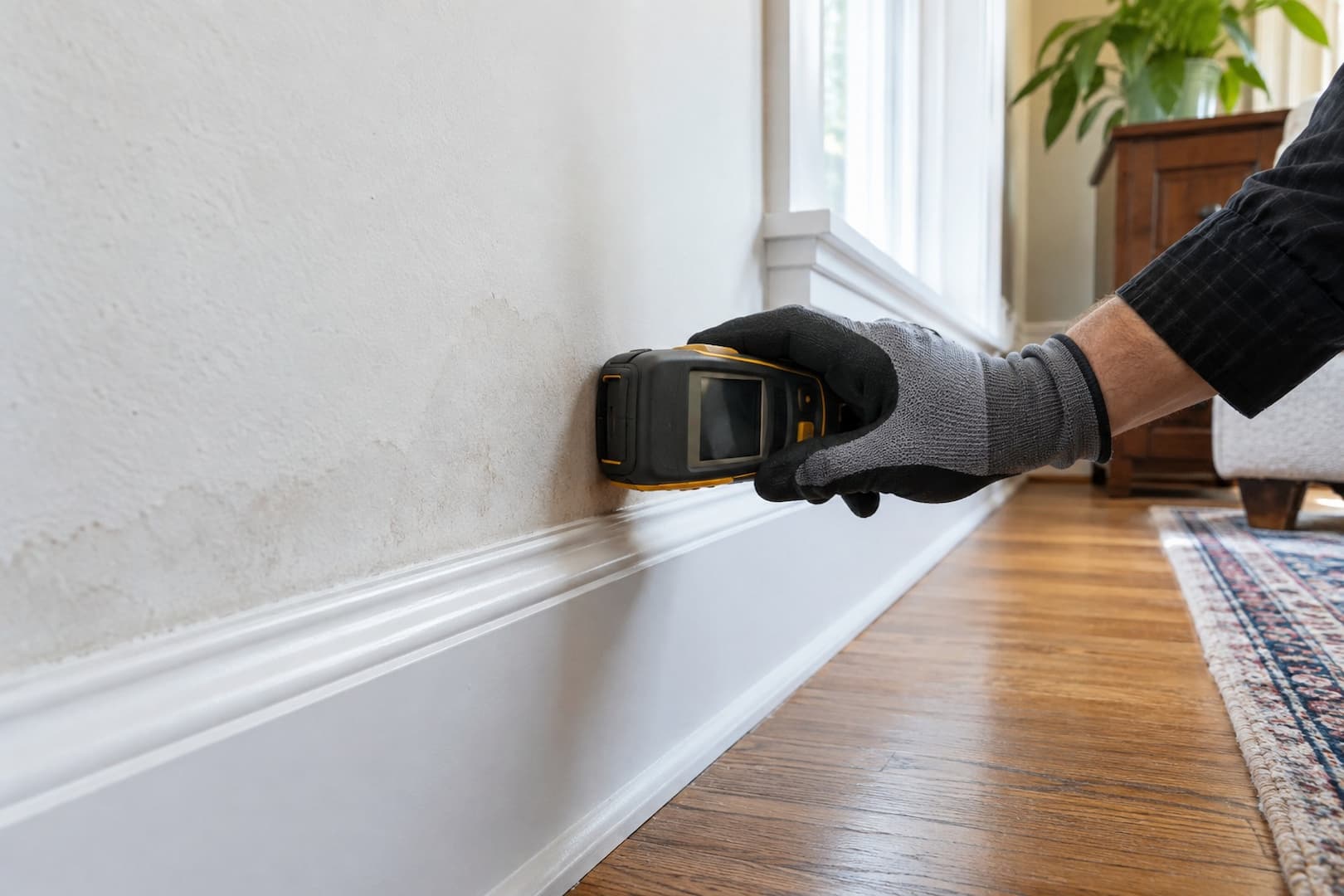
BRG starts by connecting those clues. The inspection looks above and beside the obvious damage, checks connected materials, and distinguishes new wet areas from older stains. Tell the crew about previous leaks and any recent plumbing or roof work. That history can prevent the wrong repair.
Reading’s Storm Water Division manages runoff that reaches the municipal drainage system. Water inside a building still needs its own source assessment: rainfall, groundwater and a leaking fixture can require different repairs.
Follow the connections between floors
Room names help describe the loss. Building layers explain where it can spread. These are the relationships worth checking before anyone closes a wall or replaces a floor.
| What you notice | What may need a closer look | Why it changes the work |
|---|---|---|
| Kitchen floor swelling | Toe kicks, cabinet bases and the subfloor | Trapped water can remain under an intact finish. |
| An upstairs ceiling stain | Roof entry, insulation and the wall below | The stain can be smaller than the wet cavity. |
| Basement water at the wall | Foundation entry, floor layers and nearby utilities | Source control and electrical access affect the response. |
| Smoke odor outside the burned room | Doorways, contents and air pathways | Cleaning may need to extend beyond the fire area. |
The crew checks the material condition and compares readings with suitable dry areas. A thermal image can help locate a temperature difference; it does not prove that a wall contains water. Openings should answer a specific question and stay within the agreed scope.
Before you move furniture or switch on fans
Keep out of standing water near outlets, appliances or the electrical panel. If a ceiling is sagging, leave the space beneath it clear. An active fire, suspected gas leak or immediate danger belongs with emergency services first.
For a known supply leak, use the shutoff only if you can reach it safely. Photograph the source and the affected room from a safe position. Avoid walking wet belongings through rooms that have stayed dry.
Sewage changes the plan
Water from a toilet overflow or drain backup needs a contamination assessment. Stop using fixtures that could feed the backup, keep people and pets away, and do not direct household fans across the affected area. Plumbing repair alone does not clean materials the water touched.
Use moisture readings to decide when drying can end
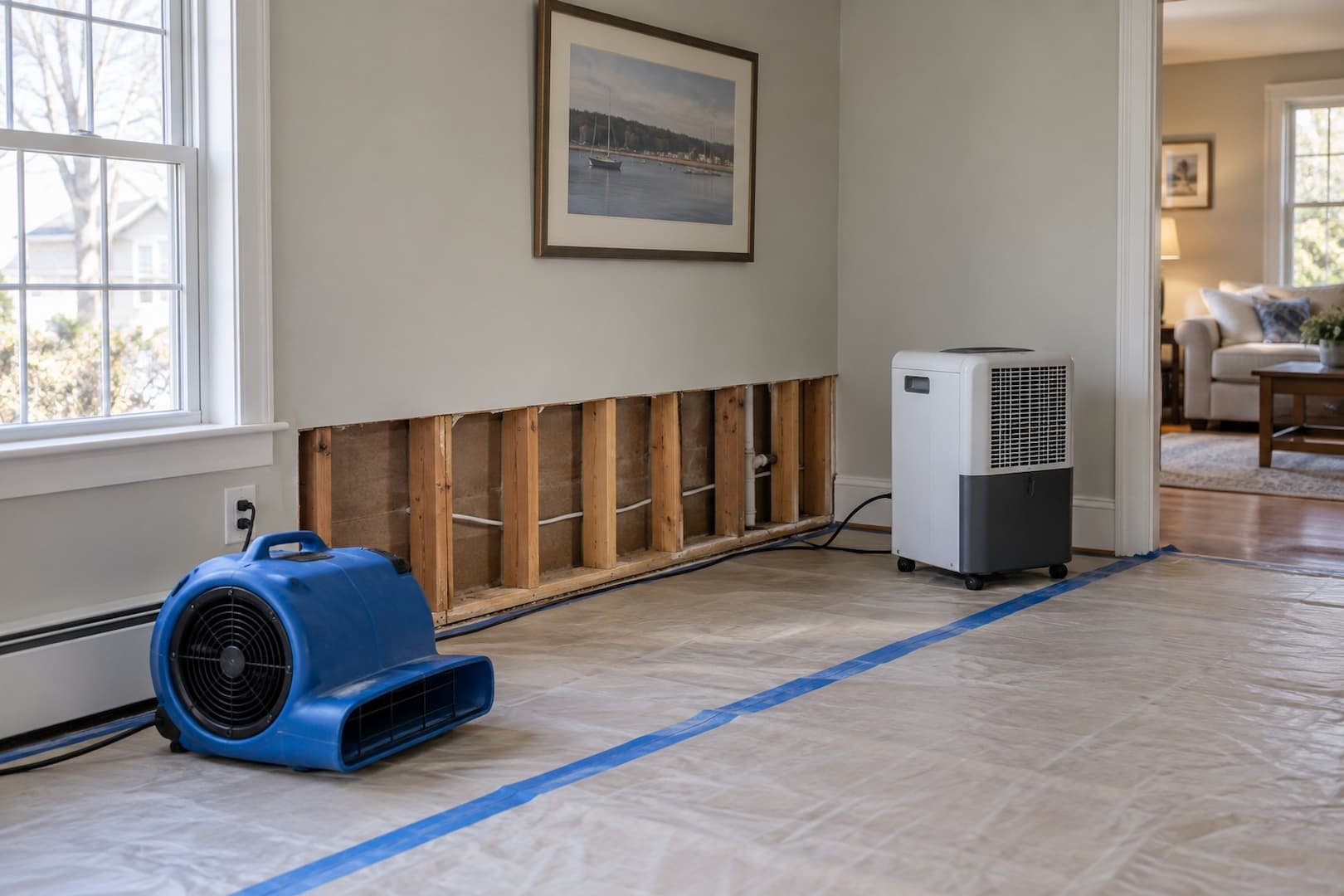
After safe access and source control, accessible water is extracted. The crew identifies materials that can remain, materials that need access, and materials that cannot be cleaned or dried reliably. Contamination and physical damage matter as much as the amount of water.
Air movers help release moisture from exposed surfaces. Dehumidifiers remove it from the air. Their placement changes with the rooms and assemblies involved; a closed cabinet base presents a different problem from an open concrete floor.
Progress readings show whether the plan is working. If a concealed area stays wet, more equipment in the room may not solve it. The next step may be selective access. BRG’s water damage restoration service includes assessment and drying decisions that support the repair scope.
When water is only part of the damage
Fire and smoke
A kitchen fire can leave soot on nearby finishes and odor in soft furnishings. Cleanup considers the residue, the surface and the movement of smoke, along with water used to extinguish the fire. Avoid wiping soot into walls or switching on affected ventilation until the cleaning plan is clear. Explore fire and smoke restoration.
Mold and persistent dampness
Painting a stain leaves the moisture question unanswered. Remediation may involve containment, controlled removal and cleaning, followed by a check that the underlying source has been addressed. A dry-looking surface alone cannot establish the condition behind it. See mold remediation.
Storm leaks and ice dams
Wind-driven rain or backed-up meltwater can wet roof sheathing, insulation and ceilings. Exterior repair stops further entry; interior assessment identifies the materials already affected. Keep off a wet or icy roof and discuss temporary protection with the appropriate crew.
Keep the usable part of the property usable
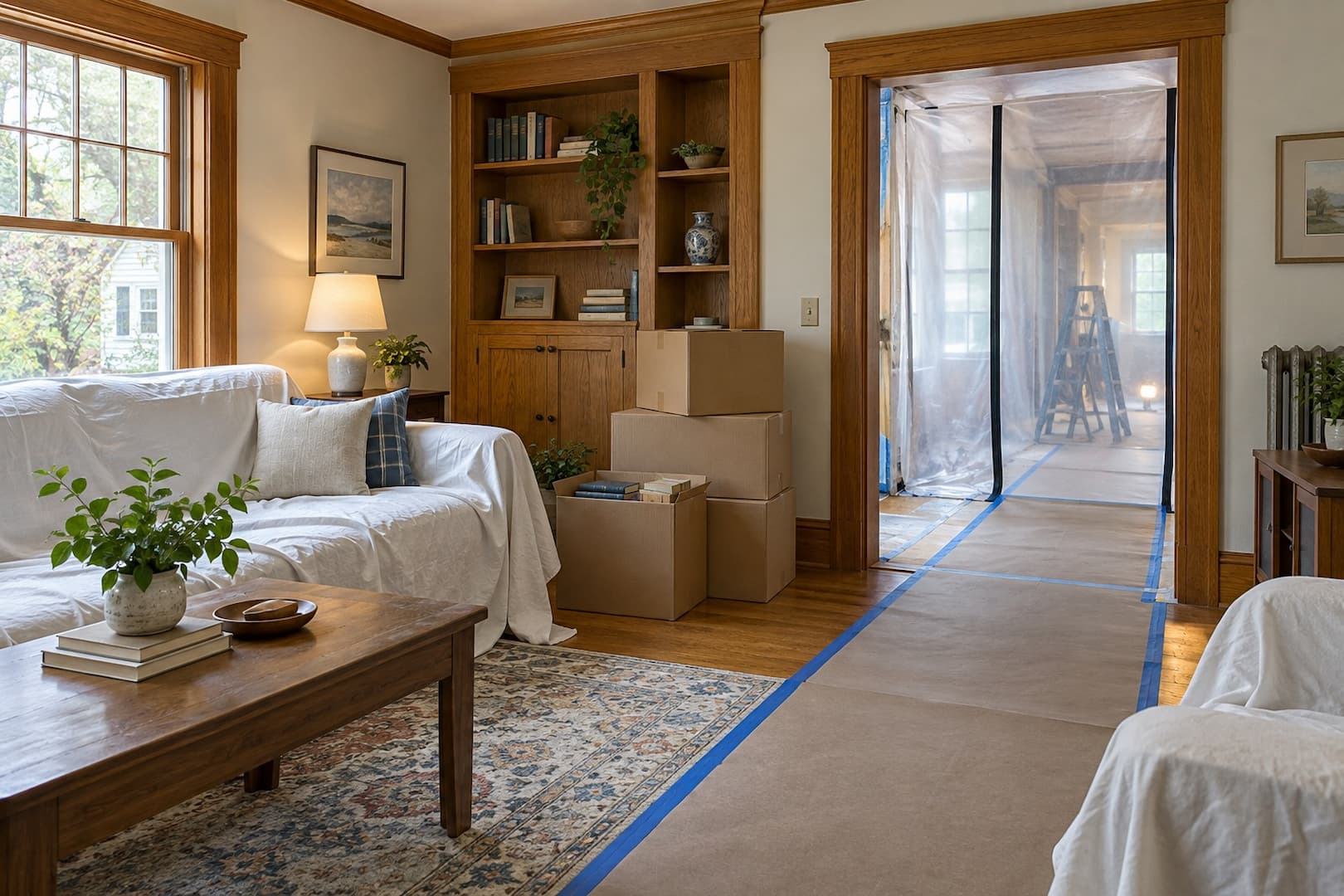
A home office, rented apartment or small business may share a wall with the work area. Discuss doors, stairs, deliveries and daily access before equipment arrives. A clear route protects dry finishes and reduces unnecessary trips through affected rooms.
For a multiunit loss, the contact list matters: the resident, property owner, manager and association may control different parts of the building. Water can cross those boundaries. The inspection and written scope should identify the rooms and shared areas involved rather than stopping at the first unit door.
Set aside a clean area for belongings that can remain on site. Furniture, books and electronics need separate salvage decisions; packing everything together can transfer odor or contamination to items that escaped the loss.
Know what the estimate is paying for
The price depends on affected materials, access, contamination, equipment and the work required to restore the rooms. A small visible stain is a poor basis for a fixed quote when wet insulation may sit behind it.
Ask for the initial mitigation scope and the repair scope to be clearly identified. Before additional removal, the explanation should connect the proposed work to observed conditions. Drywall replacement, trim, flooring and paint can have different completion dates from the drying work.
Keep a record you can use later
Save photographs, the cause and discovery date, invoices and claim correspondence. BRG can document affected areas and restoration work. Your insurer determines coverage and payment under your policy; the presence of equipment does not establish that every charge is covered.
Before finishing materials go back, confirm the source repair and review the remaining moisture findings. Resolve an unanswered leak question while the wet layers are still accessible.
Questions from Reading property owners
The carpet feels dry. Could the basement still need drying?
Yes. Carpet backing, padding and the material underneath can hold moisture after the surface feels dry. An assessment checks those layers and the bottom of adjoining walls before deciding whether equipment or removal is necessary.
Can I stay home during restoration?
That depends on the affected rooms, utilities, contamination and the ability to separate the work area. Describe sleeping arrangements and any access needs when you call. Smoke, sewage, unsafe wiring or extensive disturbance may make temporary relocation necessary.
Who fixes the pipe or roof that caused the damage?
Source repair and damage restoration are separate parts of the job. A plumber, roofer or other appropriate trade may need to stop the entry first. BRG can discuss the sequence and clarify which work belongs in its scope.
Does a musty smell mean I need mold testing?
A musty smell calls for a moisture investigation, but it does not identify the material or establish the extent of growth. Testing may answer a specific unresolved question; it should not replace finding the damp area and correcting the moisture source.
Tell us which rooms changed first
Call 617-202-3772 with the Reading address and what you noticed. A stain, odor or wet floor is enough to start the conversation; you do not need to diagnose the problem. Mention whether water is still entering and who can provide access.
617-202-3772- When you first noticed the damage
- Rooms above, below or beside the affected area
- Electrical concerns and safe access
- Owner or manager contact and claim number, if available