
Restoration Company in Natick, MA
Boston Restoration Group provides water damage restoration, fire and smoke cleanup, mold remediation and storm recovery throughout Natick. We help homeowners, landlords and businesses with emergency cleanup, drying and repairs. Call our 24/7 response line with the property address and what happened; we will discuss access, current availability and the first work your property needs.
Where did you first notice the problem?
Kitchen or laundry area
Tell us which appliance or connection was involved and whether water reached cabinet bases or a room below.
Water damage assessmentCeiling beneath a bathroom
Arrange access to both levels. Keep people clear of a bulging ceiling and mention any wet electrical fixtures.
Check connected roomsA room with soot or smoke odor
Confirm official release before entry and identify belongings that need special care.
Fire and smoke cleanupBasement, attic or recurring damp area
Share earlier leaks and repairs before finishes are opened or painted over.
Mold and moisture assessment

Water damage restoration in Natick
A leaking upstairs bathroom can leave a wet ceiling downstairs and damp flooring around the fixture. We inspect both ends of that path, remove accessible water and check the materials between them. The source matters: a recent supply-line leak, an appliance overflow and floodwater may require different cleaning or removal. Tell us whether a plumber has already stopped the leak.
Air movers and dehumidifiers support drying, but the setup must reach the wet material. Cabinet bases, carpet pad, subflooring and insulation can remain damp after the exposed surface feels dry. BRG records moisture readings and checks how retained materials respond. If an enclosed area needs access, we explain the opening before work. The repair plan identifies what can stay, what was removed and any source work still outstanding.
| What became wet | What we need to inspect | What the decision affects |
|---|---|---|
| Cabinets and built-ins | Bases, seams and accessible material behind or below the unit. | Drying in place, access openings or selective removal. |
| Flooring | The surface, pad or underlayment and accessible subfloor. | Cleaning, retention and the repair estimate. |
| Ceilings and walls | The leak path, insulation and connected cavities where accessible. | Safe access, drying and which finishes need replacement. |
Make deliberate decisions about belongings
Identify important documents, furniture, textiles and work equipment before cleanup begins. The building and its contents may need different treatment. Photograph items from a safe position and agree on any move or disposal before the condition changes.
- Protect in place
- Items outside the affected area may need coverings or a protected route around the work.
- Assess for cleaning
- Residue, water source, material and access influence whether an item can be treated on site or needs separate handling.
- Arrange specialist review
- Electronics, artwork, documents and other sensitive belongings may need their own qualified evaluator. Do not power on wet equipment to test it.

Smoke residue and mold need different investigations
Fire damage restoration, soot cleaning and smoke odor removal
Once authorities release the work area, we assess fire damage together with smoke residue and firefighting water. A room that did not burn may still need cleaning. BRG checks connected rooms, records affected belongings and discusses temporary protection for damaged openings. Items that need separate handling are identified before debris removal begins.
Cleaning depends on the surface. Painted trim, cabinet interiors, upholstery and electronics need different decisions, and some items require a specialist. We assess residue and test a cleaning approach where appropriate before treating a larger area. Smoke odor work addresses the materials holding the residue. We then distinguish cleaned surfaces from finishes that need replacement, so the repair estimate follows the actual cleanup.
- Smoke residue in adjoining rooms and cabinets
- Firefighting water beneath the fire area
- Separate cleaning, relocation and repair decisions for belongings
Mold remediation for damp basements, bathrooms and attics
Recurring growth or a musty smell needs a moisture assessment. We ask about earlier leaks, repeated condensation and repairs already made, then inspect accessible materials around the reported area. Where the suspected problem extends behind a finish, we explain what further access would establish. An odor alone does not identify the type or extent of mold.
The proposed work identifies which materials need removal, which surfaces can be cleaned and how the work area will be separated from occupied rooms. Source repairs remain part of the conversation: new drywall will not solve an active leak. Before work starts, we discuss how completion will be checked and whether sampling would answer a specific unresolved question. Testing is not added automatically.
- Current moisture and the history of previous leaks
- Affected materials and separation from occupied rooms
- Agreed cleanup and moisture checks before rebuilding
Restoration for Natick homes, shops and shared buildings
BRG serves Natick Center, West Natick, South Natick and properties along Route 9. In a house with a finished lower level, we check wall bases and flooring beyond the visible puddle. In a building with several occupants, the inspection may need access to rooms above, below and beside the reported damage. Shared entry arrangements are worth explaining when you call.
Tell us which parts of the property must remain accessible, where equipment can enter and whether a leak has already been repaired. A small wet patch beside a cabinet can lead to a different scope than water across several rooms. We record those differences, explain what needs immediate attention and discuss openings or material removal before that work begins.
Finished basement after heavy rain
Water at the stair landing may have come from a window well, foundation opening, drain or plumbing fixture. We review the reported timing and inspect the affected lower level before choosing cleanup methods. Flooring, wall cavities and stored belongings need separate decisions about cleaning, drying or removal.
Leak between occupied floors
An upstairs supply line can wet the ceiling below while leaving the floor surface looking almost normal. Access to both levels lets us check the full path, protect furniture underneath and determine whether damp insulation or enclosed cavities need attention.
Water in a shop or office
For premises near Natick Center or along Route 9, identify the manager who can authorize access and work. We plan around entrances, stock, neighboring suites and equipment routes. Any decision to keep part of the premises open depends on the conditions found.
From the first walkthrough to repair decisions
For the first visit, arrange access to the affected Natick rooms and any space directly above or below them. A landlord or condominium manager may need to open adjoining units. We review visible damage, take relevant material readings and explain the proposed work before requesting authorization.
- Inspect the source and connected rooms.Record what is visible, what can be measured and any space that remains inaccessible.
- Agree on protection and work.Explain equipment routes, contents handling and proposed removal before the work area is established.
- Review cleaning and drying.Use material condition and relevant readings to decide what needs more treatment and what can proceed.
- Define the replacement work.Identify finishes removed, material retained and source repairs that need completion.
Check these items at the handoff
- Moisture findings cover the affected floor layers, cabinet bases and ceiling below the leak.
- Removed carpet pad, drywall or insulation is identified in the repair scope.
- The source repair and access to any adjoining affected unit are accounted for.
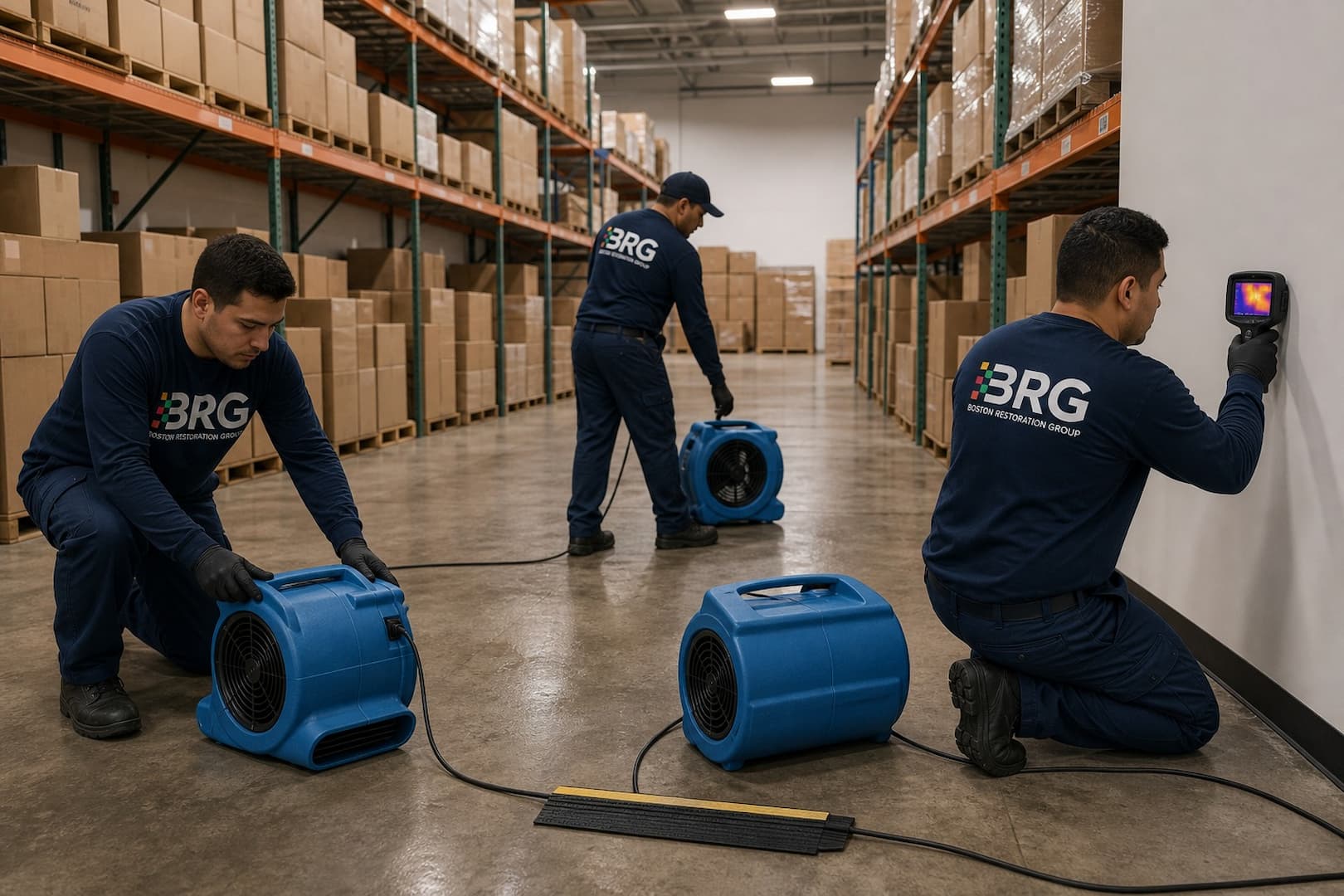
Restoration for Natick businesses and shared buildings
Retail premises, offices and multi-unit buildings need more than a list of wet rooms. A property manager may need to arrange access to a locked suite, protect stock or keep a shared entrance clear. At the first walkthrough, we identify the person who authorizes work and the people who need updates as conditions change.
We can organize cleanup and drying by affected area where the building allows it. Equipment placement, noise, power and containment all affect that decision. Daily operations and restoration sometimes cannot share the same space safely. We explain the constraints and record what must happen before each area moves from mitigation to repairs or normal use.
Services for the rest of the loss
All of these services are available throughout Natick. A single incident may need more than one, such as board-up after a fire or sewage cleanup before drying.
Sewage and septic backup cleanup
A drain or septic backup needs a cleanup plan that accounts for contamination. We assess affected surfaces and contents, remove material that cannot be cleaned appropriately and coordinate drying after cleanup. Plumbing or septic repair may be needed to stop the backup.
Storm, roof leaks and winter water damage
Rain through a roof opening, wind damage and water from ice dams can affect several levels of a building. We assess the interior path, arrange temporary protection where appropriate and plan drying alongside the roof or exterior repairs the property needs.
Odor removal and contents care
Smoke, damp materials and contaminated contents can leave an odor after the visible mess is gone. We investigate the source before selecting cleaning or deodorization methods. Furniture, textiles and other belongings may need separate cleaning, relocation or specialist assessment.
Emergency board-up and building protection
Broken windows and damaged openings may leave a property exposed after a fire or storm. Once access is safe, temporary protection helps secure the affected area while the permanent repair scope is prepared. Tell us about damaged doors, glazing and access restrictions when you call.
Repairs after cleanup and drying
The repair phase can include drywall, insulation, flooring, trim and other finishes within the agreed scope. We review what was removed, which materials can remain and what source repairs still need completion. Structural concerns require the appropriate qualified professionals before work proceeds.
Specialty cleanup and equipment rental
Some projects need discreet trauma cleanup, targeted disinfection or equipment for a defined drying task. Describe the situation so we can discuss the right service, access and supervision. Rental equipment needs a suitable setup and monitoring plan for the space.
Before authorizing the work
Keep the assessment safe
For active fire, gas odor, downed wires or immediate danger, leave the affected area and call 911. Keep people and pets away from standing water, sewage, damaged electrical equipment and unstable ceilings. Take photographs only from a safe position.
Avoid wiping soot, opening a damaged ceiling or disturbing suspected mold before assessment. A photograph and an incident timeline can help without changing the scene.
Separate the estimate into stages
Ask what is included for cleanup, equipment, contents and reconstruction. Concealed damage may require a revised estimate; agree on how that change will be explained and approved. Your insurer determines coverage, while BRG documents the condition and restoration work.
Drying progress and replacement finishes can have different schedules. Discuss both, especially when a kitchen, bathroom or tenant's room remains unavailable.
Natick restoration questions
Do you serve South Natick and West Natick as well as Natick Center?
Yes. BRG offers the same water, fire, mold, storm and specialty restoration services across Natick. Give us the property address, damage type and access contact when you call. For an urgent loss, we will discuss current availability and the conditions needed to reach and enter the property.
Can you check the ceiling below an upstairs leak?
Yes. Tell us which fixture or room was involved and whether the water source has stopped. The inspection may need access to both floors and neighboring rooms. Keep people away from a bulging or sagging ceiling and leave any opening of the ceiling to the professionals assessing it.
Will my wet hardwood floor need to be replaced?
That depends on the water source, how long the floor was wet, its construction and its condition. We inspect the boards and accessible layers beneath them, then discuss drying or removal. Surface appearance alone cannot establish whether the floor and subfloor are ready for repair.
Can you work with a landlord or condominium manager?
Yes. Identify the owner or manager who can authorize work and arrange entry to affected spaces. If water has crossed a unit boundary, access to only one unit may leave part of the problem uninspected. We document access limits and communicate the next steps to the designated contacts.
How long should drying equipment stay in place?
The duration depends on the materials, moisture levels and access for drying. BRG checks progress rather than choosing a fixed removal date at the first visit. Keep equipment operating as instructed, and contact the team before moving it or switching it off because of noise or room access.
What affects the cost of restoration in Natick?
The affected area, water or residue source, materials, access and repair needs determine the scope. An inspection may reveal wet insulation or flooring beyond what is visible. Ask for the estimate to distinguish cleanup, drying, contents work and repairs, and to explain how newly discovered damage will be handled.
Does insurance cover water, fire or mold restoration?
Coverage depends on your policy and the circumstances of the loss. Contact your insurer about notice requirements, deductibles and the records it needs. BRG can document observed damage and restoration work, but only your insurer can confirm whether a particular item or service is covered.
How quickly can you come to a Natick property?
Call the 24/7 emergency line for current availability. Dispatch depends on the address, conditions, safe access and the crew or equipment needed. Tell us whether the source is still active, which floors are affected and who can let the team in; those details help establish the next step.
Nearby service areas
Need restoration help in Natick?
Call for urgent water, fire, smoke, mold or storm damage. For a stable situation, use the form to describe the property and the help you need.
617-202-3772- Tell us which rooms are affected and when the damage started.
- Include the property address and a phone number for access.
- Mention any repair, cleanup or drying already attempted.
Boston Restoration Group
178 Crescent Rd, Needham, MA 02494
Serving Natick and Greater Boston
Request restoration help
For an active emergency, please call. Use this form for assessment requests and other inquiries.
Prefer to speak with us? Call 617-202-3772.