
Restoration Company in Lincoln, MA
Lincoln's modern, historic and wooded properties call for more than generic demolition. BRG traces the loss, protects distinctive materials and uses documented conditions to guide drying and repairs.
What we restore in Lincoln
At a Lincoln property, the event tells us where to begin, not where to stop. The working scope comes from the source, sanitation concerns, material condition and the spread confirmed during inspection.
Mold remediation
Mold found in Lincoln is not treated as a surface stain. BRG looks for the moisture source, separates clean space and removes affected material within a controlled work area.
Learn how the work is scopedStorm damage restoration
For a Lincoln storm loss, roof or wall protection and interior drying are planned together. Windows, lower levels and concealed exterior assemblies are checked along the same path.
Learn how the work is scopedSewage cleanup
At a Lincoln loss, drain water and outdoor flooding are never assumed to be clean. Sanitation, exposure time and material porosity determine what can remain.
Learn how the work is scopedCommercial restoration
For Lincoln businesses and facilities, the plan accounts for tenants, security, critical rooms, public routes and the sequence needed to move safely toward normal use.
Learn how the work is scopedWater damage restoration
Extraction is only the beginning. In Lincoln, we trace moisture into wall, floor and ceiling assemblies, set drying goals and monitor how materials respond.
Learn how the work is scopedFire and smoke restoration
After a fire in Lincoln, the scope may include unsafe-area stabilization, debris, soot and smoke residue, contents protection, odor-source work and repair planning.
Learn how the work is scopedOne town, very different building assemblies
Lincoln is known for conservation land, wooded sites, mid-century architecture and historic homes. Flat or low-slope roofs, large glass areas, concealed drainage and older plaster each create a different moisture investigation after storms or plumbing failures.
Long drives and tree exposure can also affect response logistics after wind. We confirm safe access, available power and the route for equipment before turning a careful property into a busy worksite.
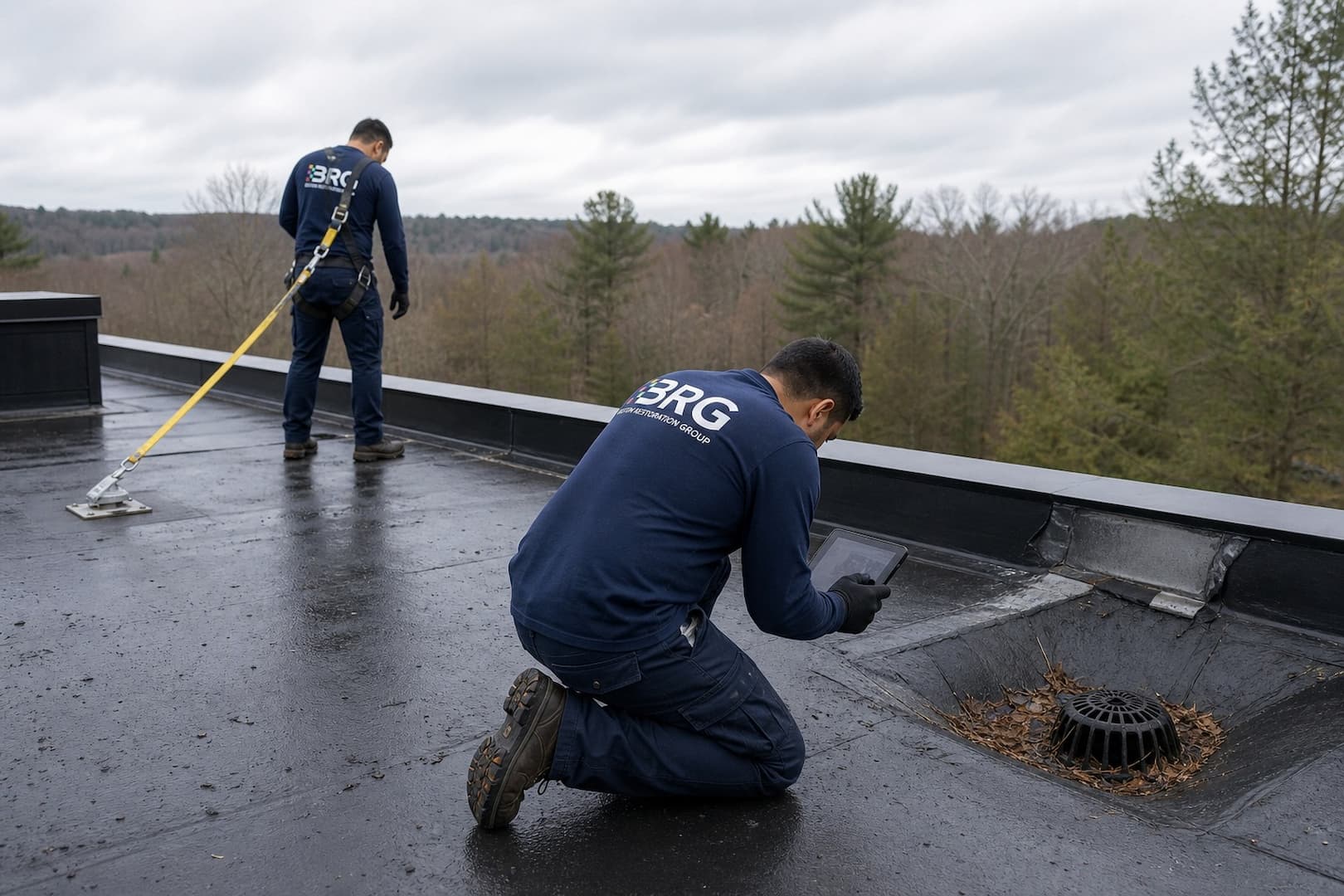
The sequence from control to repairs
Lincoln projects reward precise investigation. We use room-by-room observations and moisture comparison points to find the least disruptive method that still reaches a defensible dry condition.
Assess and stabilize
The Lincoln assessment records hazards, the source, water category or residue, affected boundaries and immediate protection needs.
Extract and contain
BRG removes accessible water or debris, separates the Lincoln work zone and protects clean routes and contents.
Dry, clean and verify
Equipment and cleaning at the Lincoln site follow the defined scope; material readings show when the plan needs to change.
Plan the repairs
Before Lincoln repairs begin, the record identifies material removed, space released and reconstruction work that remains.
The property type changes the response
Modern homes
Trace water at roof transitions, window systems, built-ins and concealed cavities while limiting unnecessary disruption.
Historic structures
Protect original materials and document why selective opening, cleaning or removal is recommended.
Wooded-site storm loss
Address temporary protection, fallen-limb safety and interior moisture as connected parts of one event.
Start with people, power and the source
A useful first call from Lincoln explains what happened, what remains active and where people can enter safely. Leave electrical, contaminated, fire-damaged or unstable areas untouched.
- Stay clear of trees, limbs, overhead wires and damaged roof sections after a storm.
- Do not drill or open distinctive assemblies until utilities and material conditions are assessed.
- Identify specialty surfaces, radiant systems and concealed building features during intake.
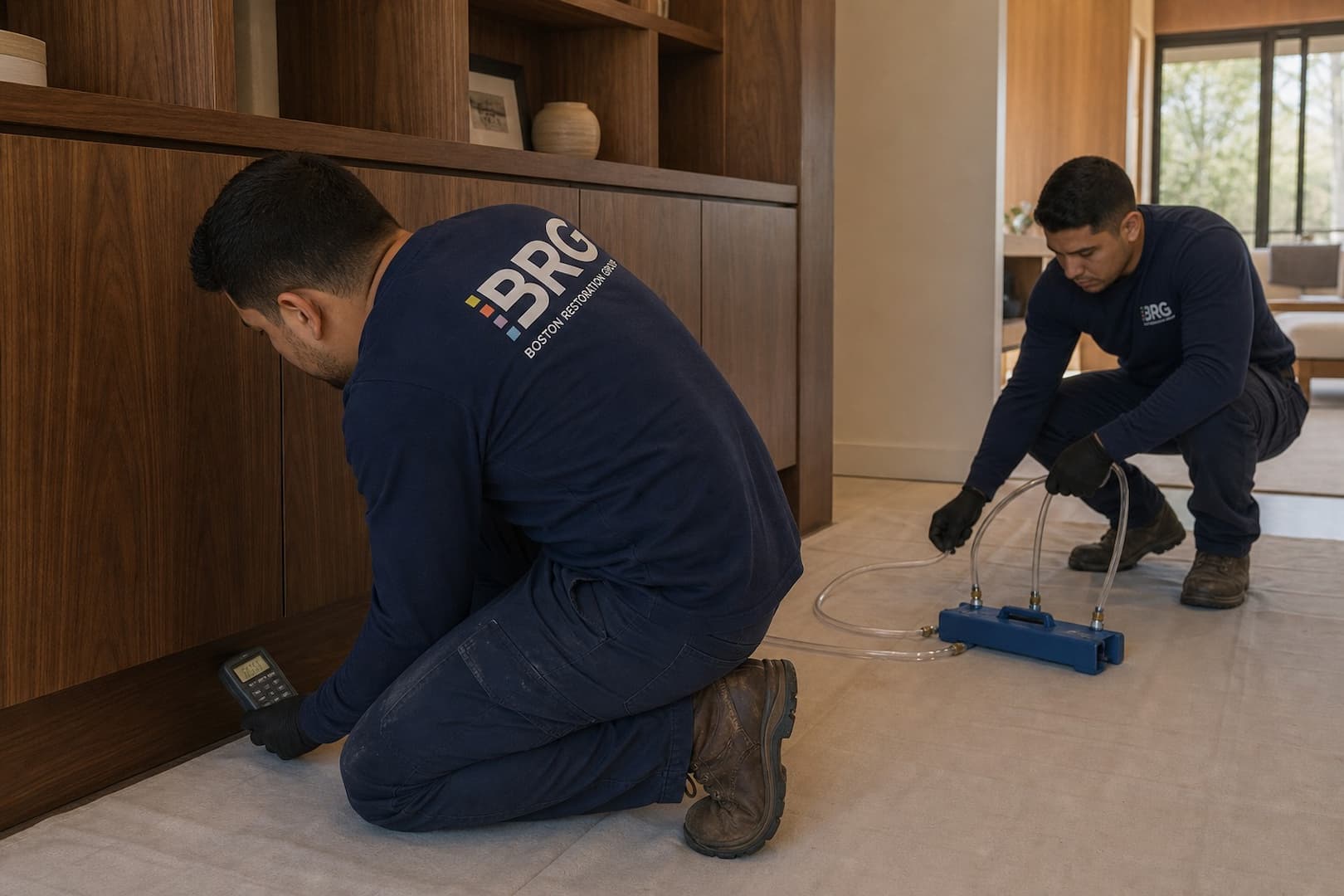
Evidence behind the work
Lincoln project records that matter
- Initial and progress photographs from the Lincoln site
- Lincoln moisture readings organized by affected area
- Equipment use and material removal at the Lincoln property
- A Lincoln mitigation summary for the repair handoff
Insurance communication after a Lincoln loss
Report the Lincoln loss to your carrier promptly and follow the policy's notice requirements. BRG documents observed conditions and our work; the carrier makes decisions about coverage, deductibles and the claim.
Lincoln restoration FAQ
Can BRG work in mid-century modern homes?
Yes. We account for roof geometry, glazing, built-ins and finish details when selecting inspection and protection methods.
How do you avoid unnecessary demolition?
We combine visual evidence, moisture readings, material condition and sanitation requirements before defining removal boundaries.
Can you respond when a tree damages the roof?
Yes, after the site is safe. Temporary weather protection and interior water mitigation are coordinated with tree and structural professionals as needed.
Do you restore smoke damage without a visible fire in every room?
Yes. Smoke residue and odor can travel beyond the burn area, so we inspect surfaces, contents and air pathways before setting the cleaning scope.
Tell us what happened in Lincoln
Call now for urgent damage in Lincoln. If the situation is stable, use the form to describe the source, affected rooms and the best person to reach about access.
617-202-3772- Include the Lincoln property address.
- Describe what is visible at the Lincoln property and where the source may be.
- Mention Lincoln access, occupants, business hours or claim details that could shape the first visit.
Request Restoration Help
A short, factual Lincoln loss description is enough for the first contact.