
Restoration Company in Haverhill, MA
A ceiling leak in an apartment can become a problem for the store below. Smoke can move beyond the room where a fire started. Boston Restoration Group helps Haverhill owners trace the damage, protect usable space and arrange cleanup with a clear plan for each part of the building.
Begin with the building, then follow the damage
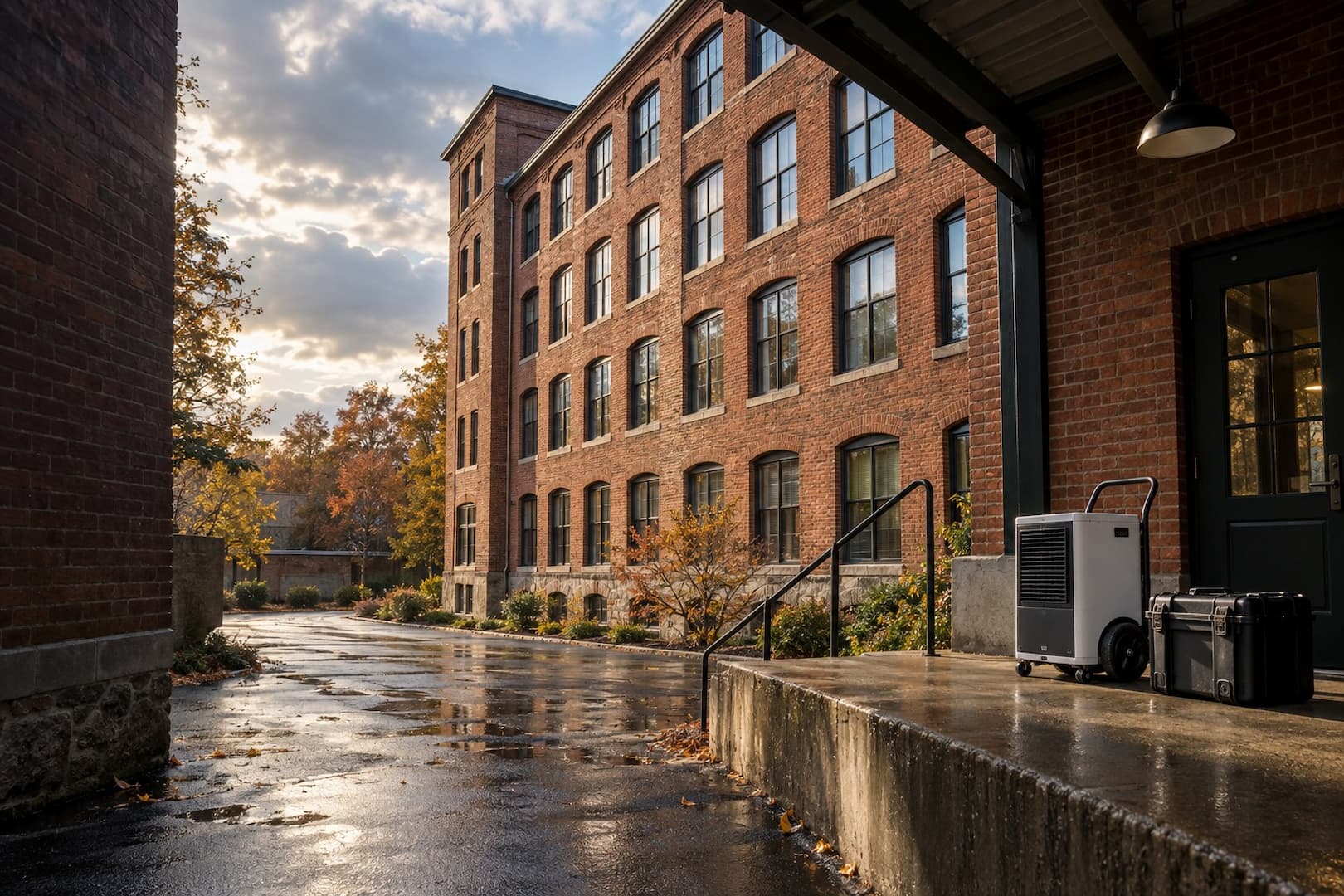
Downtown Haverhill includes former shoe-industry buildings adapted for new uses. Across the city, detached houses, older multifamily homes and business premises need different access plans. During the walkthrough, we check which spaces above, below and beside the damage may also be affected.
A house or smaller rental
We check the affected room and the assemblies connected to it. A second-floor bathroom leak may wet the ceiling below, insulation around a pipe and the edge of a hardwood floor. Tell us about recent plumbing work or earlier staining, even if it seems unrelated.
A converted mill or mixed-use building
Shared walls, service chases and long floor spans can carry water or smoke beyond a tenant boundary. We establish who controls each space and identify protected exits before placing equipment. An untouched neighboring unit may still need an inspection.
BRG serves Haverhill from its Needham operation. Dispatch depends on the actual address, access, weather and the work required. There is no need to diagnose the loss before calling.
The wet ceiling is one part of the inspection
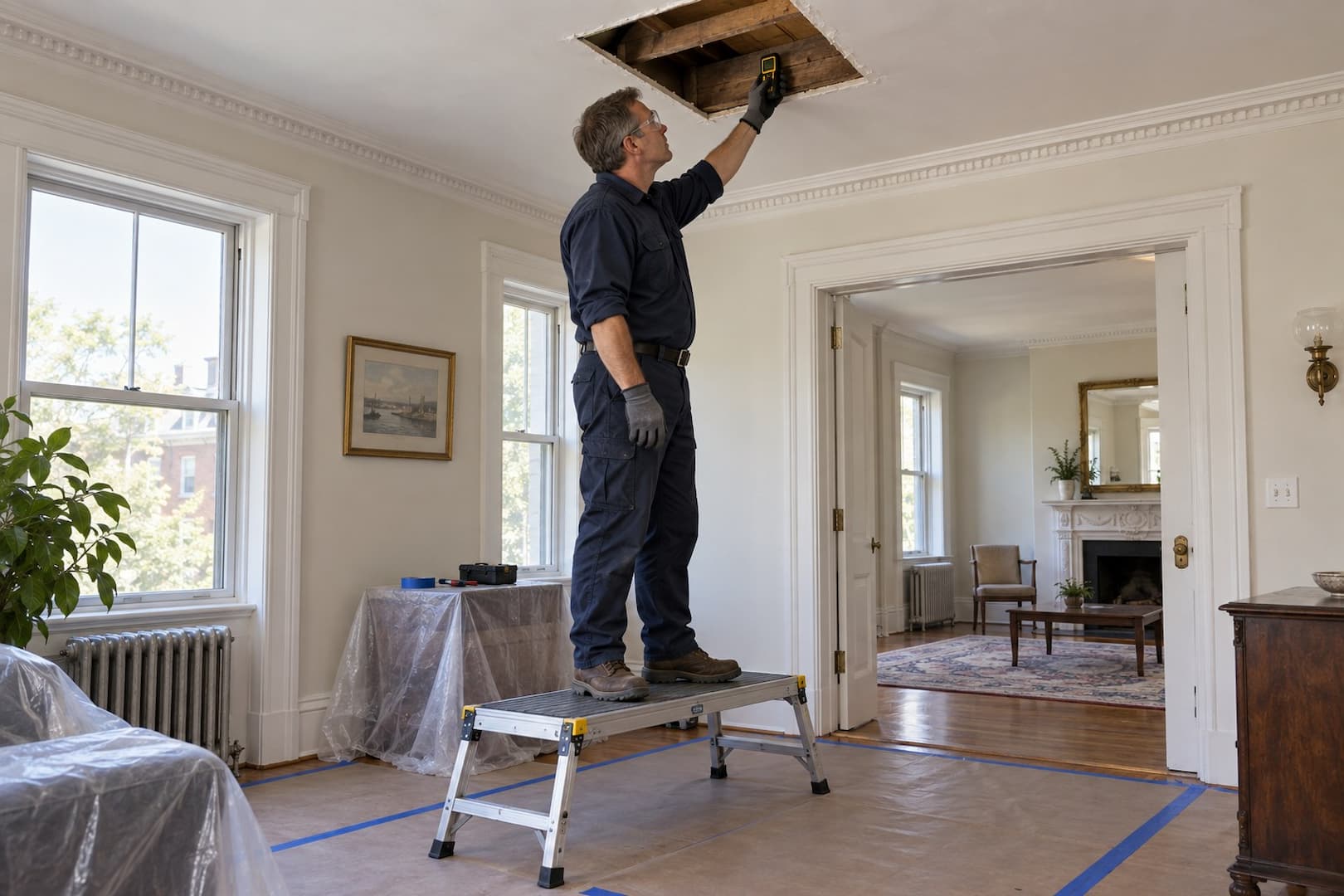
Once a plumber or other responsible trade stops an active source, BRG can extract water and map the remaining moisture. We compare affected materials with dry areas of similar construction. A thermal camera helps locate temperature differences; a moisture meter and, where needed, selective access help explain them.
Look above the stain
A supply connection, drain, roof opening or sprinkler line can feed a loss from another room. The water may travel before it becomes visible.
Check the layers it crossed
Flooring, subfloor, insulation and ceiling finishes hold water differently. We document where access is needed and why.
Recheck the occupied space below
Cabinets and wall edges can hide a second reservoir. Drying equipment stays tied to those measurements, with changes recorded as materials respond.
Read about water extraction and structural drying after a water loss.
Pipe water, runoff and sewage need different handling
Haverhill's stormwater system drains toward receiving waters that include the Merrimack and Little Rivers. That citywide setting does not establish the flood risk at a particular address. We inspect the entry point and the material exposure rather than assuming that every wet basement has the same cause.
| Reported condition | What we check | How that affects cleanup |
|---|---|---|
| A pipe or appliance leak | Whether the supply is stopped, elapsed time and water trapped under fixed finishes. | Extract accessible water, assess material condition and choose drying access. |
| Water entering after heavy rain | Entry through the roof, foundation, doors or drains; outside contamination and continued inflow. | Protect openings, separate contaminated areas and coordinate correction of the entry route. |
| A sewer or drain backup | Drain function, affected porous materials and routes into clean rooms. | Control access, remove contamination and determine which materials require disposal. |
| An ice-dam leak | Wet roof-edge assemblies, insulation and water traveling inside exterior walls. | Coordinate safe roof work with interior inspection and drying. |
Stay out of sewage and outdoor floodwater. Ordinary household fans can spread contamination. Our sewage cleanup and ice-dam water damage services explain the differences in scope.
Cleanup that addresses what remains in the building
Fire, soot and smoke odor
After the fire department releases the property, we assess residue on finishes and contents, water from suppression and any opening that needs temporary protection. A clean-looking room may still contain odor sources in porous materials or concealed spaces. Cleaning methods depend on the residue and the surface; repainting too soon can hide the evidence without resolving the smell.
Fire and smoke restoration →Mold and persistent dampness
A musty odor after a leak warrants inspection of the wet materials. Visible growth, its extent and the moisture history determine containment and removal needs. Testing can answer a specific question, but an air sample alone does not identify every affected surface. We discuss the moisture correction needed before replacement finishes go back.
Mold removal and remediation →Storm openings and exposed interiors
Wind damage may leave rain entering while the interior cleanup is underway. Safe temporary board-up and coordination with a roofer help protect the drying work. Fallen trees, utility wires and structural movement need the appropriate specialist before crews or occupants enter.
Storm damage response →Keep the access plan as clear as the work scope
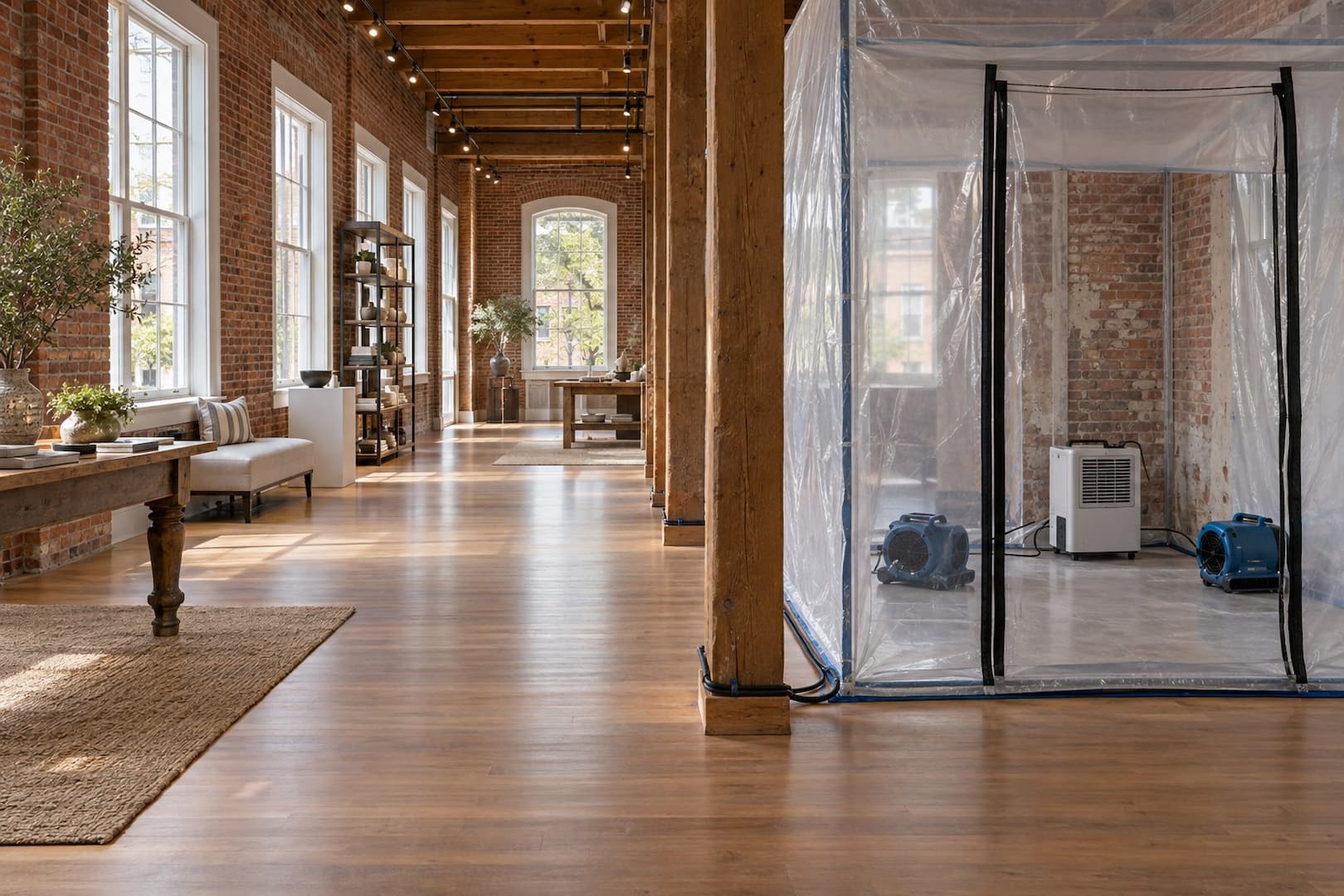
A shop cannot use an exit blocked by drying equipment. A resident needs to know whether a bedroom or hallway is inside the work area. Before cleanup starts, we agree on entry with the building contact. We also explain where equipment will go and how noise or containment may affect daily use.
For commercial restoration, tell us about opening hours, inventory, deliveries and any room that supports essential operations. If water crossed a tenancy line, the manager may need to arrange several inspections. BRG can document the affected areas separately so owners and tenants can understand the scope relevant to them.
Occupancy decisions depend on hazards, available utilities and the ability to keep clean space separate. We cannot promise that a business or residence will remain usable before assessing those conditions.
Make salvage decisions before removal starts
Original woodwork, plaster and masonry deserve a material-by-material assessment. A stained surface may remain sound; a flat-looking floor may conceal wet layers. Tell us which items or finishes matter most so we can discuss practical protection and specialist referrals.
Materials that may be retained
Sound framing, accessible masonry and some flooring can sometimes be cleaned or dried after an appropriate loss. Exposure, contamination and access determine whether that approach is feasible.
Materials that may need removal
Swollen composites, contaminated porous contents and damaged insulation often cannot be restored simply by drying. Suspect lead paint or asbestos-containing materials need review before disturbance.
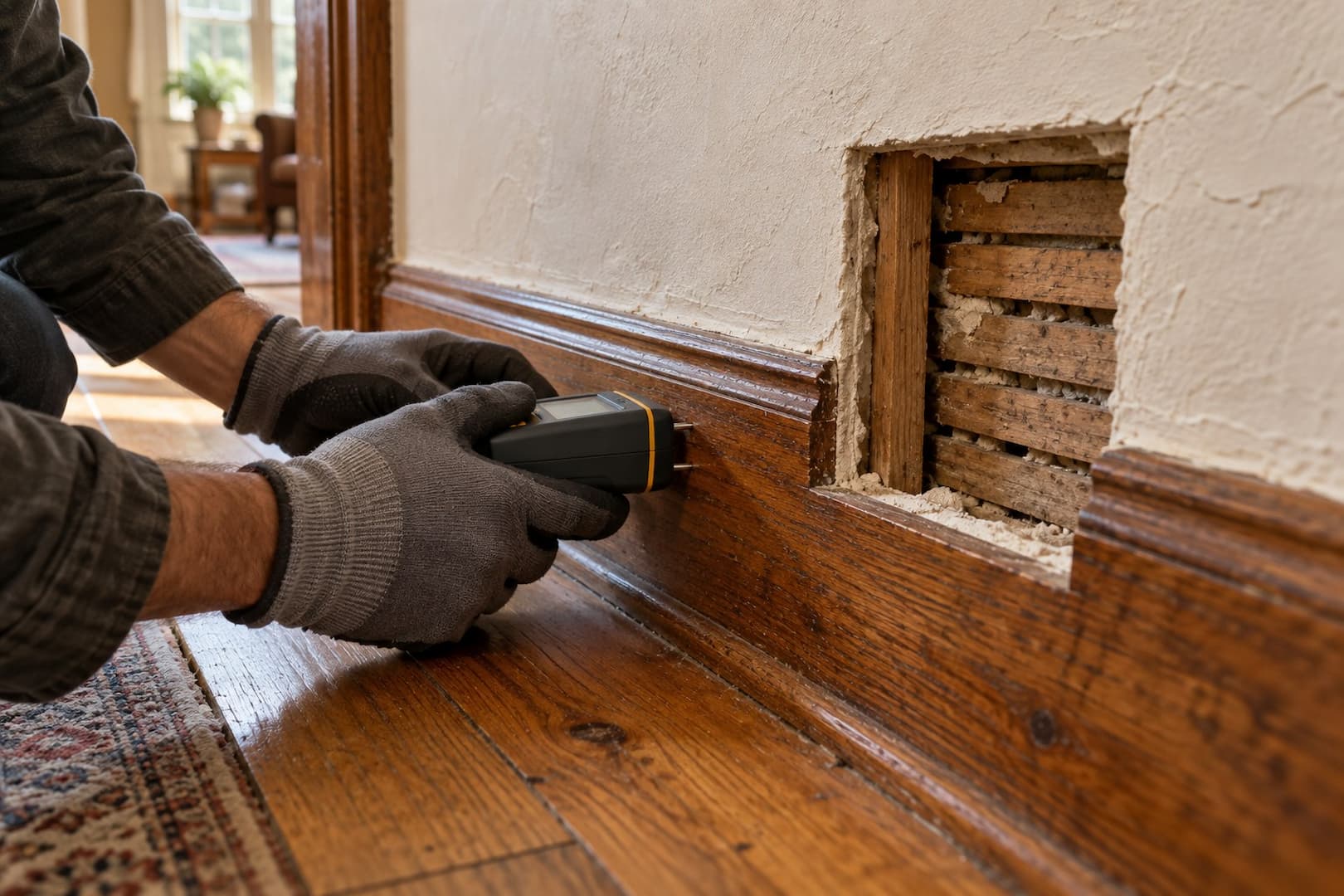
Photograph items before handling or disposal when it is safe. Record what was retained, what was removed and any specialty evaluation still needed. For protected historic features, confirm the applicable review requirements before permanent alterations.
Understand what the estimate includes
The affected square footage is only a starting point. Water beneath fixed cabinetry, restricted access to an upstairs unit, contamination and specialty contents can change the labor and equipment required. Ask for the work to be described by affected area and task.
Emergency mitigation and finish repairs may be priced as separate phases. Confirm what is authorized now, how added damage will be recorded and whether disposal, monitoring and reconstruction are included.
BRG can supply photographs, moisture records and an itemized scope for the claim. Your insurer decides coverage. Floodwater, sewer backup and a supply-line leak may fall under different policy terms; avoid assuming that one approval covers every part of the project.
Ask your agent which policy terms apply to the reported cause.
What has to happen before the room returns to use?
The source is controlled
The responsible trade addresses the leak or opening. If it remains active, the plan must account for continued wetting.
The affected layers are checked
BRG records drying or cleaning results and identifies any area that remains inaccessible or unresolved.
Repairs have a defined starting point
The handoff lists what we removed, what remains in place and which finishes still need repair. A dry room can still require insulation, wallboard or flooring.
Access and occupancy are reviewed
Relevant trades or authorities clear utilities and other restricted conditions. The owner or manager coordinates the return of occupants and operations.
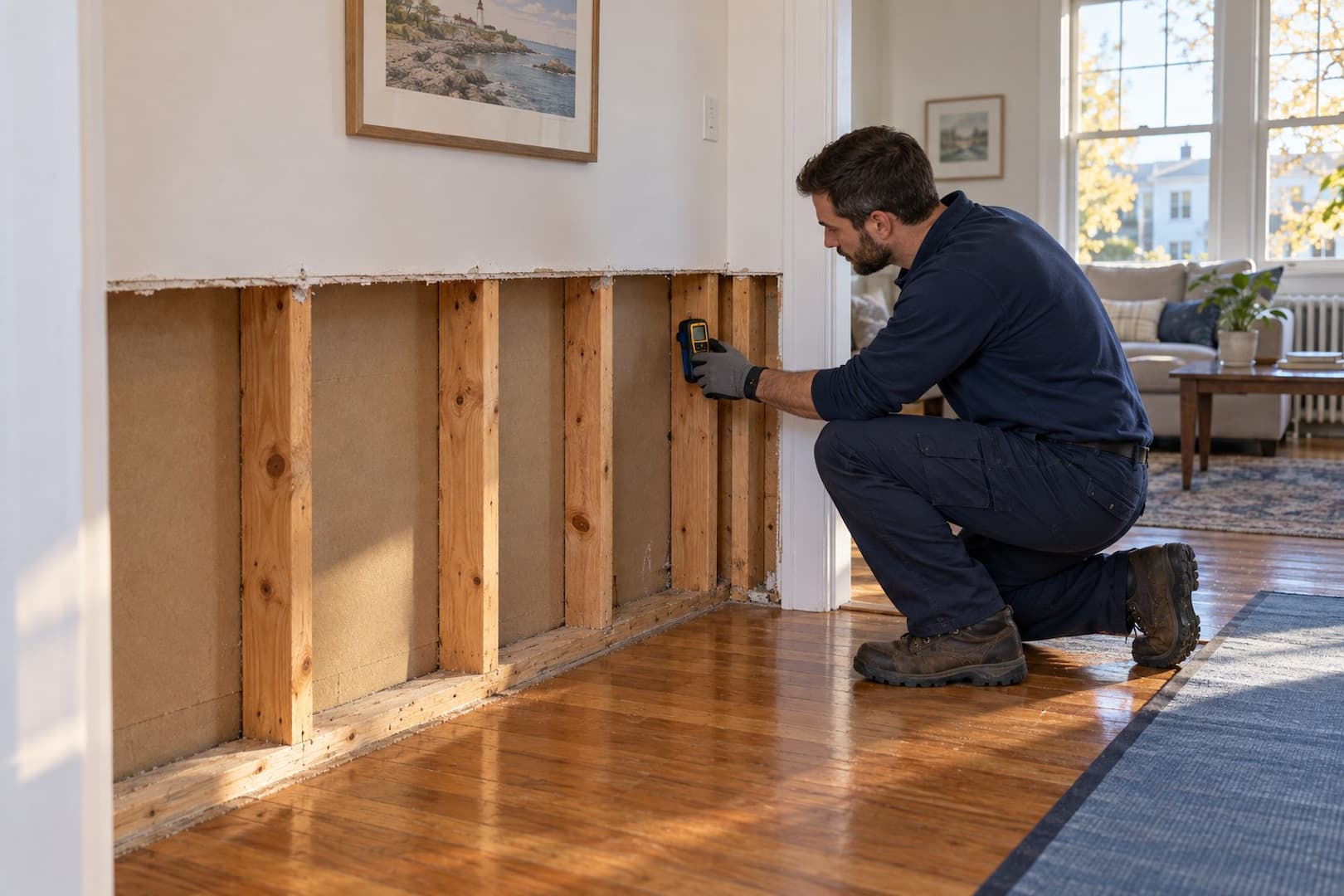
The work takes as long as the affected materials and required access demand. Hidden wet insulation, delayed source repairs or contaminated materials can extend a job beyond the initial expectation. Ask for the next decision and what evidence will support it.
Before work starts in Haverhill
Can you help with a leak that affected several Haverhill apartments?
Yes. Tell us which units show damage and provide the building manager’s contact. Access to the source unit and spaces below may be needed to trace moisture. We can separate the documentation by room or unit while keeping a coordinated drying plan.
Does a wet basement mean the Merrimack River caused the damage?
No. Foundation entry, roof drainage, failed plumbing, a sump problem or a drain backup may be involved. The source has to be investigated at the property. Its location near a river does not by itself explain the loss or determine insurance coverage.
How soon can BRG reach my property?
Calls are answered 24/7. Give us the address, conditions and access details so we can confirm availability and discuss timing. Weather, road conditions, crew needs and existing emergencies affect dispatch.
Do I need to remove wet flooring before calling?
Leave removal decisions for the assessment unless emergency authorities direct otherwise. Flooring may conceal contamination, utilities or materials that need special handling. Photograph what is visible from a safe area and tell us whether the floor has lifted or become unstable.
Can smoke damage be treated without replacing everything?
Some finishes and contents respond to suitable cleaning; others retain residue or have physical damage that limits recovery. A test-cleaning area can help establish what is practical. Odor treatment follows removal and cleaning of its sources.
Will the same estimate include rebuilding the room?
Confirm that when the scope is prepared. Mitigation, contents work and reconstruction can be separate parts of the job. The written scope should say what BRG is performing and which repairs or specialist services still need to be arranged.
Start with the affected address
Call BRG for restoration help in Haverhill. Tell us which floor or unit is affected, whether the source is still active and who can provide access. We will discuss the conditions and confirm the next available response.
617-202-3772- Mention tenants or neighboring units that may need access.
- Have the owner, manager or other authorized contact available.
- Describe standing water, smoke, roof openings or electrical concerns.