

Restoration Company in Essex, MA
When water enters an Essex property, the first question is where it came from. A burst pipe, wind-driven rain and outdoor floodwater leave different cleanup problems. Boston Restoration Group helps owners sort out the source, protect unaffected rooms and plan the work that comes next.
Start with the source
Water from outside changes the restoration plan
A puddle does not tell you whether the water came through a roof opening, escaped from a pipe or entered at ground level. Its route matters. Outdoor water can carry sediment and contaminants into floor layers, wall cavities and belongings, even when it looks clear.
Essex maintains coastal resilience resources covering the Great Marsh, the causeway and other local planning issues. That context helps explain why flood exposure deserves attention here. It does not establish the risk at an individual building, and it does not make every water loss a coastal flood.
At the property, BRG records what entered, how high it reached, which materials it touched and whether more water can follow. Tell us about earlier leaks or dampness too; an old moisture problem can overlap with a new event.
What can stay, what needs access, and what comes out
Keep materials when there is a reliable way to clean and dry them. If contamination remains behind a finish, preserving its appearance has not resolved the loss.
| Material or item | What the inspection must resolve |
|---|---|
| Plaster, drywall and insulation | Whether the cavity is wet, contaminated or inaccessible; whether the finish still holds securely. |
| Wood flooring and subfloor | Water beneath the boards, trapped layers, swelling and a practical route for cleaning and drying. |
| Cabinets and built-ins | Hidden bases, swollen panels, wet backing and whether selective access can preserve sound components. |
| Rugs, upholstery and stored goods | Water source, time wet, dyes, backing, cleanability and the value of specialist treatment. |
Removal decisions should have a reason you can understand. BRG documents the condition before work changes it and discusses salvage, disposal and outside specialist needs with the authorized owner. In older interiors, suspect lead paint or asbestos-containing materials need appropriate evaluation before disturbance. A damage cleanup schedule does not remove that requirement.
Beyond extraction
The floor can look dry while the building is still wet
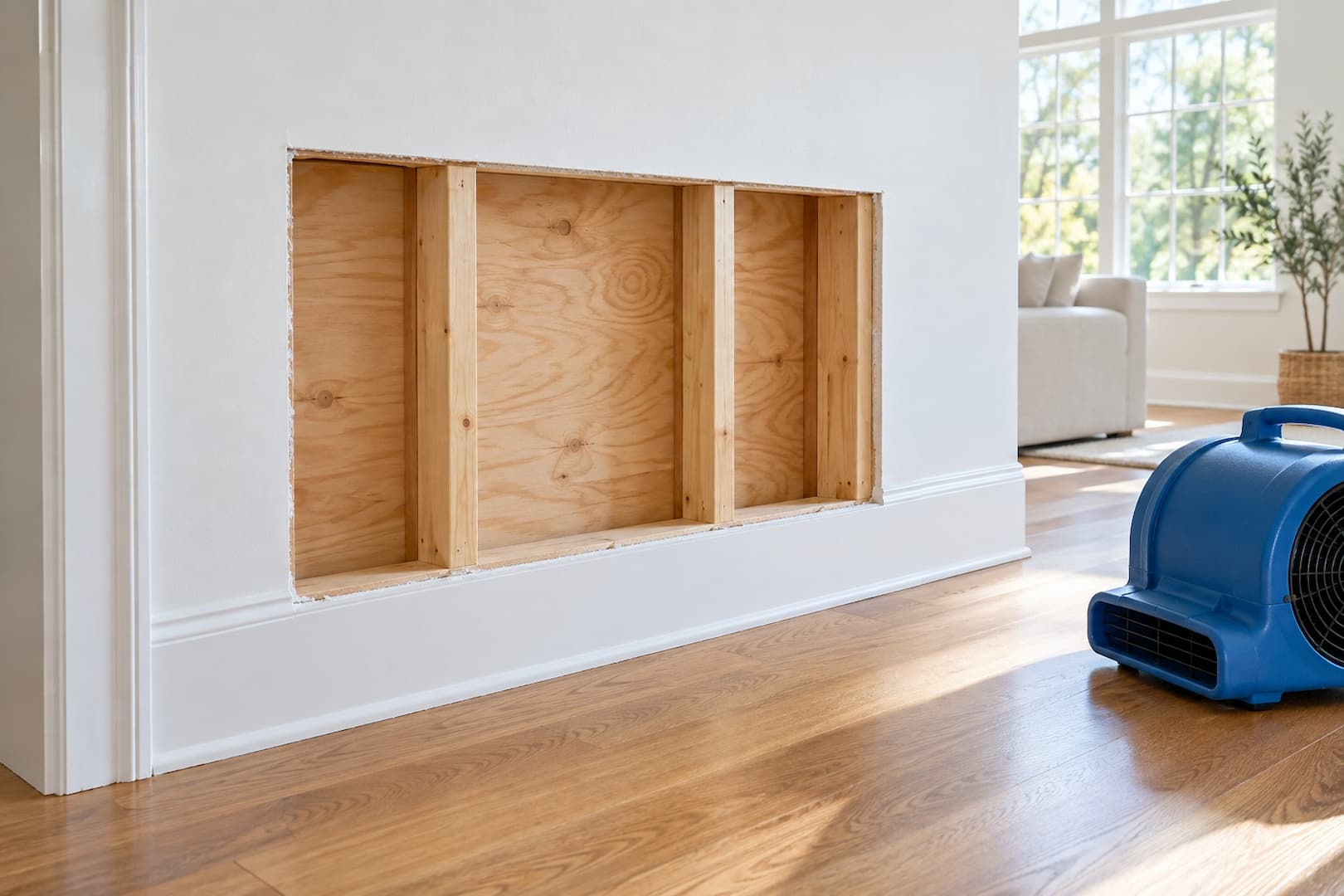
Extraction removes accessible water. Structural drying deals with what remains in wood, finishes and assemblies. BRG takes moisture readings, considers unaffected comparison areas and identifies the surfaces that air must reach. Baseboards, cabinet toe kicks or a limited section of wall may need access; broad demolition is not the automatic starting point.
Air movers help moisture leave exposed materials. Dehumidifiers remove moisture from the air. Both jobs require access to the wet surfaces and suitable room conditions. Follow-up readings show whether the materials are responding. If progress stalls, the crew should investigate the obstacle rather than simply add rental days.
Keep equipment settings and doors as agreed with the crew. Turning a dehumidifier off overnight or opening windows in damp weather can change the drying conditions. Ask about noise and sleeping arrangements before deciding which part of the home remains usable.
Smoke, sewage and mold need their own cleanup methods
Fire and smoke residue
After the fire department releases the property, the scope may include soot, odor, damaged contents and water from firefighting. Test cleaning helps distinguish removable residue from permanently damaged finishes. Smoke can travel beyond the burned room, so connected spaces and the HVAC system need attention where the evidence points. Fire and smoke restoration starts with that extent assessment.
Sewage or septic backup
Stop using affected plumbing and keep people and pets away. Cleanup and disinfection address the indoor contamination; a plumber or septic professional addresses the source. Saturated porous materials may need removal. Do not run fans across wastewater or move affected rugs through occupied rooms.
Musty odors and visible growth
A recurring odor calls for moisture investigation, not fragrance. BRG plans containment, removal and cleaning around the affected materials, with the leak, condensation or ventilation problem addressed as part of the recovery plan. Mold remediation cannot promise that a building will contain no mold spores.
Stop another weather event from undoing the cleanup
A storm may leave an exterior opening and wet rooms several floors below it. Temporary protection, roof repair and interior drying need coordination. In winter, an ice dam can force water into the roof assembly; clearing visible ice alone does not establish that insulation and ceilings are dry.
Record where water first appeared, even if the stain later expands. A window corner, chimney intersection or roof edge can help the responsible trade investigate. Keep away from unstable limbs, damaged roofs and downed wires. BRG can discuss the stabilization and interior restoration scope after safe access is established.
A shop and a home have different recovery priorities
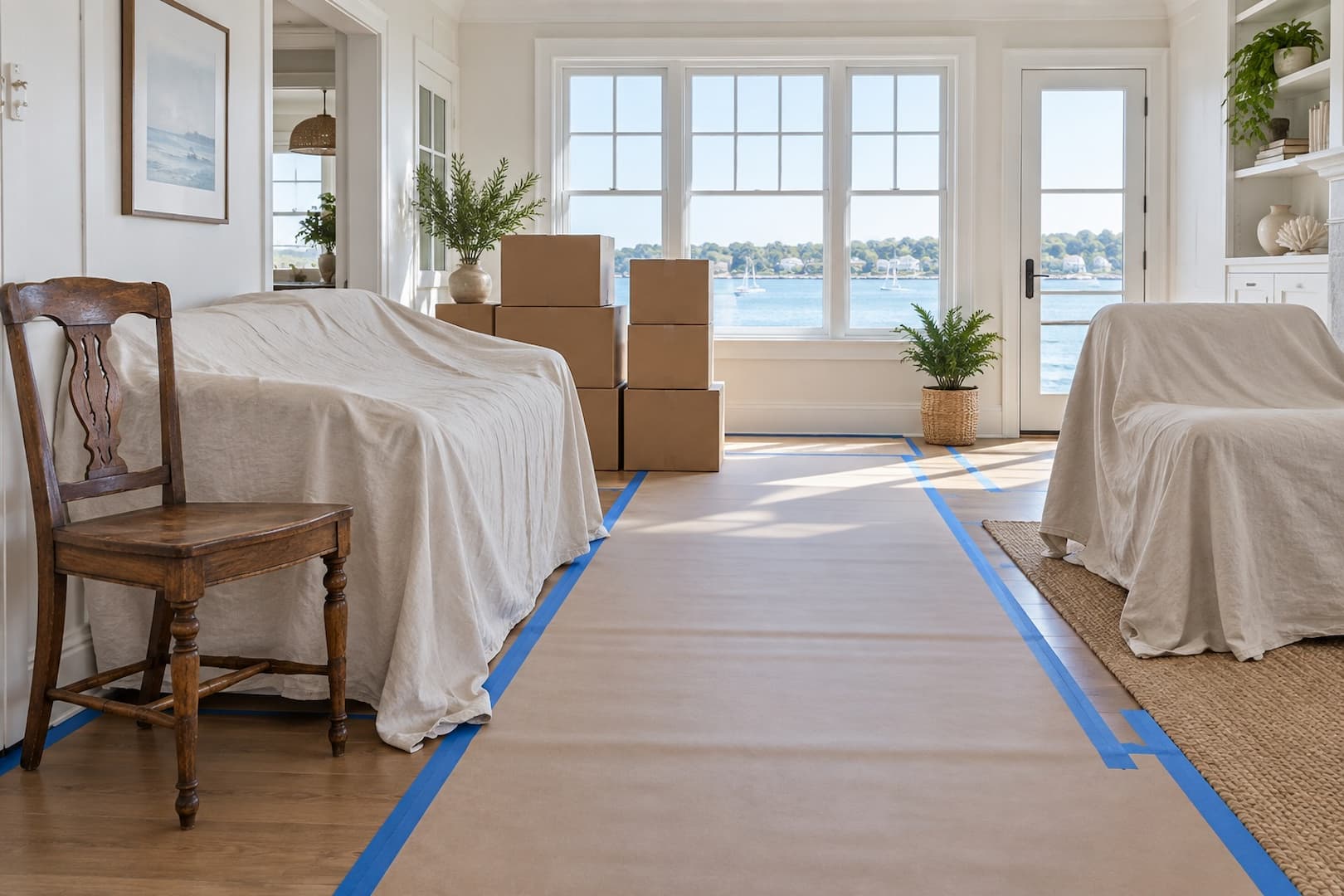
In a home, the urgent practical questions may concern bedrooms, keepsakes and access to the only bathroom. For a shop, restaurant or office, they may concern stock, food-contact areas, electrical equipment and whether customers can enter without crossing the work zone.
Before handling begins, point out items that need specialist care. Name one person who can approve changes, whether that is the homeowner, a manager or the business owner. An unaffected room may serve as protected storage if the route to it stays clean. Commercial reopening can require decisions by the owner, appropriate trades or relevant authorities as well as completion of the restoration work.
Ask for a scope you can follow from cleanup into repairs
Cost depends on the area involved, contamination, materials, access, equipment and the work needed to reach concealed damage. Drying time depends on how those materials respond. Neither a square-foot guess nor a fixed number of fan days explains every loss.
The useful record includes initial conditions, photographs, material decisions, moisture progress where relevant and work still outstanding. Before reconstruction, confirm that the source is fixed. The crew should also explain which retained materials met the drying goals and whether any cleaning or remediation requirements remain open. The repair scope can then identify drywall, trim, flooring, paint and other finishes without hiding unresolved work beneath them.
Your insurer decides coverage. Keep the estimate, approvals, invoices and damaged-contents record together, and ask the carrier about any documentation it needs before disposal when circumstances allow.
Questions Essex property owners ask before cleanup
Does living near a marsh mean my property needs flood cleanup?
No. The actual source and affected materials determine the scope. A supply-line leak inside a coastal home is different from water that crossed soil, streets or marshland. Tell BRG what you observed rather than assuming a water category from your address.
Can hardwood floors dry after outdoor water enters?
Some wood can remain after evaluation, but contamination, distortion and moisture beneath the boards may rule out drying in place. The crew needs to inspect the flooring assembly and what the water contacted before recommending cleaning, access or removal.
Should I keep wet antiques for the adjuster?
If safe, photograph them and record their location. Avoid rubbing finishes, separating stuck papers or moving contaminated items into clean rooms. Ask about a protected holding area and specialist referral. Immediate contamination controls may take priority over waiting for an inspection.
Can I use a household fan in a moldy room?
Avoid directing air across suspected growth before the area is assessed. Air movement can spread material to clean spaces. BRG reviews the moisture source, affected surfaces and need for containment before choosing the cleanup and drying setup.
Will insurance pay for coastal flooding?
Coverage depends on the cause of loss and the policies in force. Ask your insurer about the reported event, deductible, exclusions and any separate flood policy. BRG can document the physical damage and work scope but cannot determine coverage.
Describe the water, residue or damage you found
Call 617-202-3772 for restoration help in Essex. Tell us whether the source is still active and how the property can be reached safely. BRG is based in Needham; availability and dispatch depend on conditions at your address.
617-202-3772- Street address and safe access route
- Source, discovery time and affected floors
- Utility hazards and who can authorize work