

Restoration Company in Boxford, MA
A damaged room rarely exists in isolation. Water can reach a lower floor, smoke can spread into closets and a basement backup can put stored belongings at risk. Boston Restoration Group helps Boxford property owners protect usable space while the affected areas receive the cleanup and drying they need.
A property-wide view
Begin with the spaces you need to protect
The urgent loss may be in a mechanical room, finished basement, kitchen or detached structure. The first scope should name that area and the spaces connected to it. A garage wall, stair opening or utility chase can carry damage beyond the room where the event began.
BRG asks how the property is used, which rooms remain occupied and what needs special handling. Those answers determine where equipment enters, where belongings go and which hallways must stay clean. It also helps identify who else is needed to make the building safe.
Contents deserve an early decision
Protect the dry room before emptying the wet one
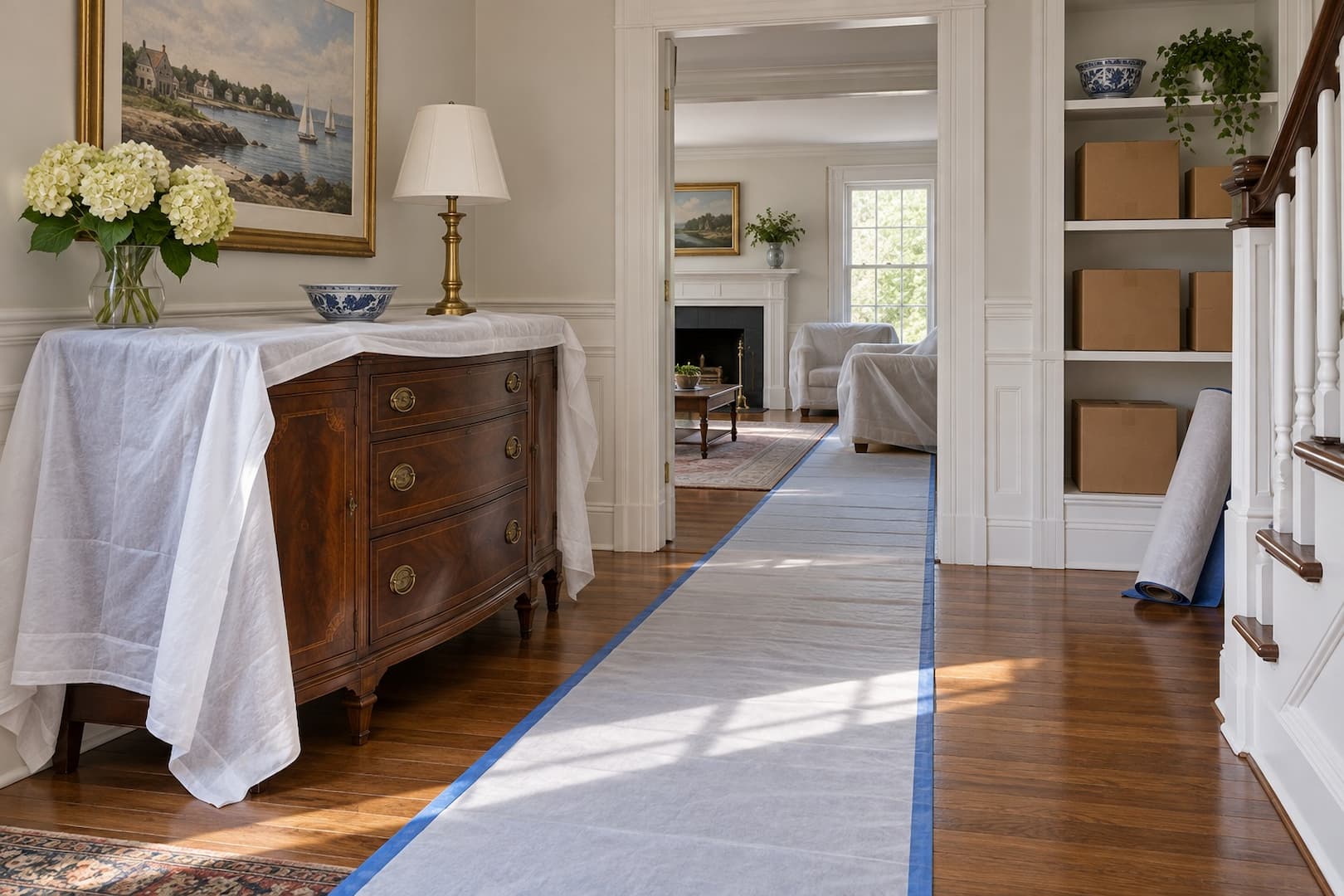
A box carried from a contaminated basement can soil a clean hallway. A wet rug rolled across wood flooring can create a second cleanup area. Moving everything immediately is not always the best way to limit damage.
BRG can discuss which items can remain, which need relocation and where they should go. Photograph important belongings when safe, and point out photographs, documents, instruments or furniture that deserve specialist review. A protected route and an inventory make later decisions easier.
Some materials clean well; others trap water, odor or contamination. Exposure time, the source and the item's construction matter more than its appearance alone. Disposal should be documented and authorized, with the insurer's instructions considered where practical and without delaying necessary contamination control.
A finished basement contains more than the surface you can see
Wall and ceiling cavities
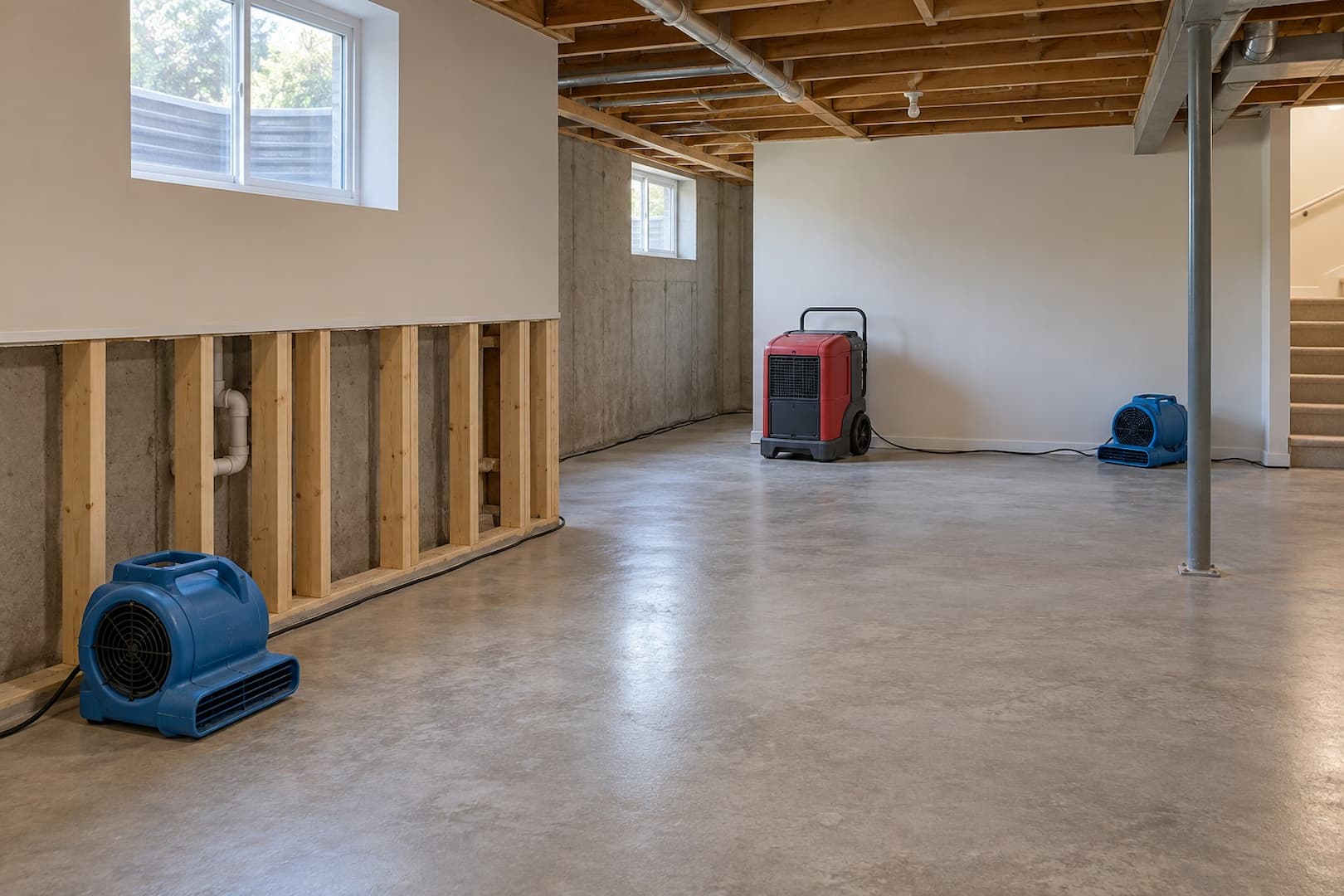
Drywall can conceal wet insulation or wood. BRG uses the loss history, readings and material condition to decide whether selective access is necessary. Removing a narrow area for access can be more sensible than leaving a wet cavity sealed or demolishing an entire room without evidence.
Flooring assemblies
Water can remain under carpet pad, laminate or finished wood. Extraction takes away accessible water; the drying plan must reach the layers that remain. Swollen composite materials, contaminated porous layers and trapped moisture may change what can be saved.
For water damage restoration, the crew places air movers and dehumidifiers around the wet assemblies and the available access. BRG checks material response over time and adjusts the plan when progress stalls. Feeling a dry floor with your hand does not replace moisture checks in the affected assembly.
The building cleanup and the source repair need to meet
Boxford's Board of Health publishes septic and Title 5 resources, while the town maintains stormwater management guidance. For an individual loss, identify the system involved rather than assuming that every basement problem has the same cause.
- Plumbing or appliance leak
- A plumber or appliance specialist stops the failure. BRG assesses wet materials and handles extraction, drying and the restoration scope. Tell both parties if water reached another floor.
- Septic or sewage backup
- Stop using affected fixtures and arrange source service. Interior cleanup needs controlled access, wastewater removal and appropriate material removal, cleaning and disinfection. A tank service does not remove contamination from carpet or wall cavities.
- Stormwater entry
- The interior needs assessment while the entry route receives separate attention. Foundation, grading, drainage or exterior repair work may involve another professional. Extraction alone does not prevent the next storm from repeating the loss.
If the property uses a private well and flooding may have affected it, contact the appropriate health or well professional about water safety. Restoration of the building does not establish that the water supply is safe to drink.
Residue and odor require more than a clean-looking finish
After fire or smoke
BRG checks soot distribution, heat-affected materials and water used during suppression after the property is released for access. Test cleaning guides the method for paint, wood, fabric and other finishes. Contents and connected rooms may need work even when the fire stayed small.
Odor treatment follows source removal and cleaning. Covering residue with paint or fragrance can leave the underlying problem. Electrical, structural and HVAC questions go to the relevant qualified professional when the damage calls for it.
When mold or mustiness returns
Recurring moisture needs an explanation. BRG investigates the wetting history, sets appropriate containment and cleans or removes affected material within the agreed scope. A repaired pipe, corrected condensation problem or other source work may be necessary to keep the area dry.
Keep fans away from suspected growth until the work area is assessed. Ask what completion will mean for the project, including any independent inspection or testing that has a defined purpose.
Storm recovery starts with safe access
Wind, snow and ice can leave tree damage, roof openings and wet insulation in the same event. In winter, an ice-dam leak may travel into a wall before it reaches the floor. An intact-looking ceiling can still need inspection after the dripping stops.
A blocked driveway or damaged stair can change how the crew reaches the loss. Report unstable limbs and downed wires before anyone tries to enter. Access conditions affect the response and the equipment that can be brought in. Temporary protection and the permanent roof or exterior repair should connect with the interior drying plan.

Keep the recovery scope understandable
For a family home, the schedule needs to address sleeping space, pets and access to essential rooms. A business may need a protected operating zone, staff communication and separate decisions about reopening. BRG discusses these needs rather than assuming an empty building.
Ask the estimate to distinguish cleanup, equipment, removals, contents work and repairs. Concealed damage can change the scope; photographs and written updates should explain why. Before rebuilding, ask what stopped the leak, which materials are dry and which trade still has work to complete. Coverage and payment depend on the insurance policy and carrier's decision, not the restoration estimate.
Planning restoration at a Boxford property
Should I move everything out of the basement?
Do not enter an unsafe area or carry contaminated items through the house. If access is safe, discuss priority belongings and a protected route before moving them. Some contents can stay in an unaffected area; others may need cleaning, specialist handling or disposal.
Does BRG repair wells or septic systems?
The restoration scope concerns damage inside the building. A qualified well, plumbing or septic professional should diagnose and repair those systems. Tell BRG which systems serve the property so indoor cleanup can be coordinated with source work.
Can a finished basement be dried without demolition?
Sometimes, especially when the water source, material condition and access make drying in place practical. Insulation, layered flooring or contamination may require selective openings or removal. An inspection is needed before promising to preserve every finish.
What if a tree limb opened the roof?
Keep away from the damaged area, hanging limbs and wires. Emergency authorities or qualified trades may need to establish safety first. Temporary protection and interior moisture work should then be coordinated so another rainfall does not restart the loss.
Can valuable wood furniture be cleaned after smoke exposure?
Possibly. Finish type, heat damage and the character of the residue affect the options. Avoid applying household cleaners before a test or specialist assessment. Record important pieces early so their handling is part of the scope rather than a last-minute decision.
Make the first call with the details you have
For restoration in Boxford, call 617-202-3772. Describe the affected building, the suspected source and anything blocking safe access. Mention detached spaces or stored belongings that may also be involved. BRG can then discuss availability and the next practical step.
617-202-3772- Main house, business or detached building
- Utilities, standing water and contamination concerns
- Access contact and immediate contents priorities