

Restoration Company in Lynnfield, MA
A leak can leave you deciding the future of a floor, a kitchen or a finished basement before you know how far the damage goes. Boston Restoration Group helps Lynnfield property owners make those decisions with an assessment of the source, affected materials and practical options for cleanup and repair.
A material decision, not a blanket decision
Before removing a finish, establish what is behind it
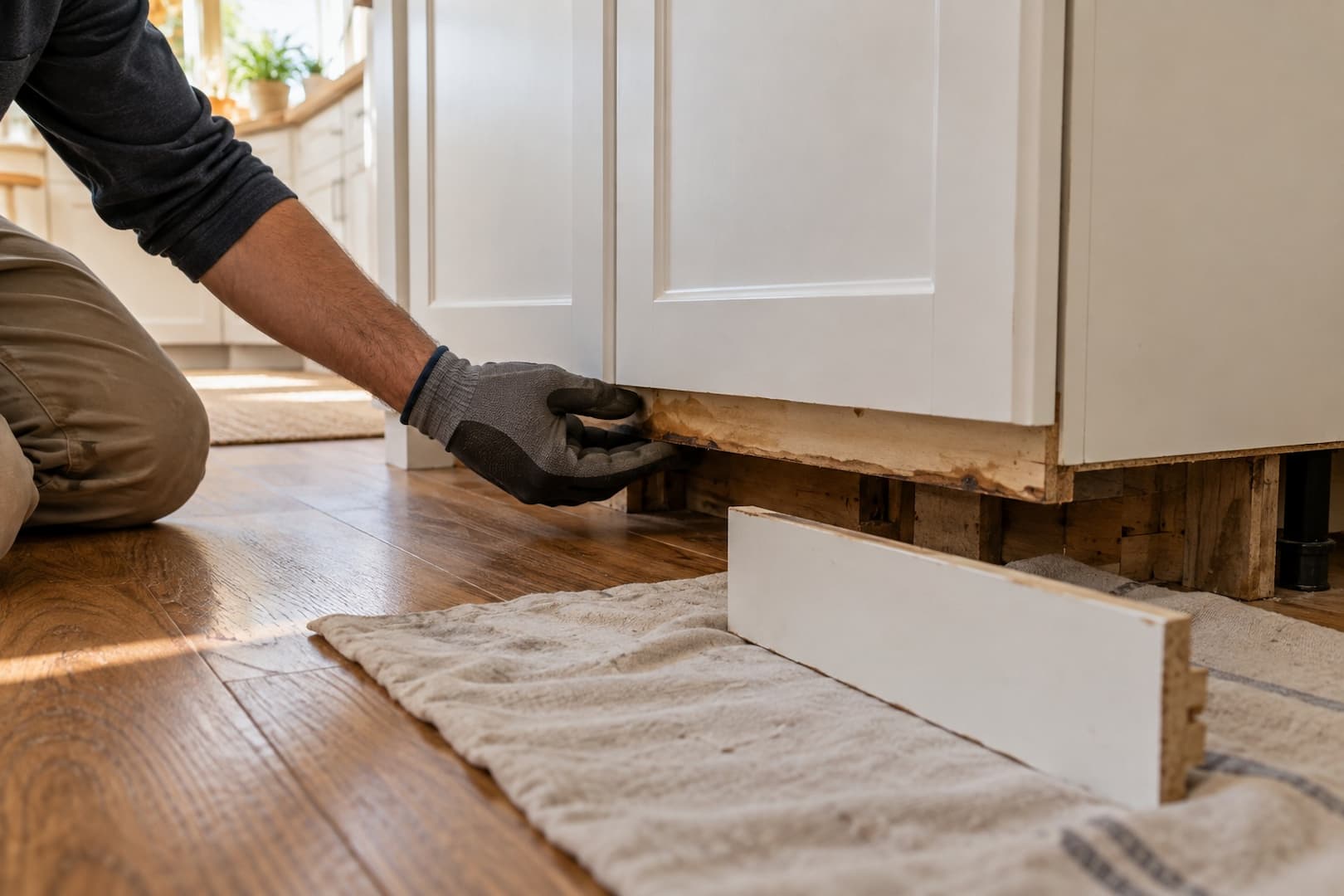
Water on an oak floor is visible. Water under the floor or behind the cabinet may not be. BRG looks at the assembly and the source together so the proposed work reflects the damage that actually needs attention.
Some assemblies can dry in place. Others need a small access opening or removal of a damaged layer. Cleanability matters as much as appearance. A material exposed to sewage can need a different decision from the same material wetted by a recent supply-line leak.
Tell us about finishes you want considered for salvage, including built-ins and matching trim. We can discuss access before a removal decision. Preservation has limits: a swollen cabinet base, weakened wallboard or contaminated porous material may not be suitable to keep.
Ask to see the reasoning. Which area is wet? What is preventing it from drying? What might become visible after opening? Those answers help you review both the immediate work and the repair that will follow.
Match the restoration work to the loss
| What you have found | What needs assessment | How BRG can help |
|---|---|---|
| Pipe or appliance water | Active supply, spread beneath finishes and wet cavities | Water removal and structural drying, with a material-specific scope |
| Smoke or soot | Residue on surfaces, odor in contents and suppression water | Fire and smoke cleanup after safe entry is established |
| Visible growth or a musty area | Moisture source, extent and affected materials | Mold remediation with controlled handling where needed |
| Toilet, sewer or septic backup | Contamination and the spaces or belongings it reached | Sewage cleanup, removal decisions and cleaning |
| Storm or winter roof leak | Entry route, compromised materials and moisture overhead | Interior drying and cleanup coordinated with source correction |
If the source is unknown, say so. Do not choose a water category from its color or smell. Keep clear of electrical hazards, unstable materials and contaminated water while the conditions are assessed. Active fire or immediate danger requires emergency services first.
The setting matters, but the house comes first
Separate a wet-building problem from a drainage problem
Lynnfield's stormwater program addresses runoff and protection of local water resources. The town also identifies Reedy Meadow in its conservation outreach. Those features explain why drainage deserves attention, but they do not establish the risk at an individual address.
If water returns after heavy rain, keep track of the first entry point and the timing. A low window, a foundation joint and a backed-up fixture point to different investigations. BRG deals with the affected interior while the appropriate trade addresses a failed pipe, roof detail or drainage condition.
Drying should answer a question: is this assembly ready?
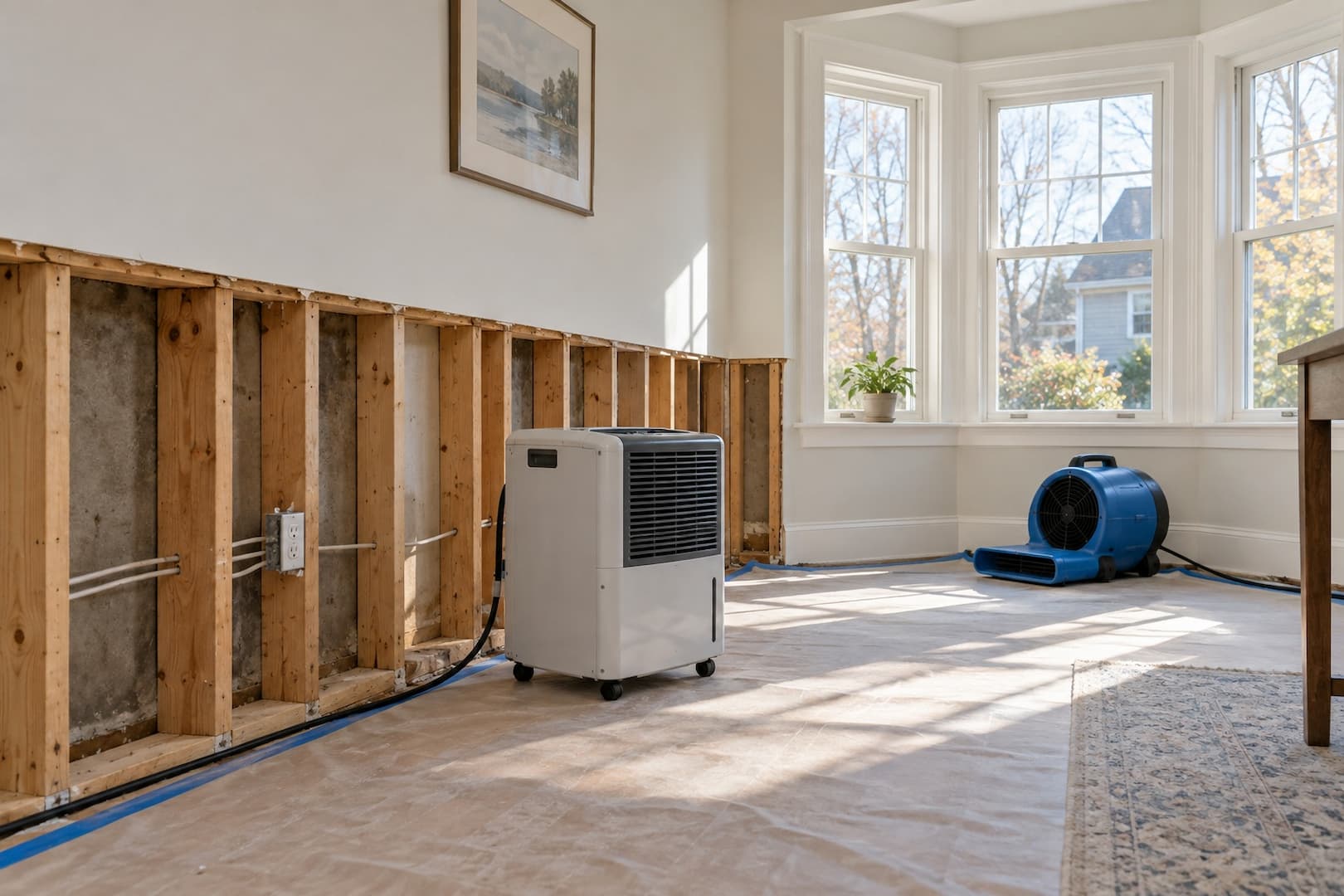
Once recoverable water is removed, BRG evaluates what remains in the structure. Flooring, framing and wall cavities do not dry at the same rate. Air movement and dehumidification need to suit the materials and the available access.
Readings taken during the work show whether that plan is working. Where moisture remains high, the next step may involve a revised equipment arrangement or additional access. A dry surface, warm room or quieter machine does not prove that the hidden layer has reached an appropriate condition for repair.
Discuss the daily effect of equipment before installation. If it blocks a necessary route or disrupts a bedroom, tell the team; switching equipment off without a plan can interrupt drying. Before drying ends, ask what the readings show and which repairs remain.
The loss includes what is inside
Contents need decisions before a room is cleared
A bookcase full of records, upholstered chairs or a family photograph collection can complicate a seemingly small loss. Identify priorities early and make an inventory of affected belongings. Separate clean contents from items that need assessment, without spreading residue through unaffected areas.
After smoke exposure, BRG considers the surface and residue before cleaning. Rubbing soot with the wrong method can drive it deeper into a finish or fabric. Odor work needs to address the source, which may include porous contents as well as the room.
Water exposure raises different questions: how long the item stayed wet, what the water contained and whether its construction allows cleaning and drying. Some pieces can be treated; others have permanent damage. Tell the team what you hope to save. Contamination or lost strength can still rule out keeping an item.
Photograph items before disposal and keep the decision record with the claim file. If valuables need specialist handling, raise that during the assessment rather than after the general contents have been moved.
When a musty smell keeps coming back
A room that smells musty after every humid spell or rain event needs a moisture investigation. The same applies to growth at the back of a closet or under a sink. Air freshener and repainting cannot establish why the material stays damp.
The remediation plan should show the affected areas and explain how the moisture problem will be corrected. Containment, cleaning and controlled removal may form part of that scope. Avoid disturbing growth or sending fan-driven air from the affected space into occupied rooms before the area is evaluated.
Review the estimate as two connected scopes
The immediate work
Assessment, water extraction, selective removal, cleaning and drying address the active damage. Price depends on the source, access, affected materials and extent. Ask which findings could change the scope and how proposed additions will be approved.
The repair work
Wallboard, flooring, cabinetry and finishing belong in the repair discussion once the condition of the structure is known. Source correction may involve a separate trade. Before finishes cover the assembly again, confirm who is doing each repair and which job needs to happen first.
For insurance, keep the discovery date, photos and invoices together. BRG can provide restoration records, while the insurer decides coverage under the policy. Review deductibles and any source-specific limits directly with the insurer; an estimate or claim number is not a payment guarantee.
Fit the plan to an occupied home or working property
In a home, tell us which rooms are essential and whether there are access needs, pets or children. The team can discuss separation and contents protection. Safe occupancy depends on the damage, utilities and available routes; some work areas need to stay closed.
For a Lynnfield office, shop or managed building, identify the decision-maker and the operations that depend on the damaged space. Commercial restoration planning can address affected inventory, tenant coordination and access for follow-up visits. Reopening depends on what remains to be cleaned, repaired or made safe.
Before arranging restoration in Lynnfield
Can you assess a kitchen leak without committing to a full demolition?
Yes. The assessment considers how water traveled and which materials are affected. Opening a limited area may be enough to understand the assembly, though inaccessible moisture or damaged materials can justify a larger scope. Ask for the reason behind each proposed removal.
Do I have to replace all flooring after a water leak?
Not necessarily. The water source, floor construction and condition determine the options. Some assemblies can dry in place; others have trapped moisture, separation or permanent swelling. BRG can explain the findings before the repair choice is made.
What if the backup came from a septic system?
Tell the team before the visit and keep the area closed to people and pets. The interior needs a contamination assessment and cleanup plan, while the system failure needs the appropriate septic service. Do not assume every Lynnfield property has the same wastewater arrangement.
Will restoration fix a recurring roof leak?
Interior restoration addresses the resulting wet or damaged materials. The entry point also needs repair by the appropriate trade. Coordinate both scopes, including any storm or ice dam damage, so newly dried materials are not exposed again.
How can I keep track of a changing scope?
Ask what the original estimate includes, which conditions remain concealed and how additional findings will be documented. Keep approvals, photos and invoices together. Name one contact for the owner or manager so the team receives clear instructions.
Get the damage assessed before the scope grows
Call 617-202-3772 for restoration help in Lynnfield. Tell us what has changed in the building and what you need to protect. BRG can discuss the immediate response, access and the information needed for an assessment.
617-202-3772- The address and safe point of entry
- When the damage appeared and any recurring pattern
- Affected finishes, furniture or business contents
- Your insurer's claim contact, if a claim is open