
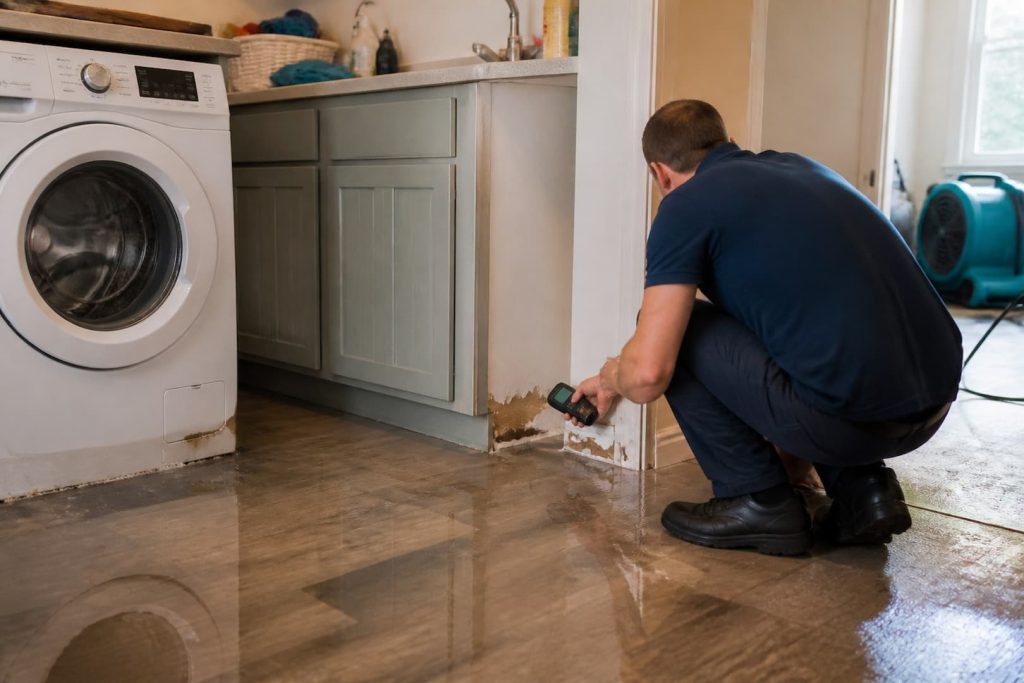
A washing-machine loss can release water faster than a mop can manage. A ruptured supply hose remains pressurized even when the washer is off; a drain overflow may contain detergent, lint and soil; a front-loader door leak may recur only during a certain part of the cycle. The first job is to stop the correct source without crossing wet electrical areas.
If the plug, outlet, power strip or machine controls are wet, do not touch them. Shut off the washer supply valves only from a dry position. If the water continues, use the known building main or call a plumber. Appliance diagnosis comes after immediate water and electrical safety.
Which failure occurred?
| Pattern | Likely source | What it means for cleanup |
|---|---|---|
| Water sprays behind the washer | Hot or cold supply hose, valve or fitting | Potentially large Category 1 release that can continue with machine off |
| Water rises from standpipe during drain cycle | Blocked, undersized or failed drain connection | Wash water may contain detergent, soil and microbial contamination |
| Water at front door | Door not latched, damaged gasket, trapped item or excess suds | Usually cycle-dependent; inspect flooring in front and below |
| Water beneath machine | Pump, tub, internal hose or dispenser leak | Appliance service needed; source may be hidden inside cabinet |
| Floor drain backs up | Drain or sewer problem unrelated to washer components | Potentially contaminated water; plumber or sewer professional needed |
| Leak only from wall/ceiling nearby | Other plumbing, roof or condensation source | Do not replace the washer without tracing the path |
Safe first steps
- Stop operation. Do not restart the cycle to reproduce the leak while water is near electricity.
- Close supply valves if safely reachable. A failed supply hose can continue flowing independent of the controls.
- Protect the lower level. Keep people away from a bulging ceiling or wet light fixture below.
- Document source and spread. Photograph connections, drain position, water line and affected rooms.
- Call the right source trade. A plumber handles valves and drains; an appliance technician diagnoses internal components.
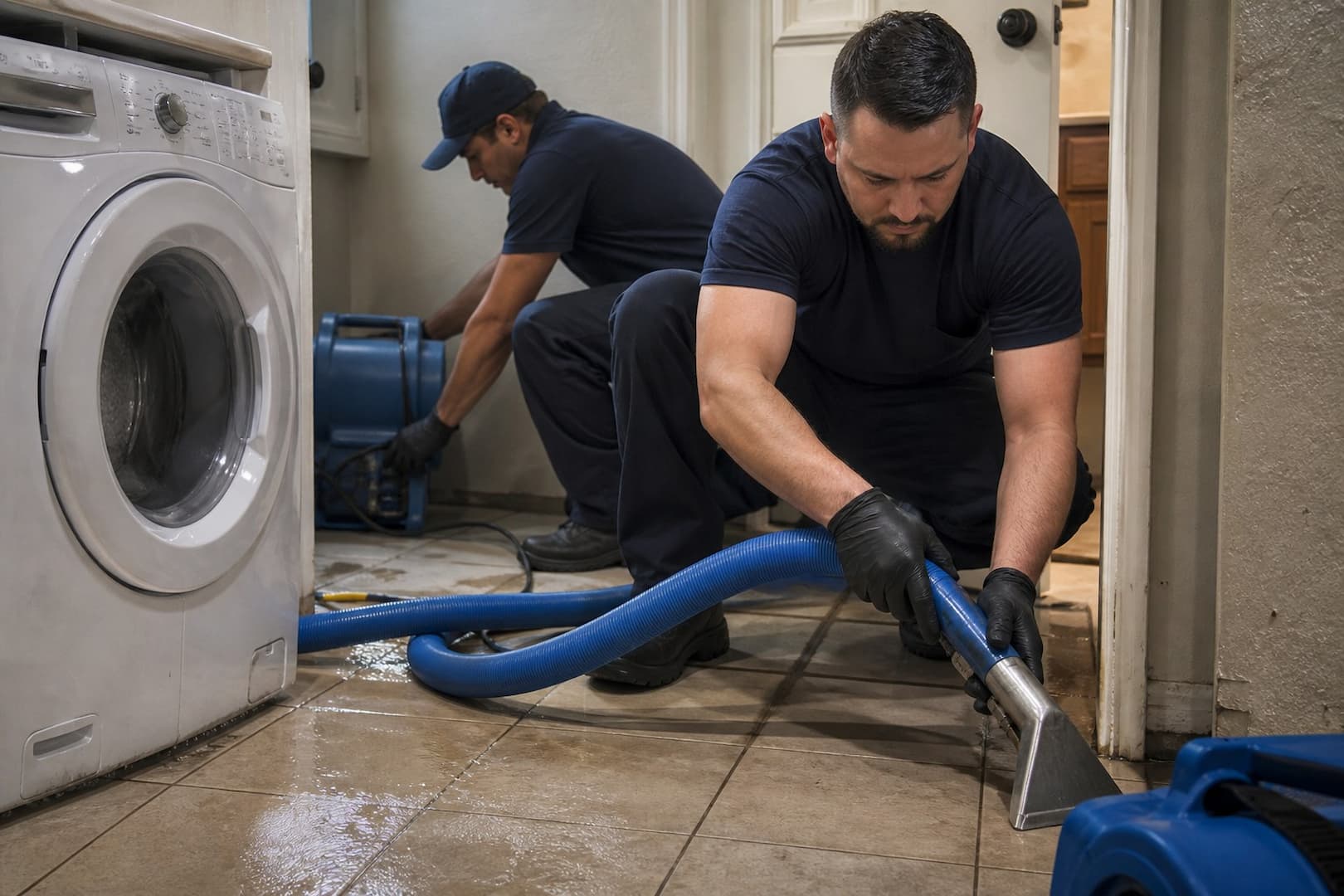
- Extract water promptly. Remove the reservoir before relying on fans or dehumidifiers.
- Inspect layers. Laundry flooring, underlayment, wall bases and the ceiling below can remain wet.
Is washing-machine water clean?
It depends on the source and stage. Water from a broken potable supply hose begins differently from water discharged after washing diapers, work clothes or pet bedding. Detergent does not disinfect the building, and clear appearance does not establish sanitation. Water that enters a dirty standpipe, floor drain, wall cavity or old carpet can pick up additional contamination.
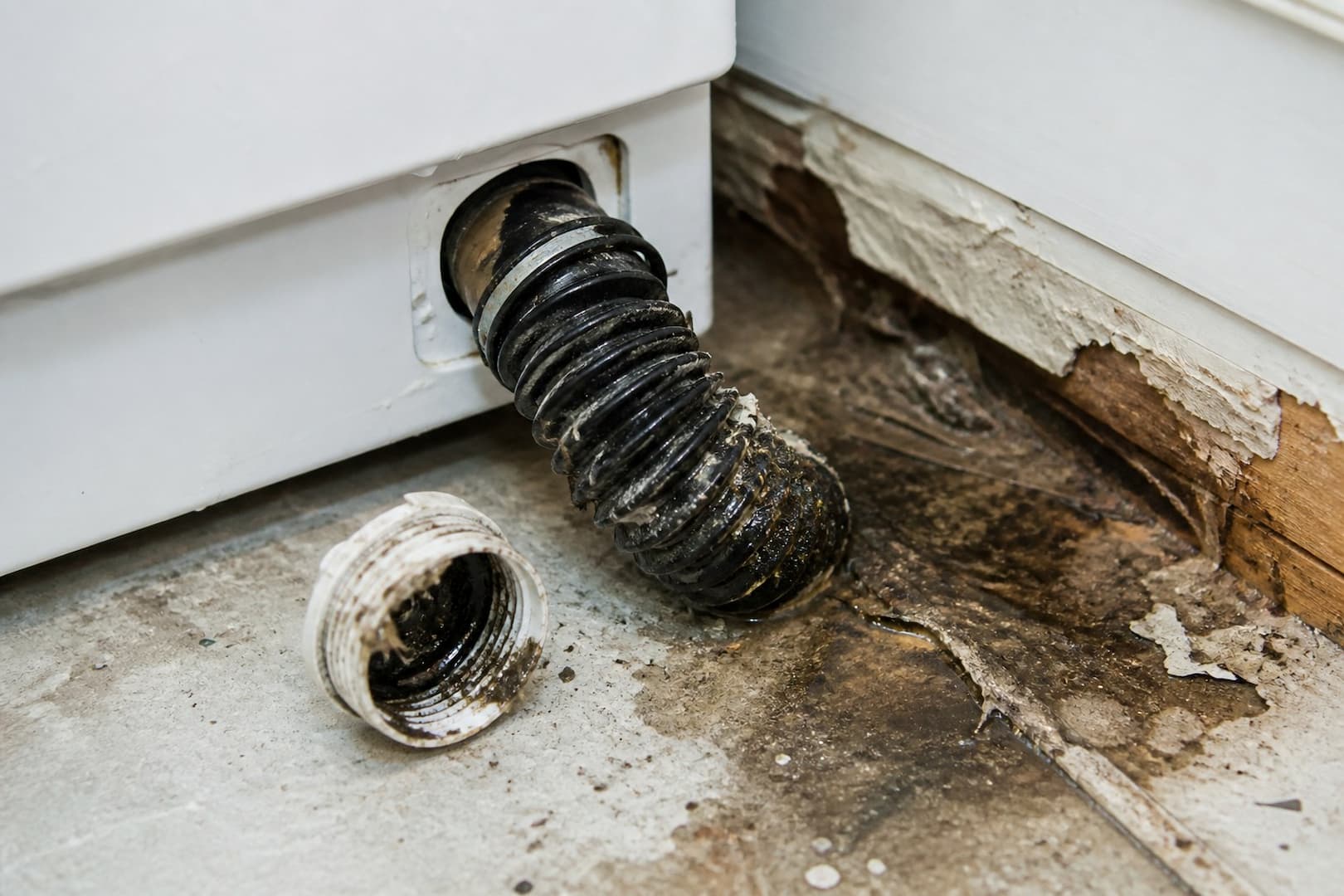
Tell the restoration team what was in the load and whether a drain or sewer backed up. That context affects PPE, material salvage and cleaning. Do not use an ordinary household vacuum for water, especially when contamination is possible.
Flooring and wall damage
Sheet vinyl can trap water at seams and perimeter cuts. Floating laminate or luxury vinyl can carry water through joints and conceal wet underlayment. Tile may survive, while grout joints and perimeter gaps allow water into backer board or subfloor. Hardwood can cup as the underside absorbs more water than the face.
Drywall wicks upward from the floor, and insulation can hold water against paper and framing. Baseboard removal may create inspection access, but a universal four-, twelve-, or twenty-four-inch cut is not a sound rule. The boundary follows water height, wicking, contamination, condition and readings.
Carpet and ceiling below
A carpet face can seem dry while the pad and subfloor are saturated. Effective extraction reaches through the carpet system, and pad may need to be lifted or removed. If water reached the level below, keep away from sagging drywall and wet fixtures. The stain location may not align with the washer because water travels along joists and penetrations.
Drying and verification
Water extraction removes free water; structural drying addresses what materials absorbed. A professional plan may use targeted floor drying, dehumidification, air movement and selective openings, but equipment goes in only after electrical and contamination conditions are cleared.
Drying is complete when the affected layers reach a stable, defensible moisture condition compared with appropriate references—not simply when the laundry room smells normal. Record readings by location and material so reconstruction does not trap moisture.
Insurance and evidence
Keep the failed hose, valve, pump or gasket when practical, along with appliance model and age, photographs and repair notes. Document both the laundry room and lower level. Ask the insurer about sudden discharge, appliance repair, resulting damage, mold limits and whether emergency mitigation requires preauthorization; take reasonable protective steps even while the claim is being opened.
Preventing another washer loss
- Inspect hot and cold hoses and fittings for bulges, rust, abrasion and seepage.
- Replace hoses according to appliance and hose manufacturer guidance.
- Close supply valves during extended absence if the system and manufacturer allow it.
- Use a drain pan and lawful drain where feasible, especially above finished space.
- Keep the standpipe and drain connection correctly sized and secured by a plumber.
- Avoid overloading and use the detergent type and amount specified for the machine.
- Install a floor-level water alarm; consider an automatic shutoff for high-consequence locations.
- Do not push the washer tightly enough to kink hoses or damage the drain line.
Washer-overflow questions
Can I run one test cycle after mopping up?
Not until the electrical area is dry and the source has been diagnosed. A test can release another full load or pressurized supply flow.
Does the washer have to be replaced?
Not necessarily. An appliance technician decides whether the machine is repairable. A submerged or electrically wet component needs different evaluation from an external hose failure.
Will a dehumidifier dry under floating flooring?
Room dehumidification helps, but trapped water may require extraction, edge access or lifting. Confirm the underlayment and subfloor rather than assuming air reaches them.
Identify the cycle stage and component
A burst supply hose may release pressurized water until the valve is closed. An overfill can involve the inlet valve, pressure sensor, control, or drain restriction. A drain-hose failure appears during pump-out. Door-gasket leaks occur during tumble and may worsen with trapped debris or oversudsing. Record the cycle stage, error code, load, detergent, and whether water continued after the machine stopped.
| When leak occurs | Likely branch | Who diagnoses |
|---|---|---|
| Machine off | Supply valve, hose, fitting | Plumber |
| Fill stage | Inlet/level control | Appliance technician |
| Wash/tumble | Door seal, tub, detergent | Appliance technician |
| Drain/spin | Pump, filter, drain hose, standpipe | Appliance technician/plumber |
| Water at standpipe | Drain restriction or poor connection | Plumber |
| Leak only under heavy loads | Balance, seal, intermittent overflow | Appliance technician |
Laundry rooms spread water vertically and horizontally
Upper-floor machines can release water through floor penetrations into ceilings and walls below. On a slab, water can run under floating flooring and cabinets. A pan may contain a small leak but overflow during a hose rupture. Inspect the washer footprint, wall base, adjacent room, hallway transition, subfloor, and lower level. Do not assume the drain in the room captured water unless the floor is sloped and the drain is clear.
Move the machine only after water, electricity, gas (for adjacent dryers), anti-tip or stacking hardware, and hose conditions are safe. Photograph connections and retain failed parts when relevant. A stacked unit may require an appliance crew.
Wash water is not the same as supply water
A supply-line release may begin as category 1. Water from the tub or drain contains detergent, soil, lint, body oils, and whatever was in the load. It can deteriorate further with time and contact. Classification influences carpet, pad, drywall, insulation, and contents decisions. Clear appearance does not settle the category.
Use the water category guide before setting ordinary household fans. If water reaches electrical devices or contaminated materials, isolate the area.
Dry the layers, not the laundry-room air
- Extract free water from accessible surfaces
- Remove wet textiles to a controlled area and document damaged loads
- Open or remove toe-kicks/baseboards when evidence shows water behind them
- Inspect flooring, underlayment, subfloor, wall cavities, and ceiling below
- Set dehumidification and air movement after contamination controls
- Track affected and reference readings
- Restore flooring and trim only after stable acceptance
Water-damage cleanup connects the appliance event to the building assembly. An appliance technician should confirm the machine and installation before reuse.
Multi-unit buildings need neighbor and management checks
A laundry leak can follow pipe chases and floor penetrations into another unit before it appears in the hallway. Notify building management promptly, document common areas, and check the unit below with permission. The building may control shutoffs, drainage, fire-rated penetrations, and approved contractors. Do not seal access openings until those shared assemblies are restored.
Prevention requires more than braided hoses
Braided supply hoses reduce some risks but still age, kink, abrade, and fail at fittings. Keep valves accessible, avoid forcing the machine against lines, secure the drain hose according to appliance and plumbing requirements, and do not overload the washer. Inspect hoses and connections periodically and after moving the unit. Use a pan and leak sensor where appropriate, with a drain that is correctly designed and maintained.
Automatic shutoff devices vary: some sense water on the floor, some monitor flow, and some connect to appliance operation. Test the installed system and know what happens during power or network failure. A device no one receives alerts from is not meaningful redundancy.
Diagnose the leak by the part of the cycle that was running
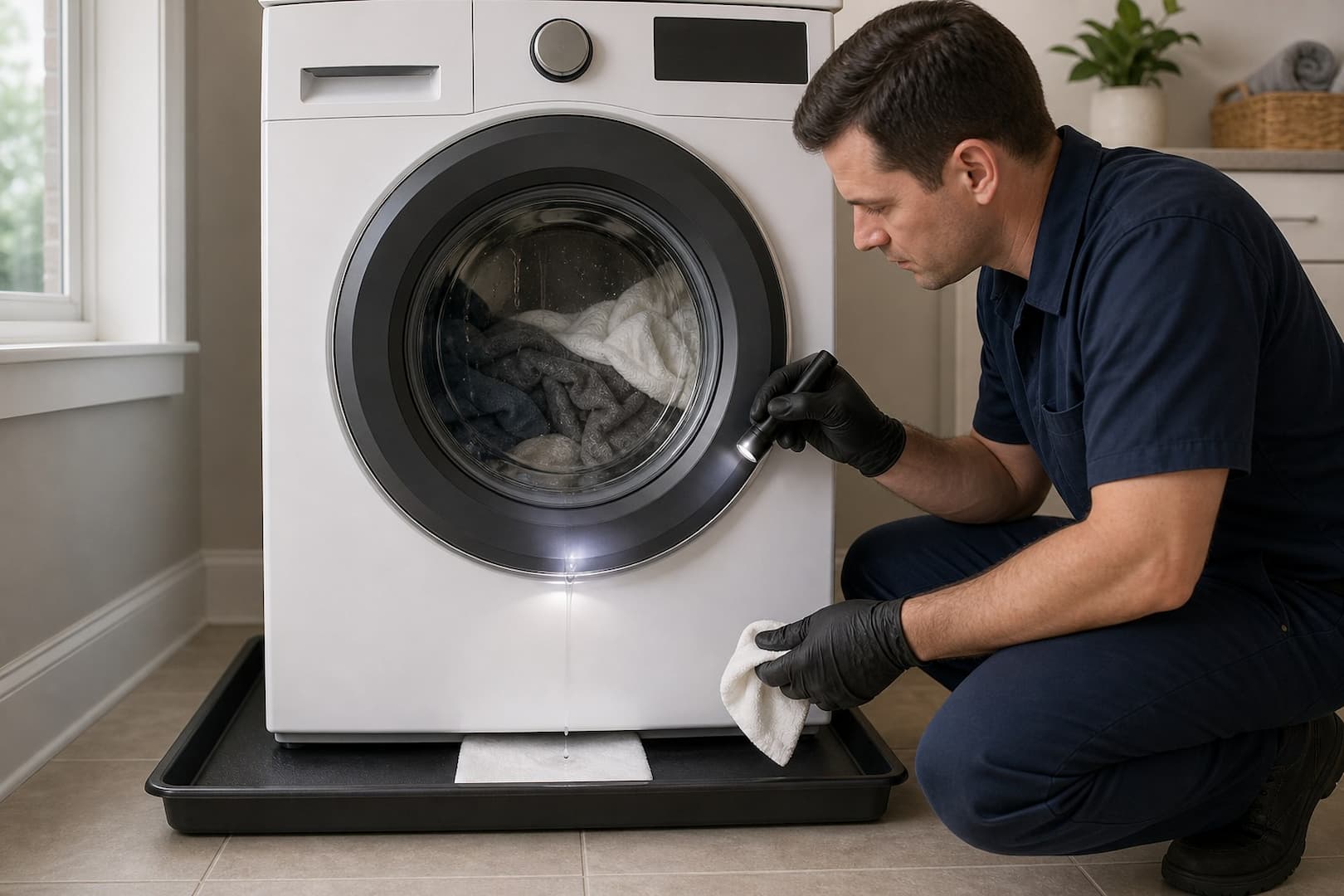
A washing-machine loss is not one generic overflow. A pressurized supply hose can release continuously, a standpipe can overflow only during drain, a door boot can leak during tumbling, and a cracked pump or internal hose can wet the cabinet base before water appears on the floor. Record the selected cycle, approximate load, detergent type, machine position, error code, valve position, and whether water continued after power was stopped. Do not restart the appliance simply to reproduce the leak when water may reach wiring or the floor below.
| When water appeared | Likely branches to investigate | What should be tested by a qualified person |
|---|---|---|
| Even while machine was idle | Supply hose, shutoff, inlet valve, nearby plumbing | Isolate pressure and inspect connections before reconnection |
| During fill | Inlet hose/valve, dispenser, pressure sensing, tub connection | Controlled fill observation after the building is safe |
| During agitation or tumbling | Door boot, tub seal, internal hose, oversudsing | Load-appropriate test and inspection inside cabinet |
| During drain or spin | Pump, filter, drain hose, standpipe restriction or siphoning | Appliance drain rate and plumbing capacity |
| After the cycle | Slow cabinet-base leak, residual standpipe spill, migrating water | Dry inspection plus repeat moisture survey |
Separate appliance failure from drain-system failure
A wet floor behind the washer does not prove the appliance failed. Pulling a large load of water through an undersized, obstructed, poorly vented, or badly connected standpipe can overflow the drain. Conversely, a loose drain hose can mimic a plumbing backup. A plumber may need to inspect the standpipe and branch while an appliance technician evaluates the machine. Restoration personnel document the water path and stabilize materials; they should not guess which trade owns the cause.
Preserve the failed hose, clamp, valve, pump, or connector when safe and when a claim, warranty, installer, or manufacturer may need it. Photograph connections before they are disturbed. Write factual notes such as “water observed at rear supply coupling” rather than assigning liability.
Map water horizontally and vertically
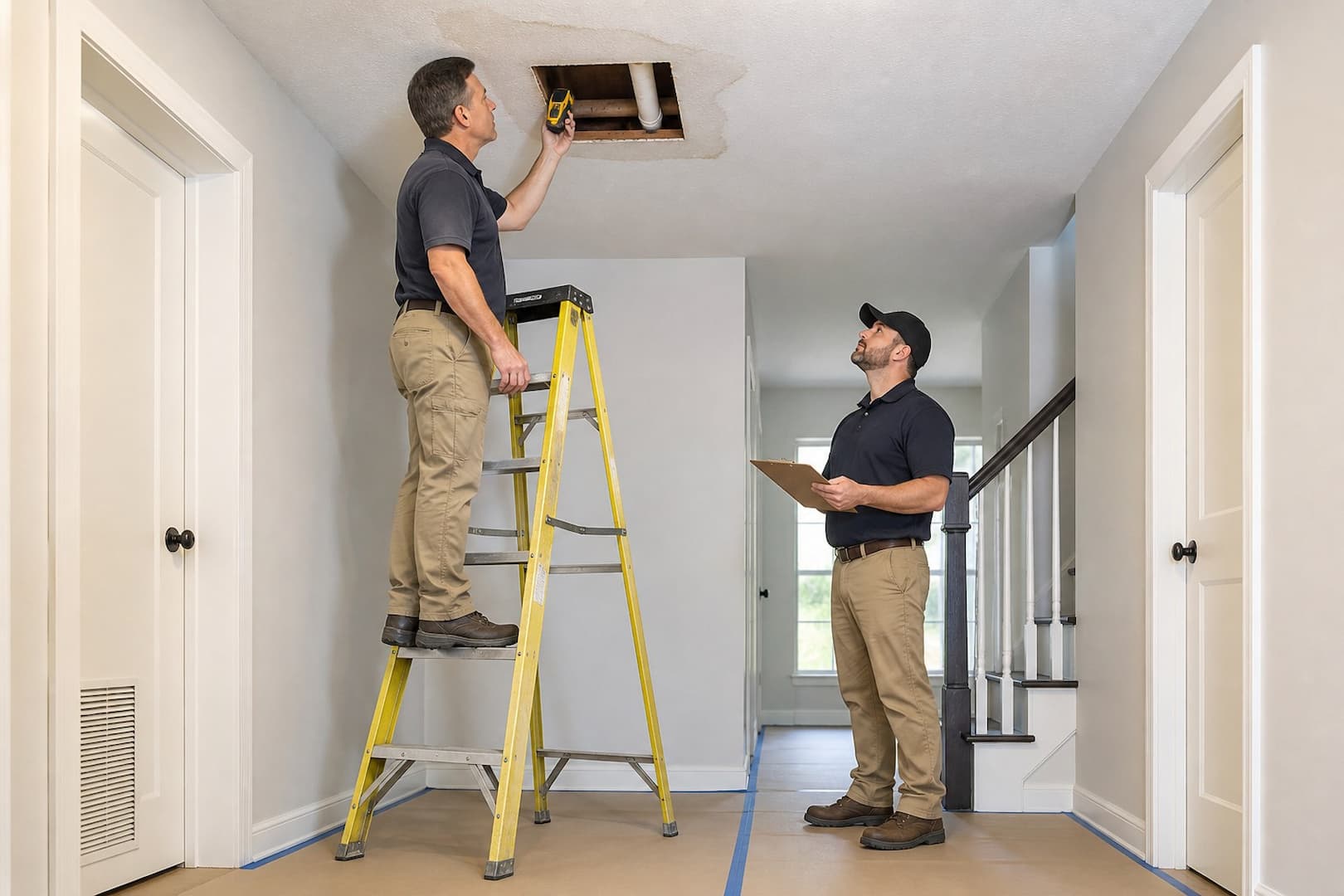
Laundry rooms are often small, but the loss can be large. Water runs under the machine pedestal, baseboard, floating floor, cabinets, hallway threshold, sill plate, and partition track. On upper floors it can follow plumbing penetrations or joists and appear at a light, smoke alarm, ceiling seam, or wall several feet away. In condominiums, the unit below and common assemblies may need prompt notice and inspection.
| Assembly | Hidden wet locations | Access question |
|---|---|---|
| Sheet vinyl over underlayment | Seams, perimeter, fasteners, swollen underlayment | Can an edge be inspected without destroying the field? |
| Floating plank floor | Pad, vapor layer, seams, wall perimeter | Must rows be lifted to expose trapped water? |
| Tile floor | Cracks, transitions, wall base, substrate | Is the waterproofing continuous and bonded? |
| Laundry pan | Beneath pan, drain fitting, wall gap | Did water reach the pan drain or bypass it? |
| Ceiling below | Insulation, resilient channel, light boxes, joist bays | Is electrical clearance required before access? |
Build the drying plan around connected layers
Extraction from the visible floor is only the start. Remove movable contents safely, protect unaffected rooms, and inspect the lowest and most enclosed layers. A nonporous finished surface can hide wet padding or underlayment. Baseboard removal may expose a wall edge, but it does not automatically ventilate every cavity. Drying through targeted access should be monitored at repeatable points against a dry comparison area.
Laundry machines are heavy and can damage wet flooring when rolled. They also have water, drain, electrical, and sometimes gas connections. Use qualified movers or trades where needed; do not tip or slide the machine in a way that releases more water or damages a pan and hose.
Treat supply water and drain water according to the actual path
Water from a potable supply line may begin relatively clean, but it can collect detergent, soil, lint, drain residue, pet waste, or contaminants as it moves. Water discharged from the machine has contacted clothing and the appliance system. A standpipe backup can introduce drain contamination. Time, temperature, affected materials, and cross-contamination all influence cleaning and removal decisions; appearance alone is not a category test.
Use a multi-unit communication checklist
- Stop the source and notify building management or the responsible contact.||Check the unit below and adjacent common corridors without waiting for a stain to grow.||Document the appliance, connections, floor transitions, penetrations, and affected contents.||Clarify who authorizes emergency access, restoration, appliance testing, and reconstruction.||Maintain quiet-hour, elevator, parking, dust-control, and resident-safety rules.||Provide drying updates with locations and readings, not vague statements that the room is “almost dry.”
These steps limit secondary damage without making policy or responsibility conclusions. Unit owner, association, landlord, tenant, insurer, installer, and appliance manufacturer can have different contractual roles.
Prevent the next laundry loss as a system
- Inspect supply hoses and connections periodically and follow manufacturer replacement instructions.||Keep shutoffs visible, operable, and reachable without moving the machine.||Use a properly sized and secured drain hose; do not force it into a standpipe in a way that defeats drainage or venting.||Keep the laundry pan and drain functional where installed, but do not assume a shallow pan can contain a high-flow hose failure.||Consider a listed leak sensor or automatic shutoff appropriate to the installation.||Avoid running the washer when nobody can respond, especially above occupied space.||After service, observe a complete cycle and inspect connections and the floor below.
Close the loss with two witnessed tests
The building release and appliance release are separate. First, verify that the floor, walls, ceiling below, and concealed layers meet the restoration drying criteria. Second, after plumbing or appliance repairs, conduct a controlled full-cycle test under observation, checking fill, tumble, drain, spin, hoses, standpipe, pan, and previously wet areas. Recheck moisture after the test. A dry room with an unproven washer is unfinished work; a repaired washer over a wet assembly is also unfinished.
Sources and further reading
- CDC: Guidelines for Cleaning Safely After a Disaster
- Boston.gov: Recovering from a Flood
- Massachusetts DPH and MassDEP: Flooding and Sewage Back-ups Home Care Guide
- Massachusetts DPH: Quick Reference — Water Damage Response in Buildings
When the laundry-room floor is only the beginning
Boston Restoration Group can extract water, inspect connected floor and wall layers, set a drying plan and document damage while an appliance technician or plumber corrects the source.