
Residential Odor Damage Restoration in Boston
A persistent odor is evidence, not the whole diagnosis. BRG follows the history, materials, moisture, contents, drains, cavities, and air pathways to find what is producing or holding the odor, then removes or cleans that source before selecting any supplementary treatment.
- Smoke and cooking residues
- Sewage and microbial odors
- Pet and animal contamination
- Contents, cavities, and HVAC pathways
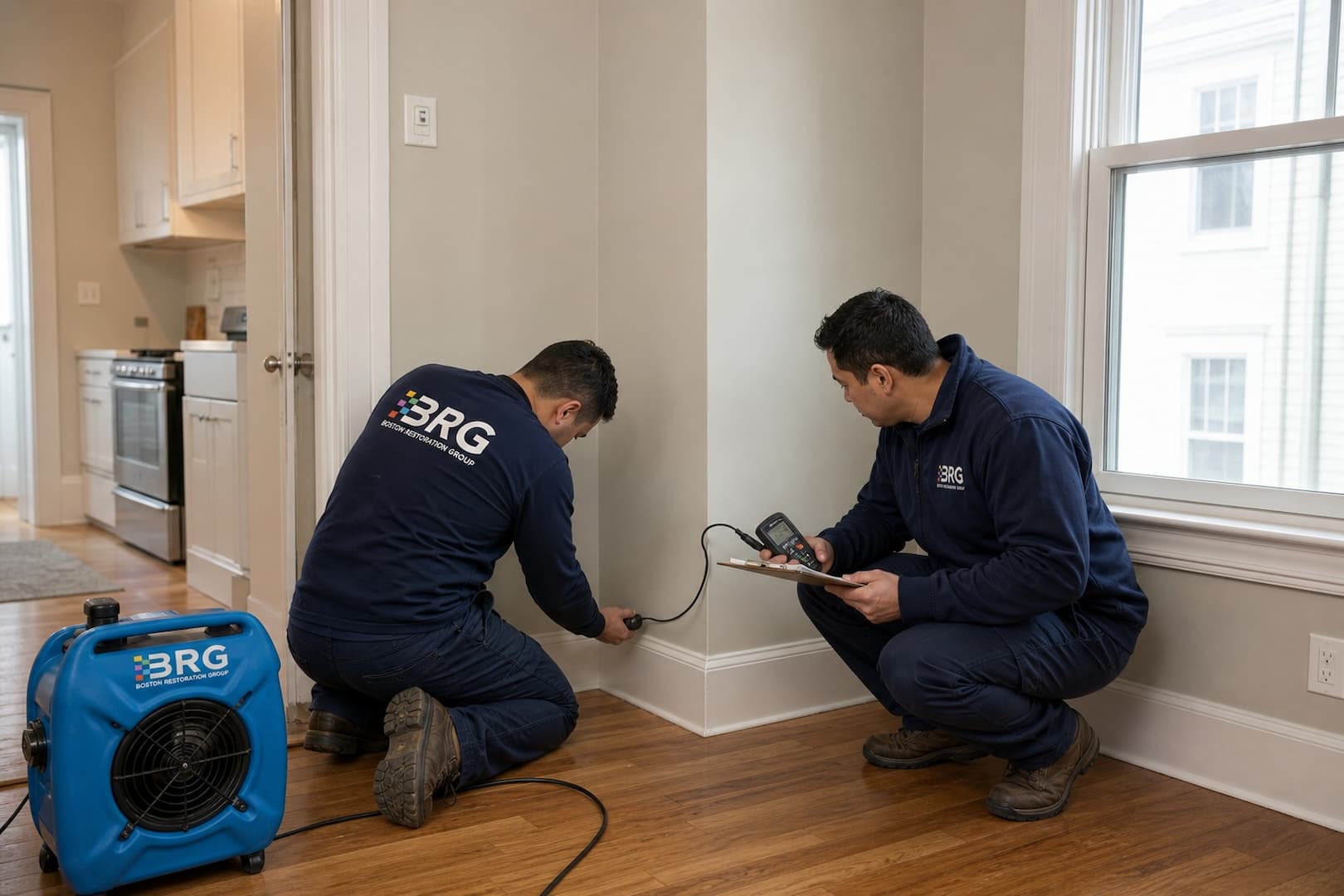
Name the event
Fire, water, sewage, pets, decomposition, cooking, chemicals, and vacancy create different source patterns.
Locate the reservoir
Carpet pad, subfloor, framing, cabinets, insulation, contents, and drains can hold odor after air fresheners fade.
Clean before treatment
Source removal and material cleaning come before fogging, oxidation, sealing, or other supplementary methods.
Verify in normal conditions
A result should be reviewed after ventilation and treatment effects settle, not while fragrance masks the room.
The correct first step depends on what could be producing the odor
Some sources are routine restoration work; others require immediate hazard control or a specialty trade.
| Odor history | Possible reservoirs or pathways | First decision |
|---|---|---|
| Fire, smoke, or long-term cooking residue | Paint, cabinets, textiles, insulation, HVAC returns, and concealed soot | Map residue and heat history; clean or remove source material before deodorizing |
| Sewage, septic, or drain odor | Contaminated porous materials, traps, drains, piping, wall bases, and crawlspaces | Correct plumbing or septic source and use contamination-control cleanup |
| Musty or earthy odor | Wet drywall, insulation, framing, carpet backing, stored contents, condensation areas | Investigate moisture and visible or hidden mold conditions |
| Pet or animal contamination | Carpet pad, subfloor, baseboards, cabinets, insulation, nests, and wall voids | Find full affected boundary; coordinate pest or wildlife removal when active |
| Decomposition or bodily-fluid event | Porous finishes, seams, subfloor, contents, and concealed migration | Confirm scene release and use controlled trauma or biohazard cleanup |
| Chemical, fuel, or gas-like odor | Appliances, tanks, drains, products, combustion equipment, or spills | Leave the area and contact emergency services, utility, fire department, or hazardous-material specialist as appropriate |
Odor moves through pressure, air leakage, and porous materials
An odor noticed in a bedroom may originate below it, inside a chase, at an air return, behind a cabinet, or in contents moved from another room. Temperature, humidity, HVAC schedules, closed doors, and outdoor conditions can change when it is noticeable.
BRG records when the odor appears, where it is strongest, prior events and treatments, material transitions, moisture, drains, cavities, and ventilation pathways. Controlled access may be needed when the evidence points behind a finish. Broad demolition is not a substitute for a source hypothesis.
Do not mix odor chemicals
Household products can react, damage finishes, create respiratory hazards, or erase clues. Ventilate only when it is safe and appropriate for the suspected source, and tell BRG what has already been applied.
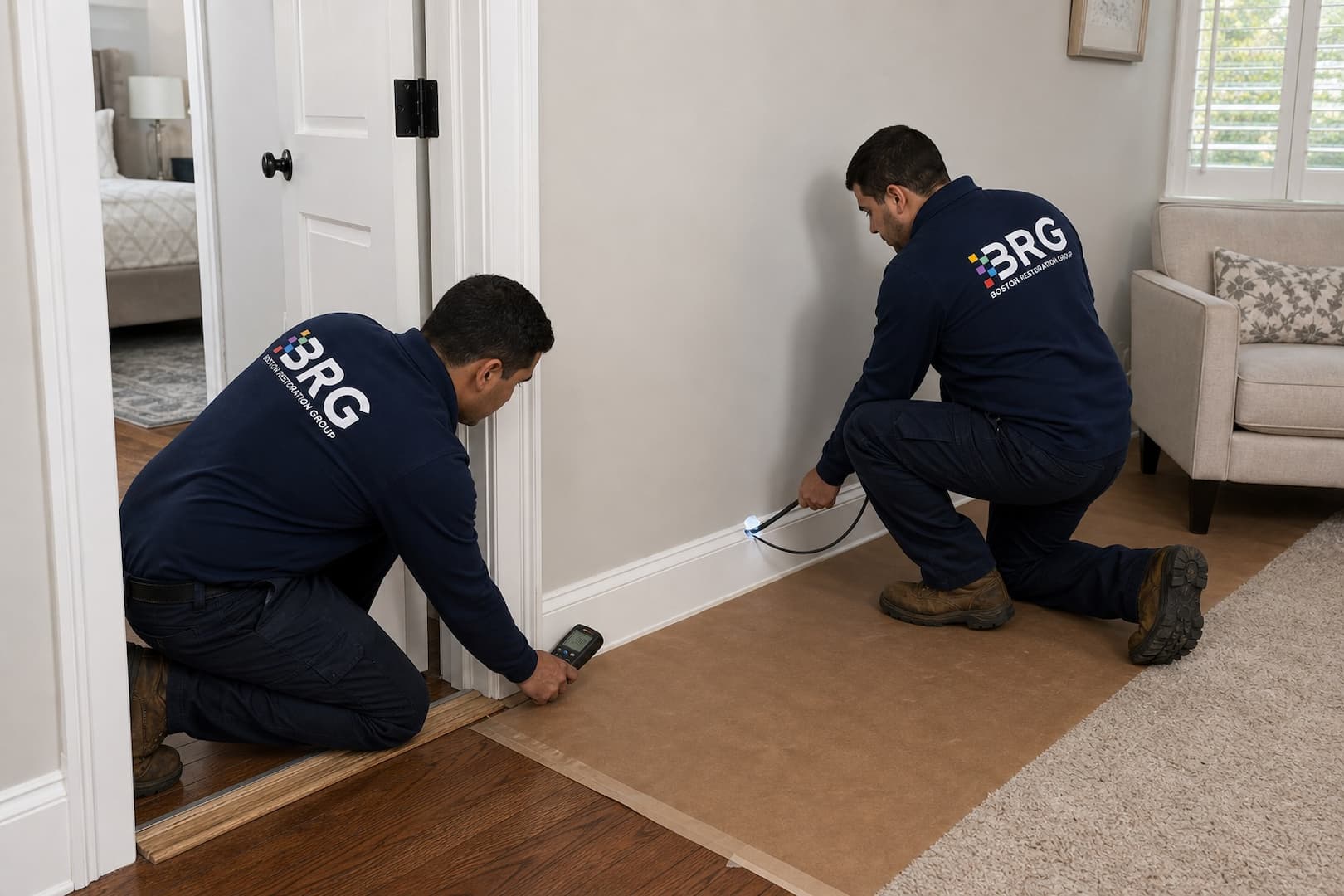
Deodorization is a finishing step, not the opening move
The sequence avoids spending money on treatment while odor-bearing material remains in place.
History and safety screen
BRG identifies the event, timing, occupants, products used, utilities, contaminants, and any emergency or specialty referral needed.
Source and pathway investigation
Rooms, contents, materials, drains, moisture, HVAC pathways, and concealed areas are compared to form and test a source hypothesis.
Material and contents decisions
Odor reservoirs are cleaned, selectively removed, or referred according to porosity, condition, value, and access.
Detailed cleaning
Reachable retained surfaces receive a process suited to the residue and material. HVAC or specialty systems are coordinated when involved.
Supplementary treatment and review
Only the remaining condition guides sealing, adsorption, hydroxyl, thermal, or other suitable methods, followed by review under normal conditions.
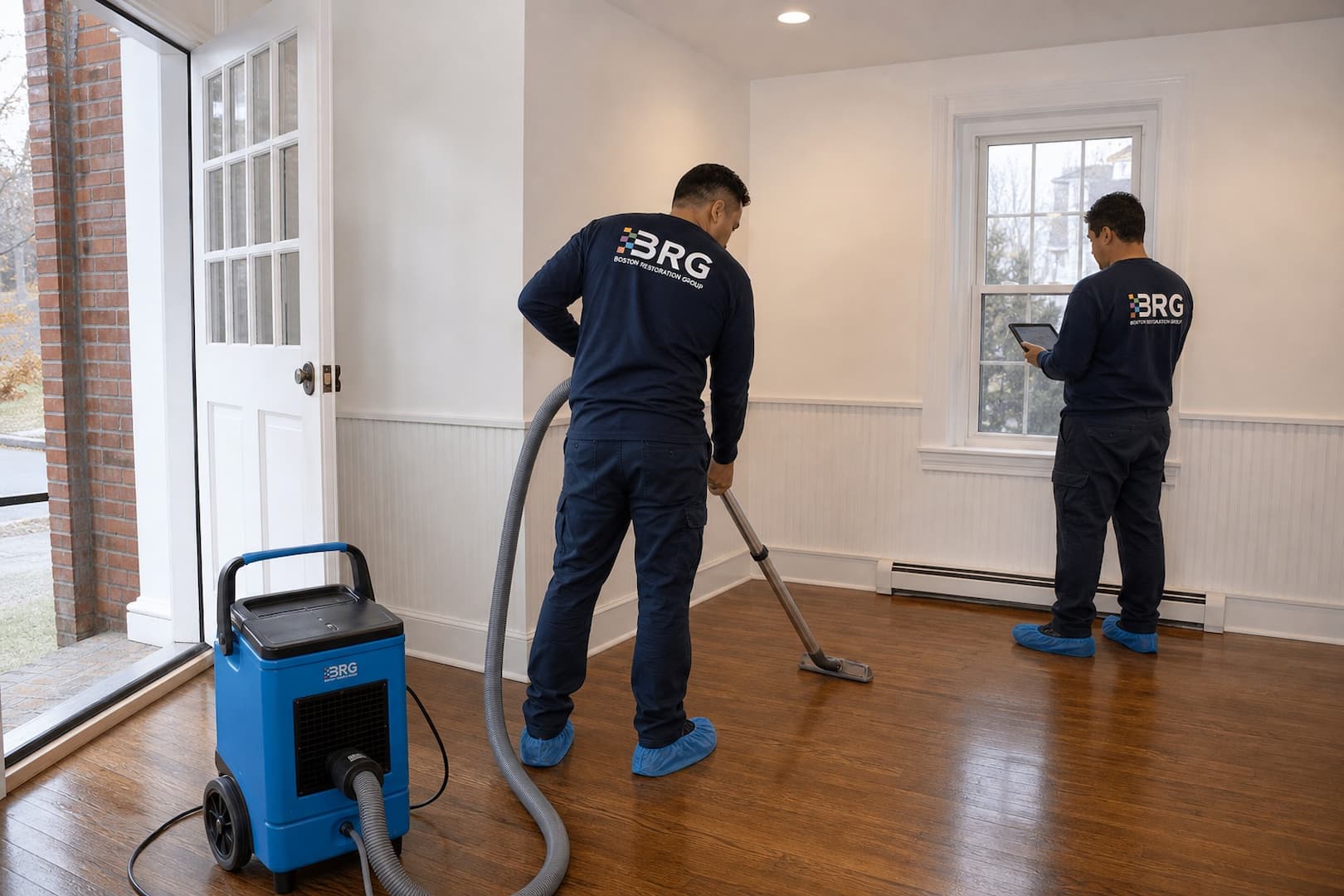
A machine cannot make inaccessible residue disappear
Air scrubbers capture certain airborne particles; they do not remove residue embedded in carpet pad or behind a wall. Sealers can isolate suitable clean, dry, prepared substrates; they should not be used to bury active moisture, contamination, or loose soot. Oxidizing processes require material, occupancy, and exposure controls and are not a default answer.
BRG documents which source materials were removed, what was cleaned, which treatment was selected, areas not accessed, and repairs still required. This keeps a short-term fragrance change from being mistaken for completed restoration.
Odor review is strongest when the building returns to ordinary use
Immediately after cleaning, ventilation, or treatment, the space may not represent its normal condition.
Settle the treatment effect
Follow the equipment and re-entry plan, then review after temporary product or ventilation effects have dissipated.
Restore normal air pathways
Evaluate with normal doors, HVAC, temperature, and humidity when the system is safe and intended to operate.
Use more than one observer
Odor sensitivity varies. The project lead and authorized owner can compare defined rooms and control areas.
Reopen the source hypothesis
If odor returns, revisit reservoirs and pathways rather than simply applying more fragrance or treatment.
Residential odor restoration questions
Describe what happened before the odor, when it is strongest, and what has already been cleaned or treated.
Can BRG guarantee that no one will ever notice an odor?
Odor perception varies, and concealed or recurring sources may remain outside the initial scope. BRG defines the source areas, work performed, limitations, and review conditions rather than offering an absolute sensory guarantee.
Will an ozone machine solve the problem?
No machine substitutes for source removal and cleaning. Oxidizing treatments also have occupancy, exposure, material, and application constraints. BRG selects supplementary methods only after the source condition is understood.
Why did the odor return after painting?
The coating may not have been compatible with the residue or substrate, odor-bearing material may remain behind the finish, or moisture and air pathways may still be active. The source and preparation need reassessment.
Can musty odor confirm mold?
A musty odor can justify a moisture and mold investigation, but odor alone does not identify the organism or full location. Inspection focuses on source conditions and accessible materials.
Does insurance cover odor removal?
Coverage depends on the event, policy, resulting damage, exclusions, limits, and maintenance history. BRG documents observed conditions and work; the carrier decides coverage.
Request residential odor damage assessment
For a non-emergency odor, send the address, rooms, event history, timing pattern, moisture or smoke history, contents affected, HVAC conditions, and every product or treatment already used.
617-202-3772- Do not mix cleaners, deodorizers, or oxidizing products.
- Mention sewage, bodily fluids, pests, fuel, combustion, or chemical conditions directly.
- Tell BRG whether the property is occupied and which rooms must remain in use.
Describe the odor history
What changed before the odor is often more useful than an adjective for the smell.