
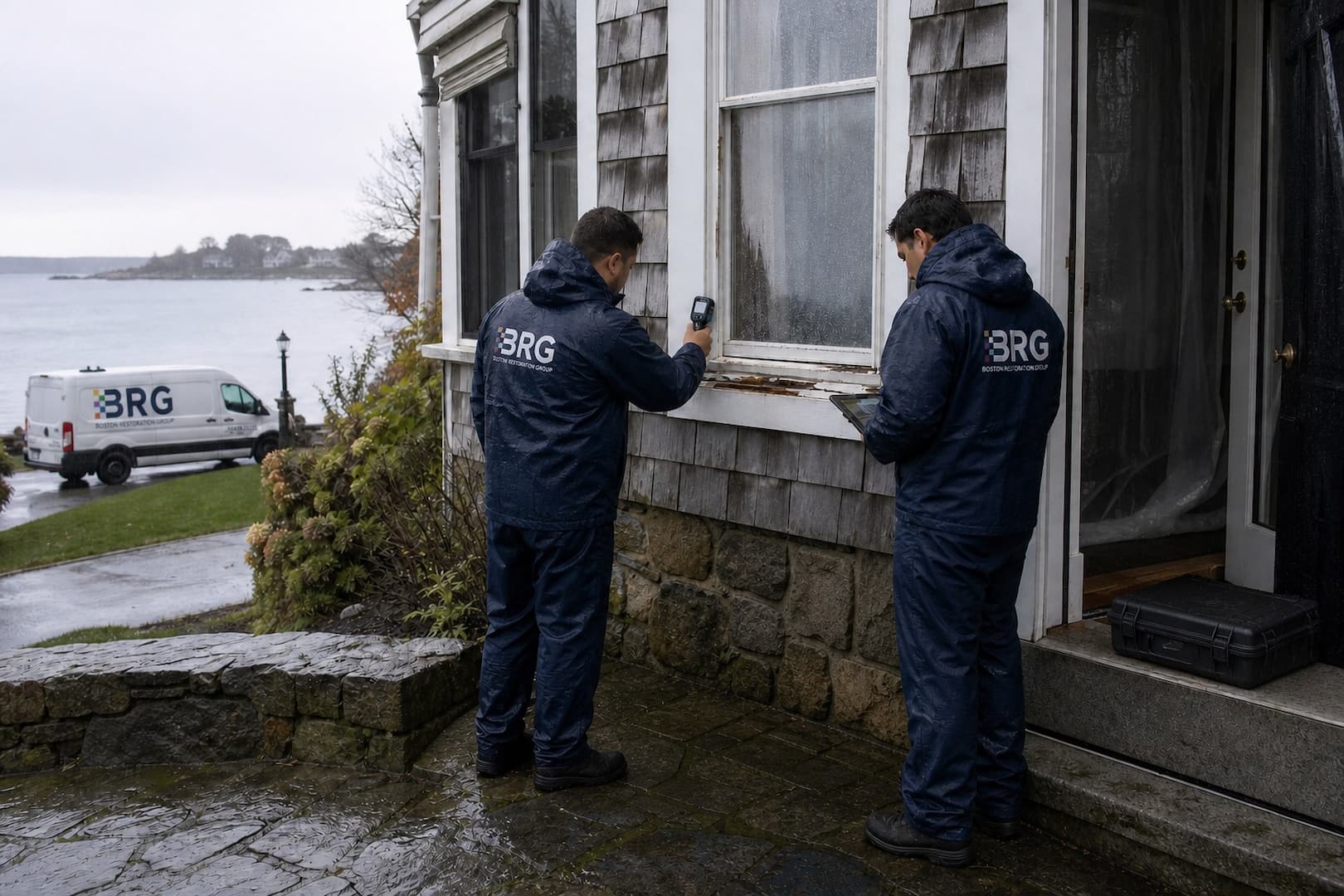
Residential Weather Damage Restoration in Boston
Storm damage often combines an exterior opening with a hidden interior water path. BRG secures the immediate exposure, protects occupied areas, maps affected materials from the entry point downward, and creates a practical route from emergency work to repairs.
- Temporary property protection
- Wind-driven rain and roof leaks
- Tree and debris impact
- Moisture, contents, and repair records
Control the opening
Broken windows, roof edges, siding, doors, and wall breaches need safe temporary protection.
Follow the path
Rain and meltwater move through laps, flashing, cavities, floors, and rooms below.
Protect building use
Occupants, pets, contents, stairs, exits, and unaffected rooms shape the work plan.
Preserve repair evidence
Temporary work, wet materials, source observations, and remaining trades are recorded.
Do not inspect the roof or exterior damage during unsafe weather
Downed wires, unstable trees, broken glass, loose siding, saturated ceilings, flooded basements, and carbon-monoxide risks can make a familiar home unsafe. Call emergency services or the utility for life-safety and public hazards. BRG begins property work after the relevant area is accessible and released.
From a safe position, tell the team what you can see, where water is appearing, whether utilities are affected, and whether an owner, tenant, property manager, fire department, or tree contractor controls access.
- Stay away from fallen lines and anything touching them.
- Do not walk below leaning trees, hanging branches, glass, masonry, or roof material.
- Leave rooms with sagging ceilings or water near electrical fixtures.
- Never run a generator, grill, or fuel-burning heater inside or near openings.
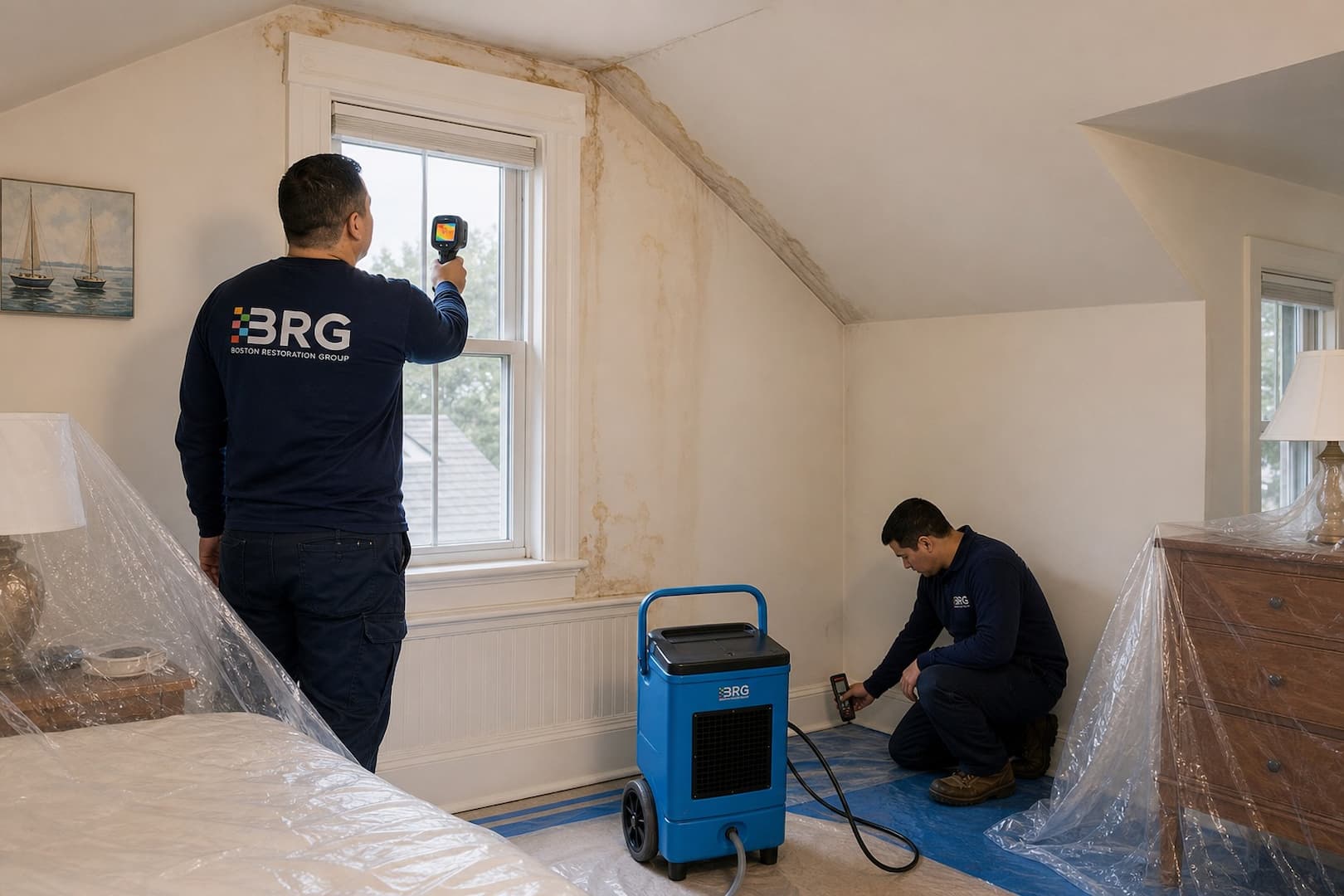
The cause changes the first trade, but the building still needs one coordinated record
BRG handles stabilization and restoration within the agreed scope and identifies when a roofer, arborist, electrician, plumber, engineer, utility, or other specialist must correct the source.
| Event | Likely property path | First coordination |
|---|---|---|
| Wind-driven rain | Window perimeters, siding laps, roof transitions, vents, and wall cavities | Temporary weather control, envelope or roofing review, moisture mapping |
| Tree or limb impact | Roof deck, framing, chimney, siding, glazing, ceilings, and contents below | Emergency authority if needed, arborist removal, structural review, board-up |
| Snow load or drifting | Roof deflection, leakage at transitions, blocked vents, and access limitations | Keep occupants clear; building or structural professional when movement is suspected |
| Ice dam and meltwater | Eaves, valleys, roof deck, insulation, ceilings, walls, and floors | Controlled ice-dam relief plus separate interior water cleanup |
| Freeze and burst pipe | Plumbing source followed by multi-level wall, ceiling, and floor wetting | Plumber or building staff source control plus burst-pipe restoration |
| Sump or drainage failure | Basement floor, stored contents, wall bases, and mechanical equipment | Power and drainage source review, extraction, contamination classification |
Stabilization should not erase the evidence needed for repair
The project moves forward fastest when temporary work, source correction, drying, contents, and reconstruction are kept visible in the same handoff.
Release, access, and hazard screen
BRG confirms safe access, authority, utility status, exterior hazards, occupants, and whether another emergency trade must act first.
Temporary protection
Openings and travel paths are secured within the approved scope. Before-condition photographs preserve the loss information.
Water-path and contents map
Rooms and elevations are checked from the entry downward. Contents are protected, relocated, or documented according to exposure.
Extraction, access, and drying
Accessible water is removed. Material condition and readings guide selective access, equipment, and monitoring.
Permanent repair handoff
The final record separates emergency protection, source work, dry retained materials, removals, and remaining exterior and interior repairs.
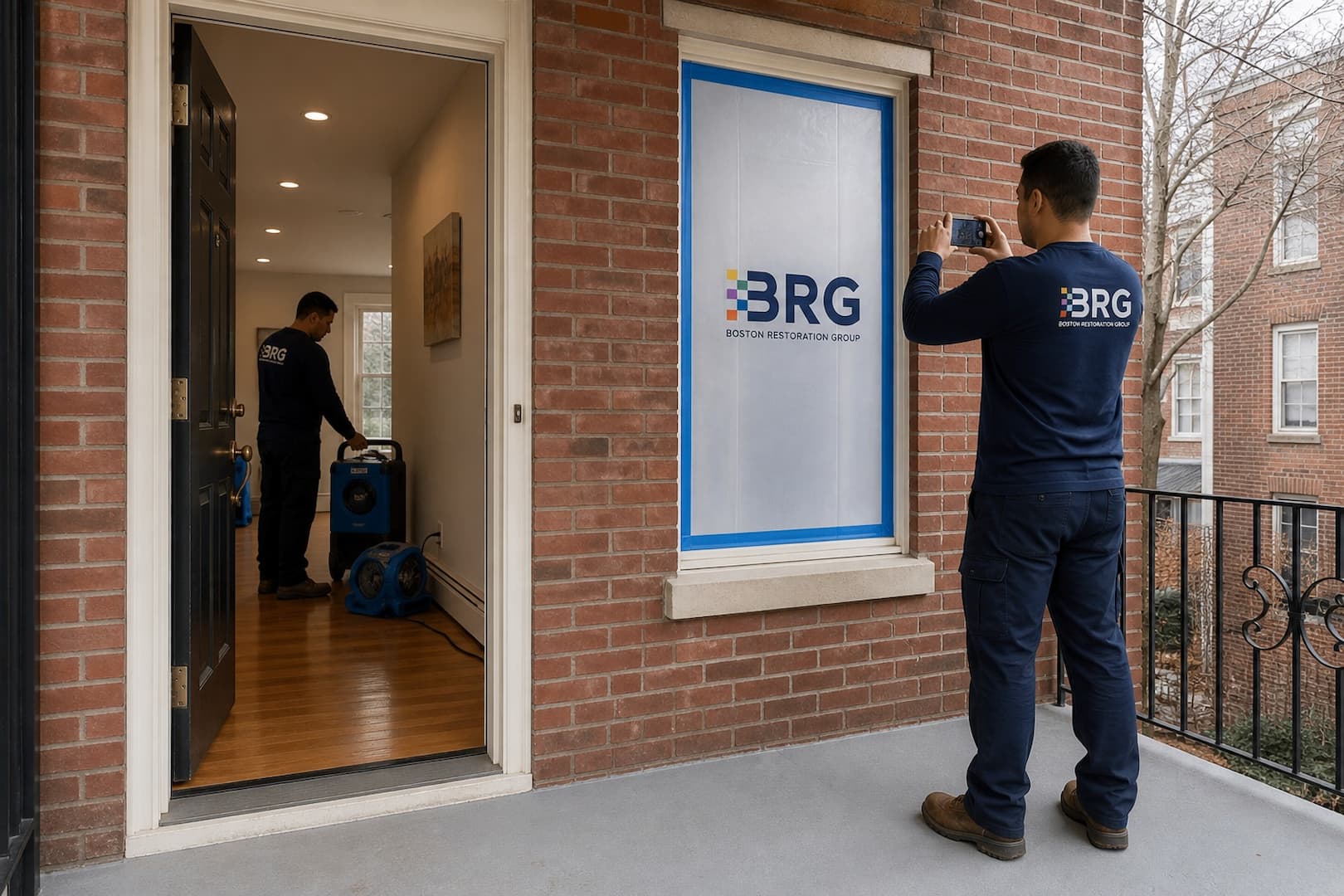
A dry room can remain usable while the affected zone stays controlled
A weather loss does not always require emptying the entire home. BRG evaluates exits, bathrooms, bedrooms, heating, pets, children, air pathways, noise, dust, and equipment routes. The owner can then make an informed occupancy decision with any relevant authority or insurer.
Barriers and floor protection should fit how the household moves through the building. Equipment cannot block egress, create uncontrolled cords, or discharge water where it freezes. If safe separation is not practical, the record should explain why.
Photographs alone are not a complete storm scope
A useful file connects the weather opening with interior assemblies and the trade responsible for the next correction.
Exterior condition
Openings, roof or wall locations, impact, temporary materials, and specialist referrals are recorded.
Interior boundary
Affected rooms, ceilings, walls, floors, insulation, and contents are separated from unaffected comparisons.
Mitigation record
Extraction, access, removed materials, cleaning, readings, equipment, and area-release decisions remain traceable.
Repair list
Roofing, siding, glazing, framing, insulation, drywall, paint, trim, flooring, and contents work are handed off by condition.
Residential storm restoration questions
The safe first step depends on the active weather, source, utilities, building movement, and exterior access.
Should I put a tarp on the roof myself?
Do not climb onto a wet, icy, wind-damaged, or structurally uncertain roof. Keep clear of falling material and request safe temporary protection.
Can BRG remove a fallen tree?
A qualified tree contractor or public authority may need to make the tree safe before restoration work. BRG coordinates the property protection and interior restoration sequence around that work.
Why is the wall wet below a window that looks intact?
Wind-driven rain can pass perimeter sealants, flashing, siding or trim details and travel inside the wall before appearing below. Moisture mapping follows the assembly rather than the visible stain alone.
Can we remain in the house during work?
That depends on utilities, structural condition, exits, affected areas, contaminants, noise, dust, equipment, and the ability to separate occupied space. BRG documents the work-zone factors; the owner and relevant authorities make the occupancy decision.
Does homeowners insurance cover storm damage?
Coverage varies with the event, policy, deductible, exclusions, maintenance, flood definitions, and endorsements. BRG documents observed conditions and completed work; the carrier determines coverage.
Request residential weather damage restoration
Call for an active opening or water entry. Provide the address, event type, utilities, visible exterior damage, affected rooms, occupants, and any authority or specialist already on scene.
617-202-3772- Do not approach downed lines, leaning trees, hanging material, or sagging ceilings.
- Mention public sidewalks, shared driveways, neighbors, pets, and access limitations.
- Send exterior and interior photos only from safe locations.
Describe the storm pathway
A factual message helps BRG plan temporary protection and interior assessment.