
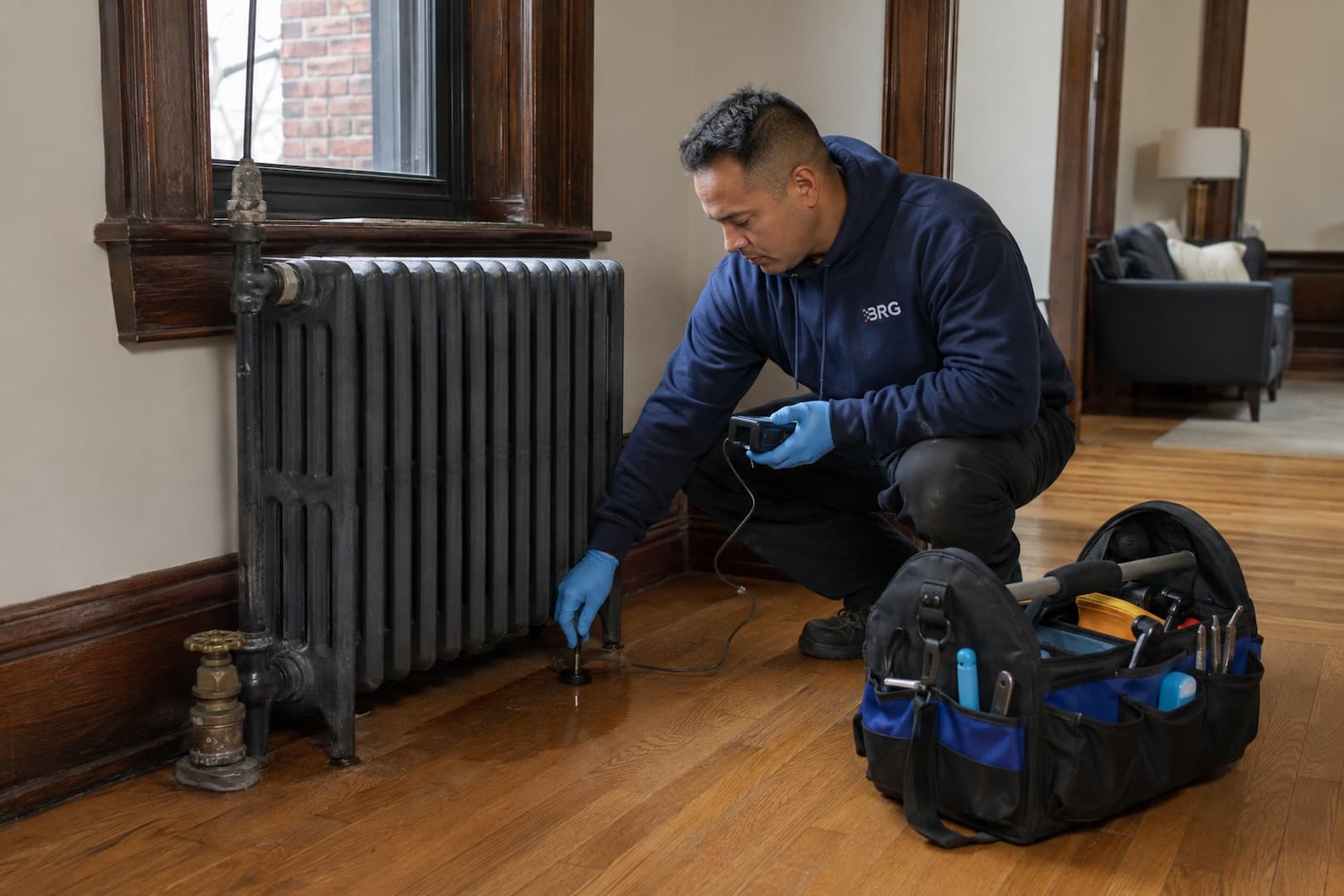
Boiler and Radiator Leak Cleanup in Boston, MA
A boiler, radiator, valve, or hydronic pipe leak can release hot or treated system water into finished rooms, mechanical spaces, and floors below. BRG handles the resulting property damage after the heating source is made safe—extracting water, tracing the route, drying affected assemblies, and documenting the boundary between heating repair and restoration.
Do not approach a leaking pressurized heating component or attempt unfamiliar boiler controls.
A qualified heating professional isolates and repairs the boiler, radiator, valve, or loop.
System water may contain corrosion products or treatment chemicals that affect cleaning.
Radiator and pipe leaks often enter floor penetrations and ceiling cavities.
Do not treat a boiler or radiator release like an ordinary cold-water spill
Hot water, steam, pressure, combustion equipment, electrical controls, and unfamiliar valves can injure occupants or damage the system. Shut down or isolate components only if you are authorized and know the procedure. Otherwise leave the area and call building management, the heating contractor, utility, or emergency services as conditions require.
Temperature and pressure
Keep clear of spraying hot water, steam, hissing valves, and a boiler or relief device behaving abnormally.
Mechanical and electrical systems
Do not operate wet controls, burners, pumps, switches, or equipment until the responsible qualified professional releases them.
System-water condition
Tell BRG about glycol, treatment chemicals, rust-colored water, odor, or a heating contractor’s findings.
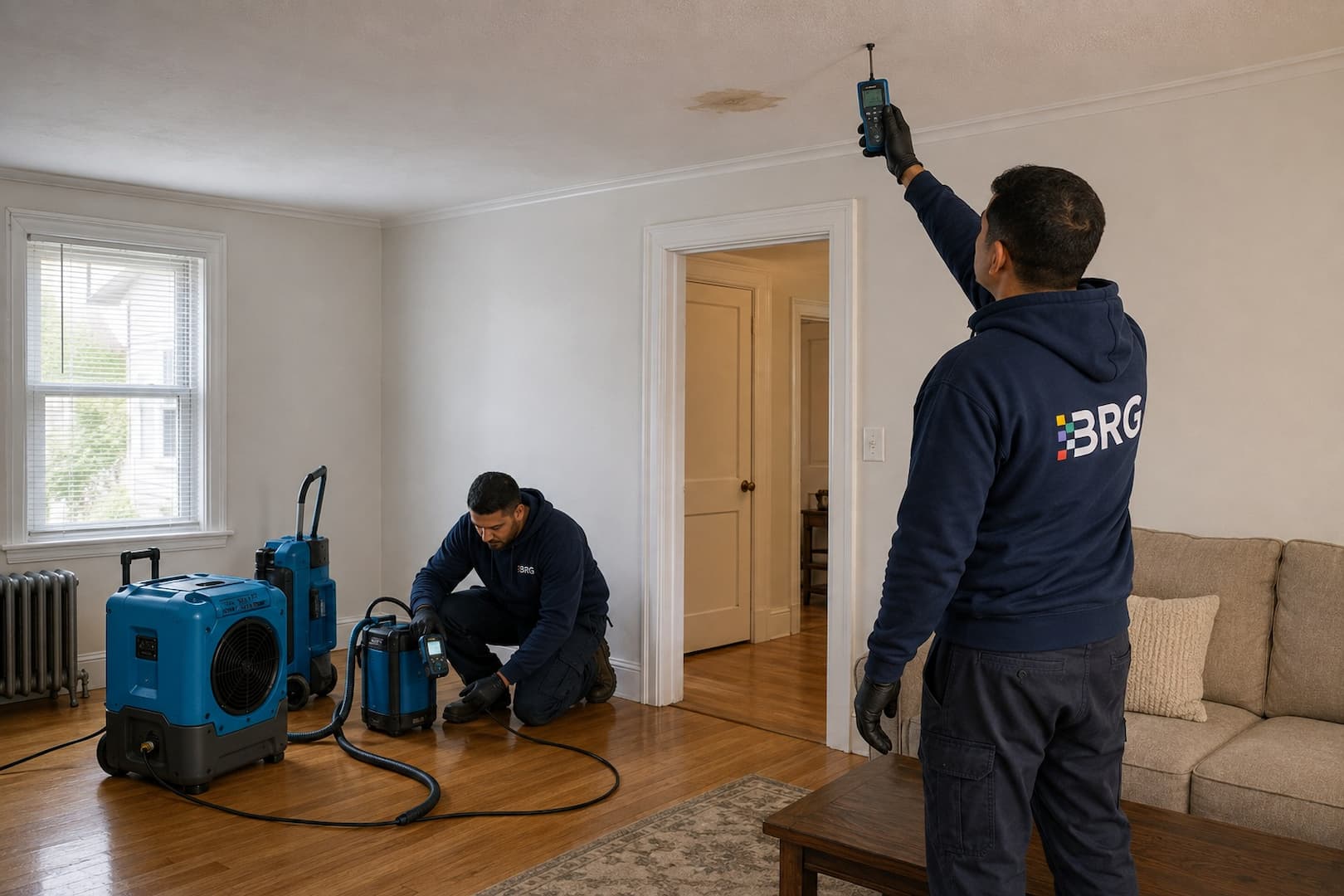
Floor penetrations and layered construction can hide the wet boundary
Water at a radiator valve or pipe may enter gaps around the riser, flow beneath a finished floor, wet the subfloor, and appear at a ceiling or wall below. Plaster, lath, dense masonry, wood flooring, insulation, and later renovation layers each change access and drying.
BRG follows the water from the heating component through adjacent materials and lower levels. The heating contractor’s source repair is recorded separately so the drying plan can proceed without confusion about whether the loop is safe to operate.
- Check radiator-side wall, floor seam, and pipe penetration
- Inspect the story below and nearby chases
- Record plaster, wood, insulation, and finish conditions
Old and new finishes need different recovery choices
Boston-area heating leaks often cross assemblies built or renovated in different eras.
Hardwood and subfloor
Watch
Board cupping, finish condition, moisture gradient, underlayment, and trapped water near the riser.
Plaster and lath
Watch
Bond, cracking, weight, concealed cavity moisture, insulation, and safe access around historic finishes.
Drywall and insulation
Watch
Wicking, water condition, ceiling loading, cavity access, and response to drying.
Mechanical-room surfaces
Watch
Concrete, stored contents, equipment bases, insulation jackets, and any system-water residue.
Keep system repair and building restoration in sequence
BRG does not test, repair, or recommission boilers and hydronic systems unless separately qualified for that trade. The heating professional owns that step.
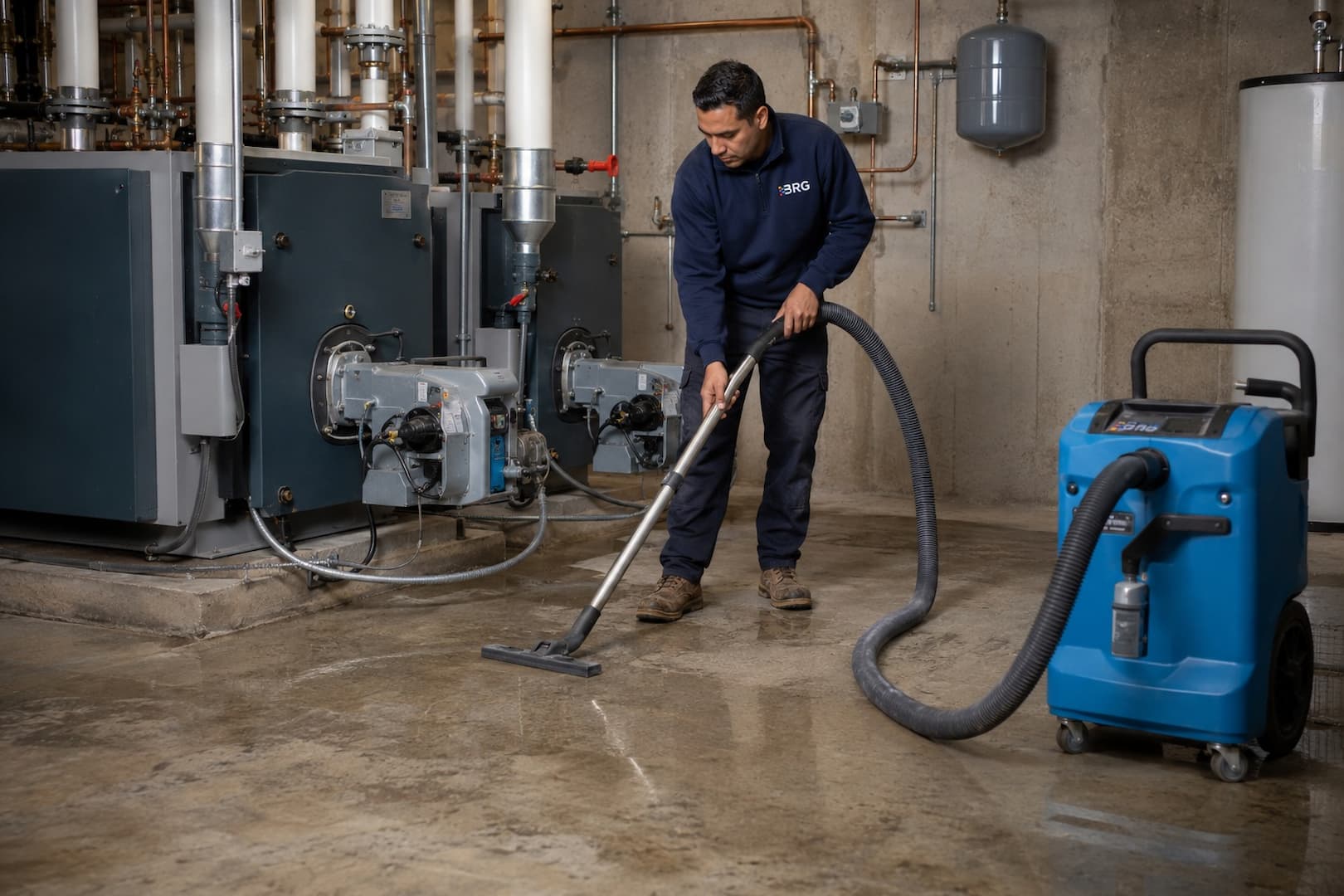
Obtain safe source control
Confirm the heating professional’s isolation or repair, equipment status, temperature, additives, and safe access.
Extract and protect finishes
Remove accessible water while protecting sound wood, plaster, contents, and dry travel routes.
Map vertical and concealed spread
Measure the radiator area, pipe paths, wall or floor layers, ceiling below, and connected mechanical spaces.
Dry or selectively remove
Match access and equipment to the assembly; document material that is unsafe, contaminated, or unable to dry.
Verify and coordinate restart or repair
Provide restoration records while the heating professional handles system recommissioning and repair.
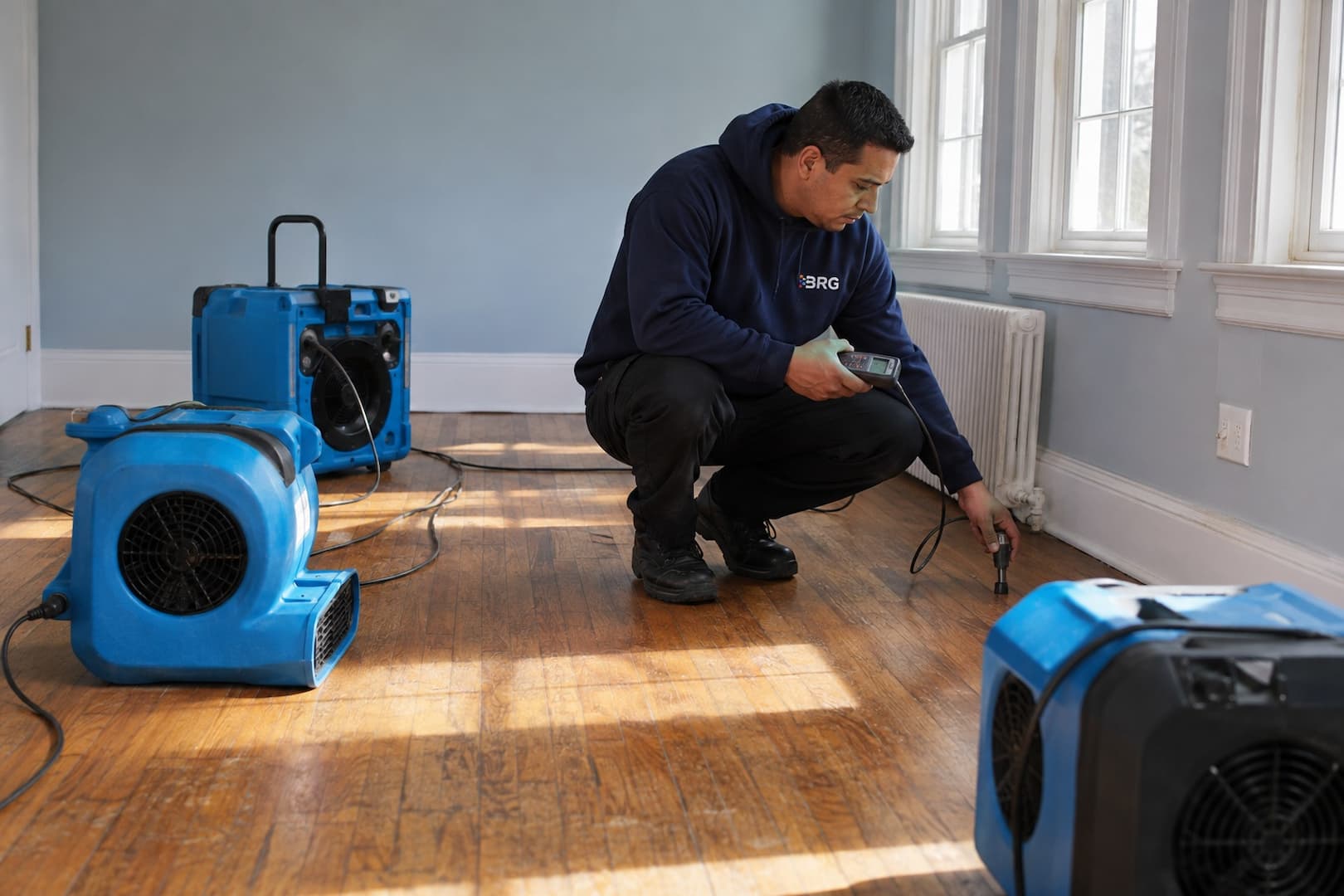
Drying choices should respect the floor, not just the leak source
Wood flooring near a radiator can hold a strong moisture gradient even after the valve area appears dry.
Record what the heating trade did and what the water affected
A useful file separates system cause from building damage without losing the connection.
Source and repair status
Component, reported failure, isolation, additives, heating-contractor findings, and recommissioning status.
Water migration
Rooms, floors, ceilings, plaster, wood, insulation, contents, and material readings.
Mitigation and repair needs
Extraction, cleaning, drying, removal, finish damage, and reconstruction still open.
Coordinate temporary heat when the system must remain off
In freezing conditions, the building owner or manager should promptly work with the heating contractor on safe temporary heat, freeze protection, and system repair. Combustion heaters and improvised heat sources create serious hazards and should not be used without proper professional controls.
- Notify building management and affected occupants
- Protect other piping from freezing
- Keep heat sources clear of drying materials and egress
Boiler and radiator leak cleanup questions
Heating-system safety and period construction shape the restoration plan.
Should I turn off the boiler myself?
Only if you are authorized, understand the system, and can reach the correct control safely. Hot water, steam, gas, combustion, electricity, and pressure are reasons to call the heating professional or emergency authority.
Can heating-system water stain or contaminate finishes?
It can contain rust, sediment, glycol, or treatment chemicals. The contractor’s system information and observed residue help determine cleaning and material handling.
Can wet plaster be saved?
Sometimes. Bond, cracking, sagging, water condition, cavity moisture, finish value, and ability to dry and verify all matter. Unsafe or detached plaster requires a different decision.
Who restarts the boiler after cleanup?
A qualified heating professional should inspect, repair, and recommission the system. BRG reports restoration conditions but does not substitute for that trade.
Why inspect the ceiling below a small radiator leak?
Water can pass through gaps around a pipe and spread within the floor-ceiling assembly. The lower ceiling may be wet even when the upper floor shows little water.
Request boiler or radiator leak cleanup
Tell BRG whether the leak is active, hot, or isolated; which heating component is involved; whether a heating contractor has responded; and which rooms or floors show water.
617-202-3772- Keep clear of steam, hot spray, wet controls, and sagging ceilings
- Mention glycol, rust-colored water, odor, or treatment chemicals
- Share heating outages and freezing-weather concerns
Request Heating-Loss Cleanup
Source status and affected levels help us coordinate the restoration response.