
Smoke Damage Restoration and Odor Removal in Boston, MA
Smoke can move beyond the fire room through openings, pressure differences, ceiling voids, and HVAC pathways. BRG’s certified restoration specialists define affected and clean areas, identify residue and surface types, protect contents, test cleaning methods, and address odor reservoirs after fire officials and investigators release the property.
- Soot and smoke-residue assessment
- Surface, contents, and cavity cleaning
- Source-based odor removal
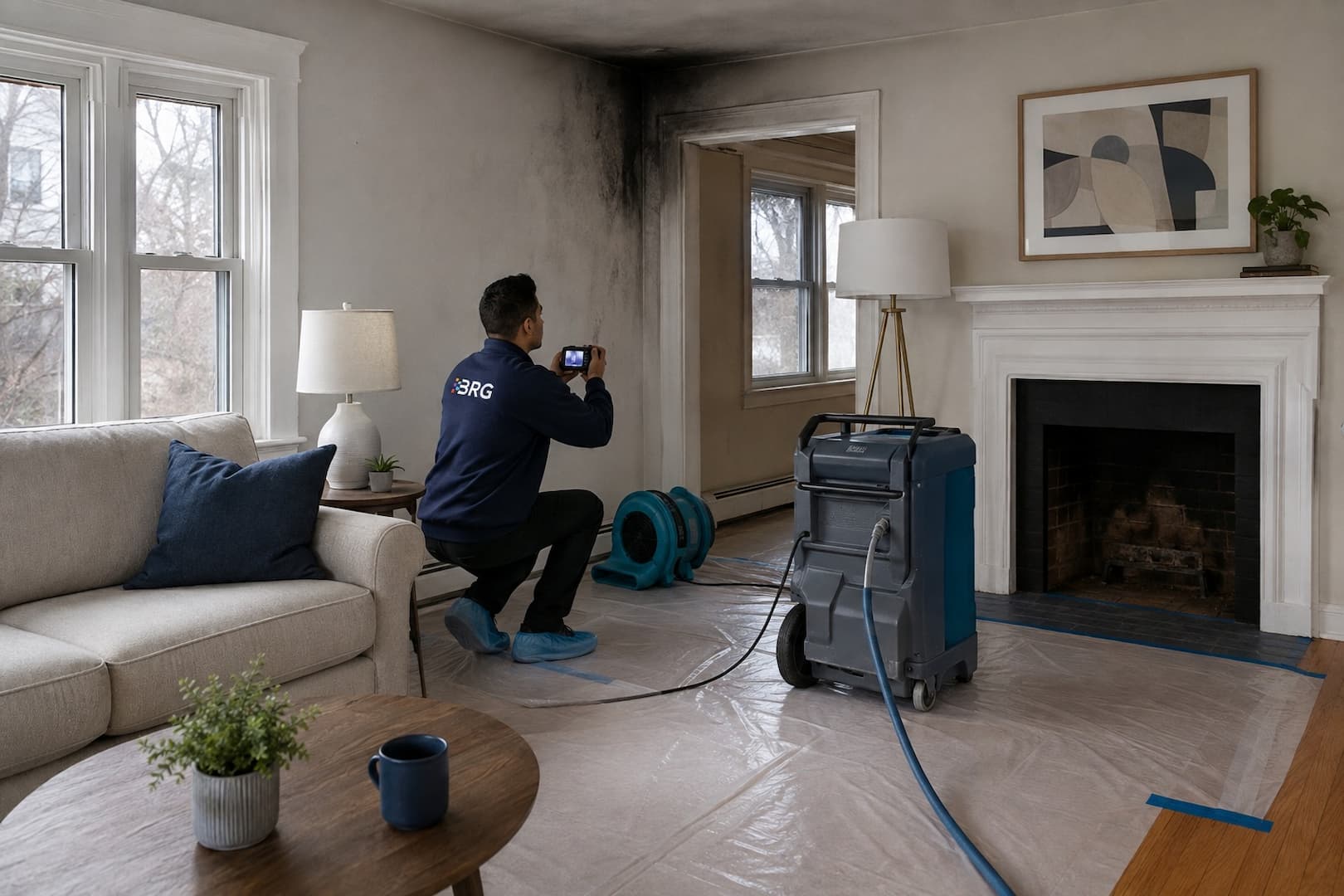
Fire officials, investigators, utilities, and building professionals may control areas before cleaning begins.
Dry soot, oily smoke, protein residue, and extinguisher deposits can react differently to cleaning.
Textiles, electronics, wood, paper, food, and porous items need different decisions.
Char, settled residue, wet materials, cavities, and contents are addressed before final deodorization.
Preserve authority boundaries and avoid setting soot into finishes
Do not enter restricted fire areas or move items that may be evidence. In released areas, avoid ordinary wiping, household vacuums, fragranced sprays, and untested wet cleaning. Heat-altered residues can smear, penetrate, corrode, or permanently change a finish when the wrong method is used.
Authority and safety
Confirm fire, investigation, structural, gas, electrical, and utility release before contents or debris are disturbed.
Residue and surface
Identify representative deposit, heat, moisture, porosity, finish, corrosion sensitivity, and method compatibility.
Air and pathways
Consider open doors, shafts, ceiling voids, return paths, pressure differences, and firefighting water without assuming the whole building is equal.
Smoke type and surface chemistry shape the method
A dry loose particle may respond to controlled dry removal, while an oily residue can smear under the same action. Protein fires can leave a light, difficult-to-see deposit with strong odor. Plastics and synthetic materials may produce corrosive residue that deserves prompt specialist attention on metal and electronics.
BRG selects representative surfaces, documents small tests, and compares results before expanding the method. Sealed wood, painted gypsum, stone, metal, glass, textiles, acoustic material, and unfinished framing are not cleaned as one category.
- Begin at clean-to-affected boundaries
- Protect surfaces that are not part of the test
- Record limitations, finish change, and specialty referrals
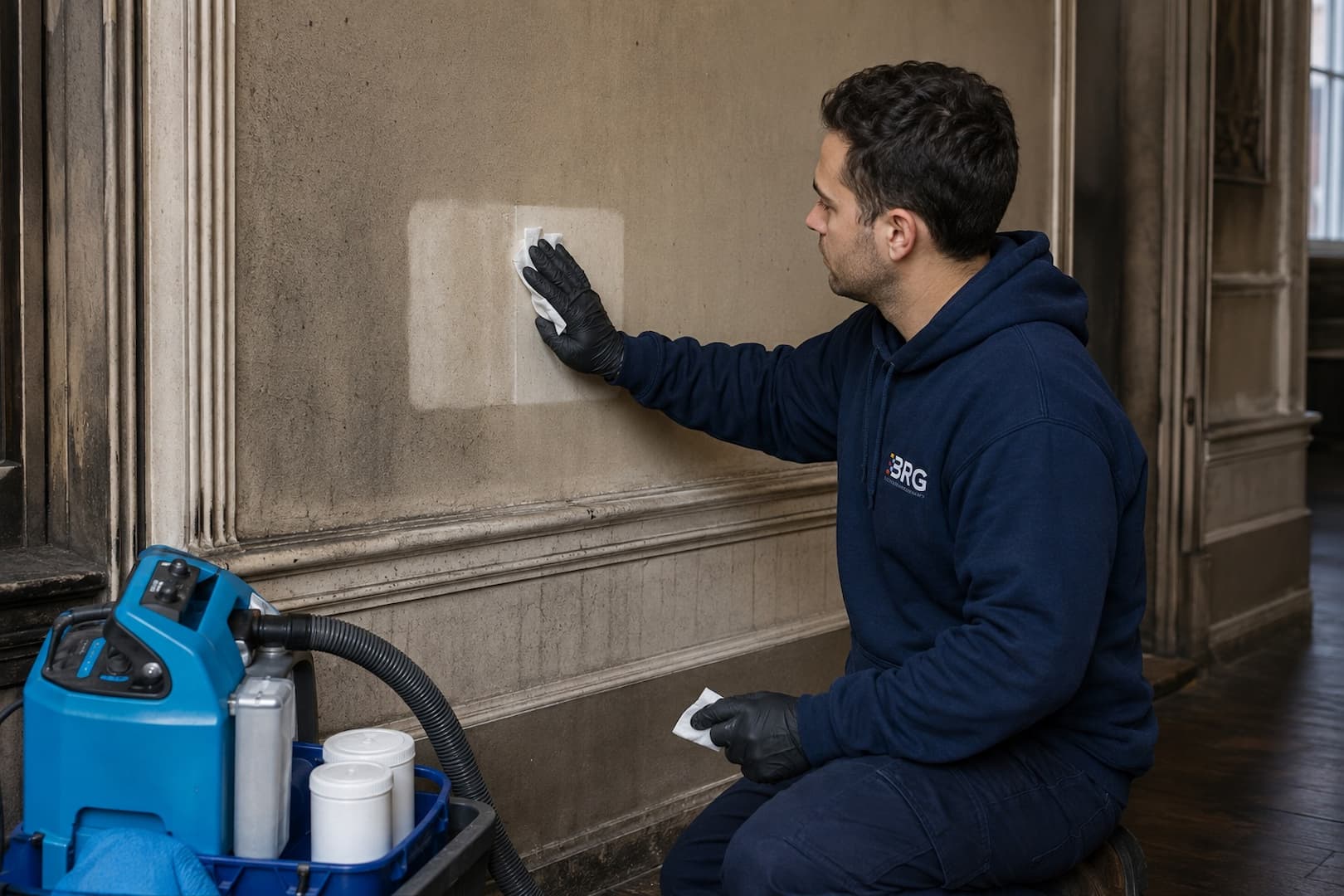
An odor reservoir can sit in a room, item, or concealed assembly
Contents triage identifies what can be cleaned on site, referred, stored, or released, while controlled cavity access addresses residue the room surface cannot reach.
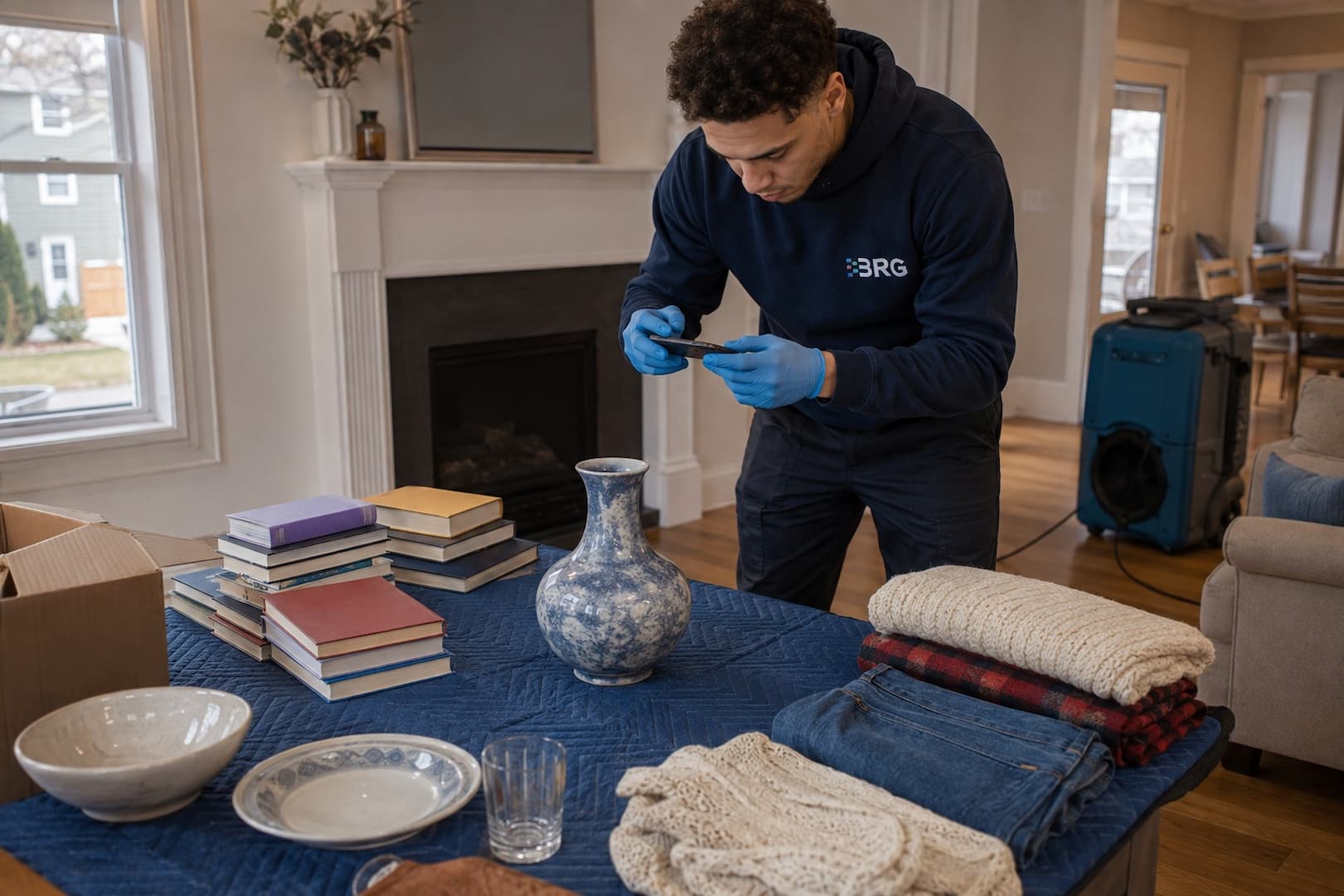
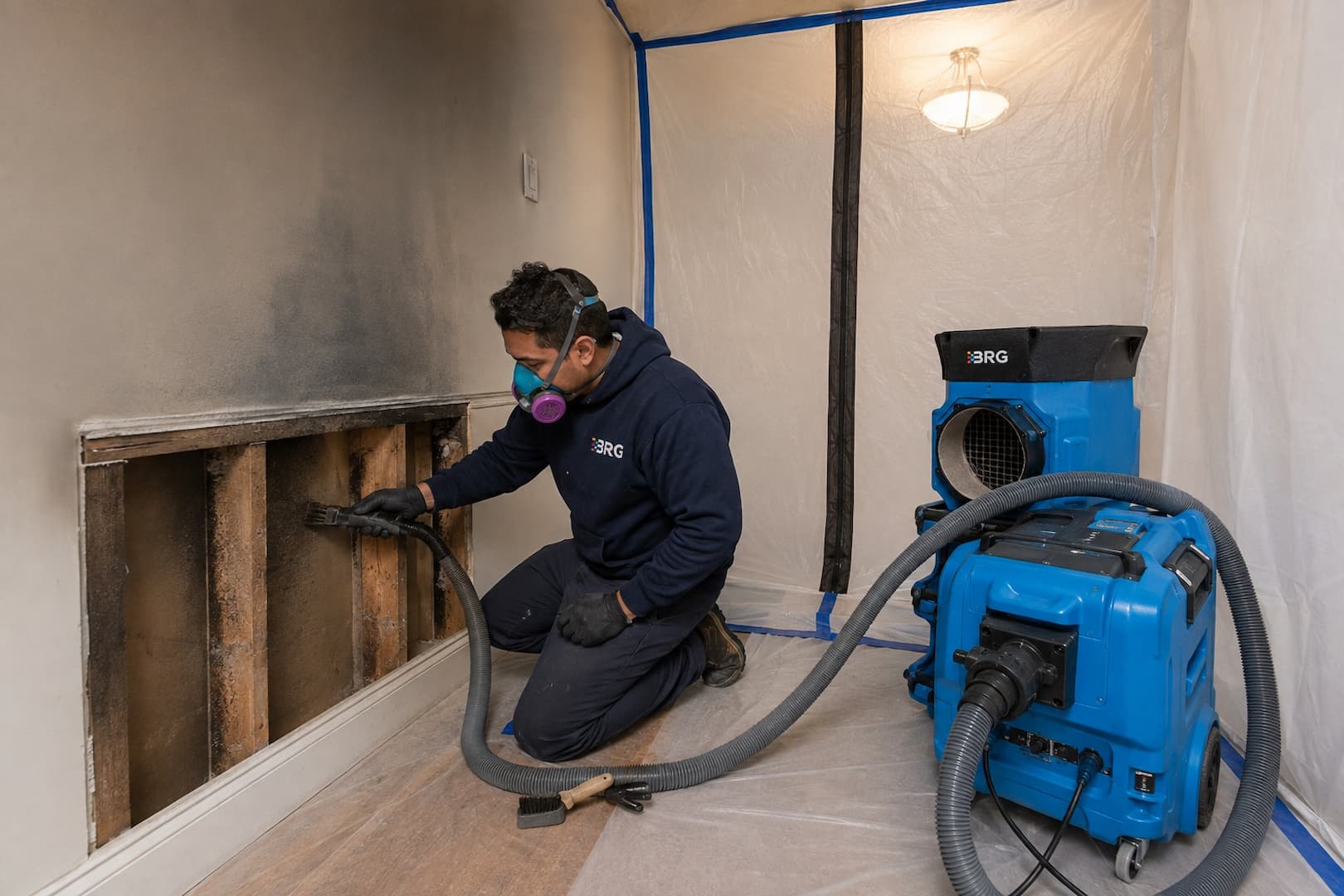
Deodorization follows the path of remaining odor
Treatment is selected after removal and cleaning reduce the actual reservoirs.
Charred or heat-damaged material
Primary source
Unsafe or unsalvageable burned material is removed under the authorized scope after investigation release.
Settled surface residue
Distributed source
Walls, ceilings, floors, trim, furnishings, and horizontal ledges are cleaned with material-compatible methods.
Porous contents and finishes
Absorbed source
Textiles, paper, unfinished wood, carpet, upholstery, and insulation are evaluated for cleaning, specialty treatment, or removal.
Cavities and air pathways
Concealed source
Open ceilings, chases, wall voids, HVAC components, and pressure routes are inspected according to evidence and access.
From fire release to a room-by-room odor review
Odor can fluctuate with humidity, temperature, closed-building time, and porous contents. BRG evaluates it after source removal and cleaning rather than promising a single treatment will solve every reservoir.
Translate the release into working zones
Map restricted, affected, transition, and clean spaces together with utility status, water, structure, and contents access.
Characterize residue and materials
Inspect representative deposits, surfaces, rooms, contents, cavities, and system pathways.
Remove sources and control water
Handle released char or debris and address firefighting water before it supports further odor or material damage.
Clean building and contents methodically
Use tested procedures by surface and item, with HEPA control and protected routes where appropriate.
Evaluate remaining odor and repair needs
Apply suitable deodorization, document specialty referrals, and identify sealing, finish, or reconstruction work still required.
Name the rooms, surfaces, contents, and remaining limitations
BRG documents release conditions, residue observations, test methods, areas cleaned, contents handling, water mitigation, deodorization, and repair items. The insurance carrier decides coverage, and fire, building, environmental, or other authorities retain their roles.
- Room and surface cleaning record
- Contents disposition and specialty vendors
- Odor review conditions and remaining repair scope
Smoke damage and odor removal questions
Residue type, surface, pathway, and source control determine the answer.
Can I clean soot with household soap?
Untested wet cleaning can smear or set some residues and damage finishes. Representative surface and method testing should come first.
Will an ozone machine remove all smoke odor?
No single deodorization method replaces source removal and cleaning. Some treatments also require strict occupancy and safety controls and are not appropriate for every property or material.
Why does odor return when the building is warm or humid?
Temperature and humidity can change how odor compounds release from porous materials and concealed reservoirs. Recurrence is a reason to recheck sources and cleaning boundaries.
Do all contents need to be removed?
No. On-site cleaning may be suitable for some items, while secure, specialty, or heavily affected contents may require pack-out or referral. Access and operations also matter.
Can smoke-damaged walls simply be sealed and painted?
Cleaning and condition assessment come first. A coating cannot replace removal of loose residue or unsalvageable material; sealing is a repair step used only where appropriate.
Request smoke damage restoration and odor removal
Tell BRG where the fire occurred, which areas are released, what burned, whether firefighting water is present, which rooms or contents smell or show residue, and any investigator or utility restrictions.
617-202-3772- Do not enter restricted areas or disturb possible evidence
- Do not energize exposed electronics or wipe soot
- Mention HVAC operation, open doors, and odor in distant rooms
Request Smoke-Damage Help
Fire location, release status, and residue path help us plan the assessment.