
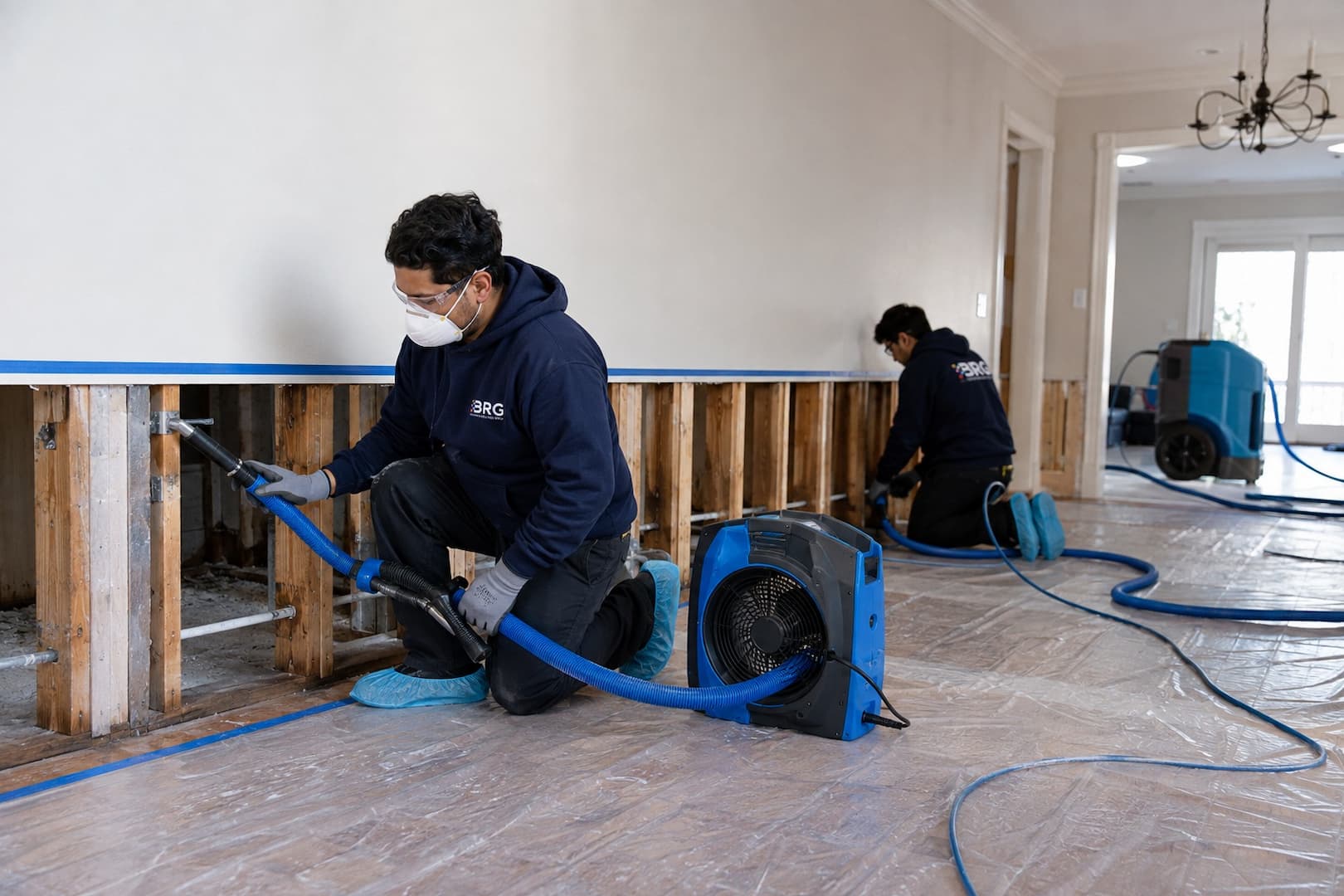
Debris Removal, Tear-Out, and Haul-Away in Boston, MA
Property-damage debris can include wet drywall, insulation, flooring, cabinets, charred material, broken finishes, storm debris, contaminated porous contents, and ordinary discarded items—all with different handling needs. BRG defines the removal boundary, checks hazards and authority restrictions, protects travel paths, separates materials, and leaves a documented, repair-ready work area.
- Selective demolition after damage assessment
- Protected debris routes and occupied-space controls
- Material, contents, and disposal documentation
Structure, utilities, asbestos or lead, investigation, biohazard, and ownership can restrict tear-out.
A measured scope protects sound finishes and keeps hidden conditions reviewable.
Containment, floor protection, elevators, public areas, and disposal paths are planned in advance.
Remaining framing and surfaces are cleaned, documented, and prepared for drying, evaluation, or repair.
Debris can be evidence, a hazard, a personal item, or a salvageable material
Fire-origin items may be restricted by an investigator. Structural debris may remain unstable. Older paint, flooring, insulation, mastics, or surfacing may require hazardous-material review. Sewage, mold, sharps, chemicals, fuel, or bodily fluids need source-specific controls. Contents may require owner or insurer authorization before disposal.
Authority and investigation
Confirm fire, police, building, engineering, insurance, landlord, condo, and ownership permissions that apply to the area or item.
Environmental and utility hazards
Identify suspect asbestos or lead materials, energized wiring, plumbing, gas, structural support, chemicals, and biohazards before disturbance.
Disposition authority
Separate building debris from contents and obtain approval for salvage, disposal, storage, or specialty review when required.
The removal line should follow damage, access, and repair logic
A straight cut is useful only when it removes the affected material, creates safe access to the assembly, and supports a practical repair. Moisture, contamination, char, loss of integrity, fasteners, utilities, framing bays, cabinet geometry, tile layout, and trim all influence the boundary.
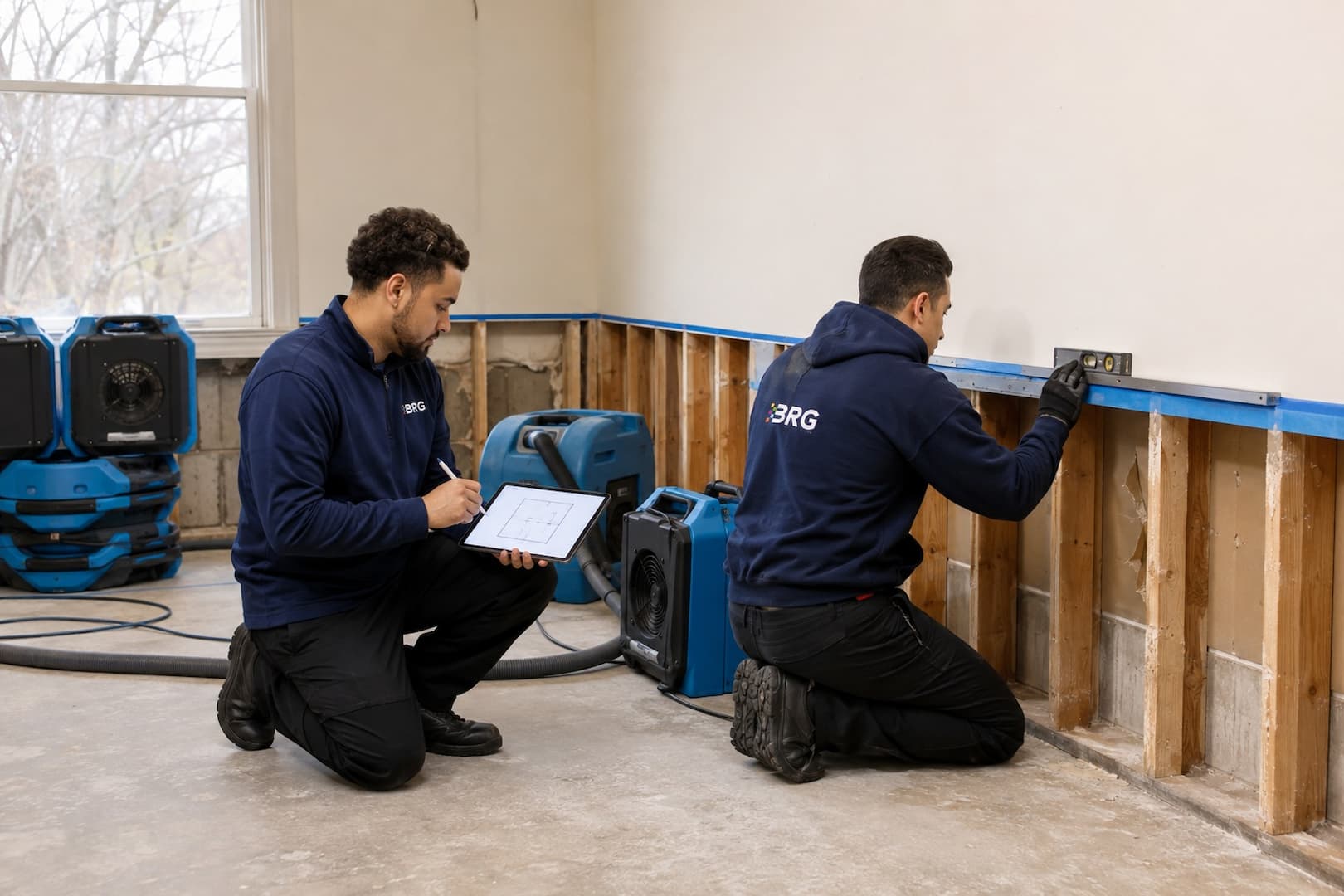
BRG marks and photographs the planned scope before removal. Conditions found behind the finish are documented before the boundary changes. This preserves the distinction between original damage, necessary access, newly discovered conditions, and elective renovation.
- Protect sound adjacent finishes and reusable trim
- Locate utilities and structural elements before cutting
- Pause and document when concealed conditions change the scope
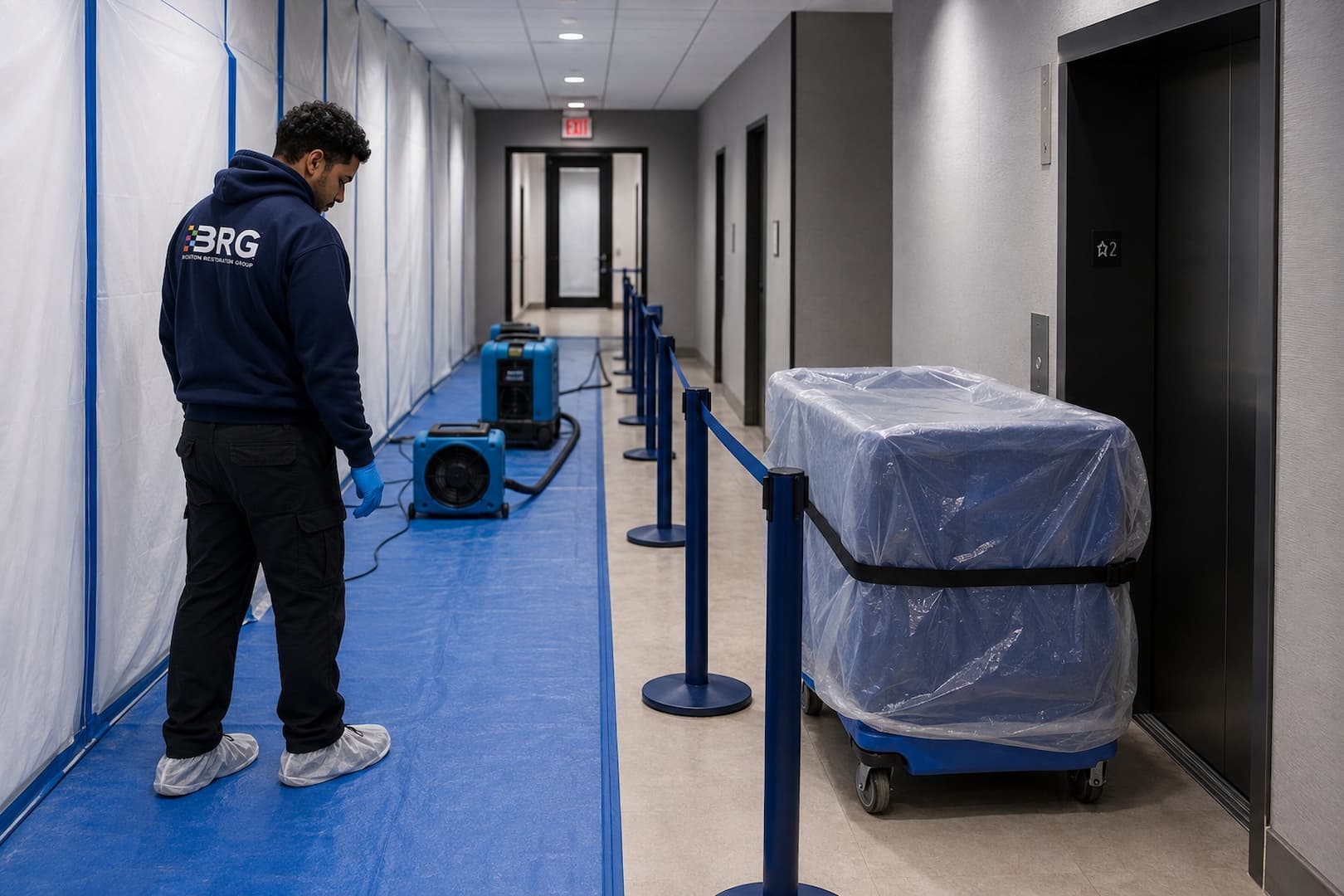
Containment and segregation protect the rest of the property
Covered carts, clean routes, elevator and floor protection, manageable loads, and separated materials keep removal controlled from room to vehicle.
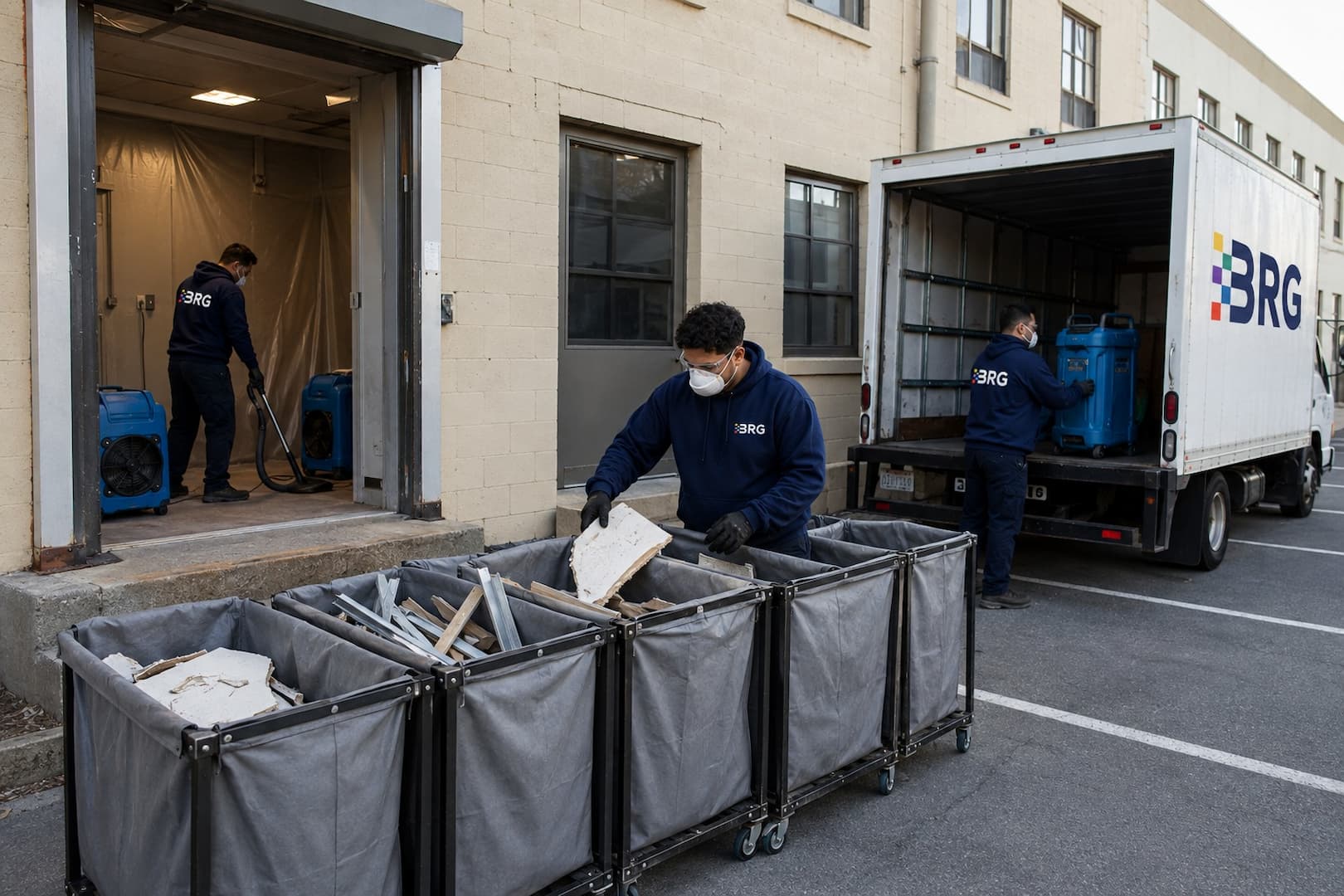
Different debris requires different handling and destination
Local rules, facility requirements, contamination, and specialty vendors can change disposal.
Water-damaged building material
Examples
Drywall, insulation, flooring, cabinet parts, trim, and porous contents assessed by source and material condition.
Fire and smoke debris
Examples
Charred material, soot-covered finishes, extinguishing residue, wet debris, and items subject to investigation release.
Mold or sewage material
Examples
Contained porous material, cleaning waste, protective equipment, and sealed loads handled to avoid cross-contact.
Special or regulated material
Examples
Suspect asbestos, lead, chemicals, sharps, electronics, refrigerants, and other items referred to qualified handlers.
From authorized boundary to repair-ready assembly
Removal may be paused for consultant review, testing, engineering, utility, evidence, owner approval, or a newly discovered material.

Confirm hazards, scope, and approvals
Record affected material, utilities, structure, environmental concerns, contents ownership, and authorized removal boundary.
Build protection and routes
Set containment, floor and elevator protection, clean access, carts, loadout, dust control, and occupied-area separation.
Remove selectively
Use methods suited to the material, limit breakage and dust, protect retained elements, and update records as layers open.
Segregate and haul appropriately
Separate salvage, ordinary debris, recyclable material, contaminated waste, and specialty streams according to the plan.
Clean and document the exposed area
Remove fasteners and loose debris, HEPA-clean or otherwise treat surfaces as required, and record conditions for drying or repair.
The removal record protects the next phase
Photographs and notes should make concealed conditions and remaining work legible.
Original condition and marked boundary
Damage, contamination, moisture, contents, finishes, utilities, measurements, and approved scope.
Concealed findings and changes
Framing, insulation, utilities, hidden water, growth, char, corrosion, and authorized revisions.
Exposed repair-ready condition
Material removed, retained elements, cleaning, temporary protection, drying, specialist needs, and reconstruction.
Keep disposal traceable when the item or material matters
Photographs, quantities, owner approvals, inventory references, specialty-vendor records, and disposal documentation may be appropriate depending on the loss. BRG does not discard controlled evidence, regulated material, or owner contents without the required path.
- Building debris and contents listed separately
- Specialty waste assigned to qualified providers
- Repair and drying access preserved after loadout
Debris removal and tear-out questions
Authorization, hazards, and a measured boundary come before speed.
Can BRG remove all damaged material immediately?
Only after safe access, authority or investigation release, environmental and utility concerns, ownership, and scope authorization are addressed. Some items or areas must remain untouched.
How is the drywall cut height decided?
Moisture or contamination boundary, insulation, framing bays, utilities, finish layout, access, and repair practicality inform the line. A standard height is not appropriate for every room.
What if suspect asbestos or lead material is found?
Work pauses in the affected area and the property coordinates qualified assessment and abatement as required. BRG does not disturb suspect regulated material outside an authorized compliant scope.
Are personal contents included with construction debris?
They should be documented and authorized separately. Ownership, salvage value, insurance review, privacy, and specialty handling may apply.
What does repair-ready mean?
The authorized damaged material is removed, loose debris and protruding hazards are addressed, retained surfaces are cleaned as required, conditions are documented, and drying or specialist needs are identified. It does not mean reconstruction is complete.
Request controlled debris removal and tear-out
Tell BRG what caused the damage, which materials and contents are involved, whether the area is released and safe, what testing or consultant information exists, and how debris can leave the property.
617-202-3772- Do not disturb fire evidence, unstable material, or suspect asbestos and lead
- Identify elevators, public routes, loading hours, and disposal restrictions
- Separate owner contents from building-material authorization
Request a Debris-Removal Call
The source, material, approvals, and loadout route help us define a controlled scope.