
Window Leak Water Damage Cleanup in Boston, MA
Wind-driven rain can enter above or beside a window and travel through flashing, trim, sheathing, insulation, masonry interfaces, and wall cavities before appearing indoors. BRG maps the affected interior materials, protects the room, dries or removes damaged layers, and documents the exterior repair that must be completed by the appropriate building-envelope trade.
- Window, flashing, and wall-interface water paths
- Interior wall, trim, and floor drying
- Exterior repair and restoration handoff
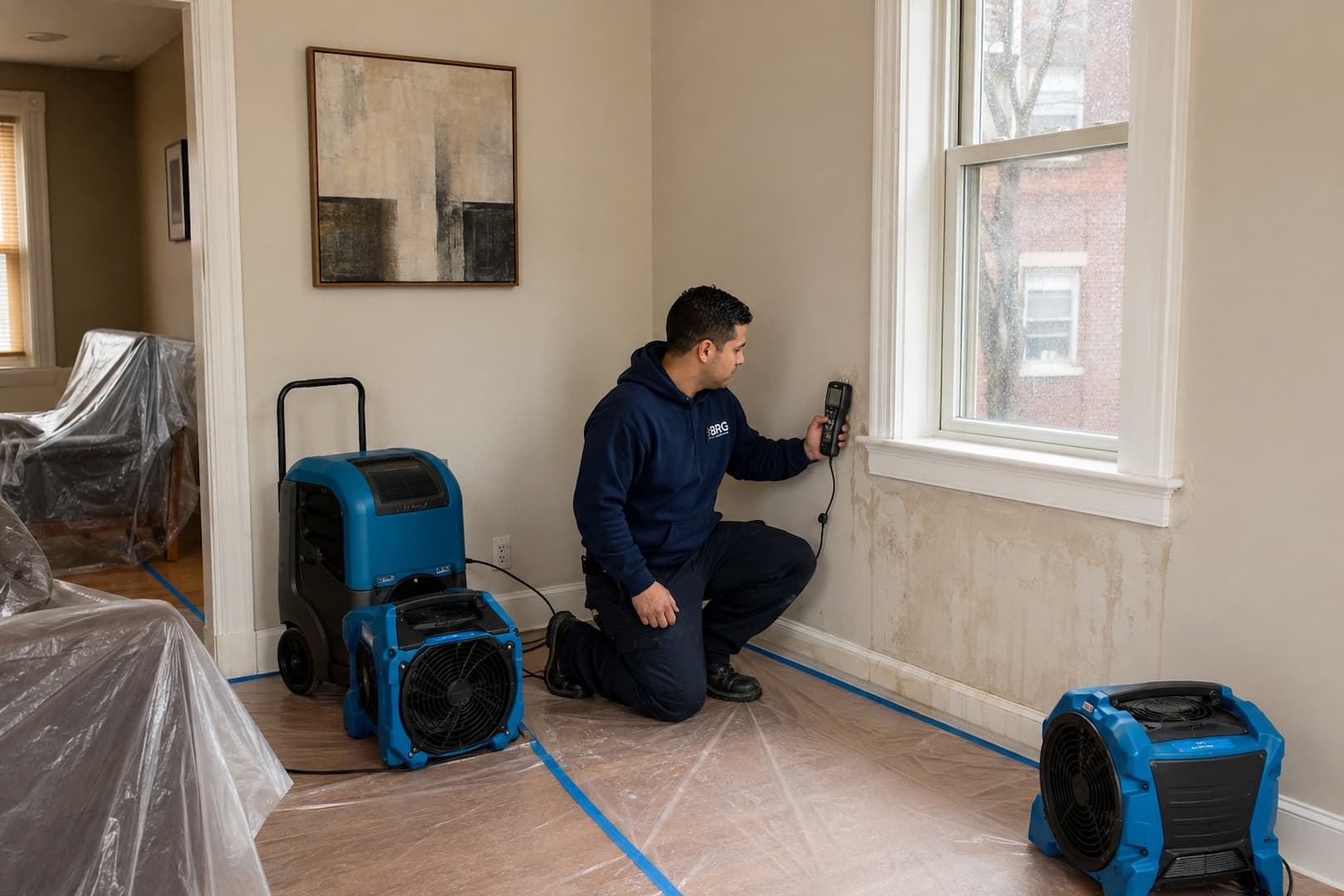
Note wind direction, intensity, and where water first appears without opening walls during active entry.
Flashing, sealant, siding, masonry, roof-wall, and drainage details can redirect water.
Water may wet insulation, studs, baseboards, flooring, and the ceiling or room below.
Exterior correction and interior drying must be coordinated before finishes close the assembly.
Water often travels within the wall before it reaches the room
A failed joint at the head flashing, sill pan, perimeter seal, masonry opening, siding transition, or nearby roof detail can admit water. Wind pressure and capillary action move it through layered construction until gravity brings it to an interior seam.
BRG maps interior moisture around the full opening and checks wall base, flooring, adjacent openings, and levels below. Exterior observations help the qualified envelope professional investigate the entry; interior readings alone cannot certify a window or facade repair.
- Photograph when and where water appears during weather
- Check above and beside the visible interior stain
- Share prior caulking, window replacement, or facade work
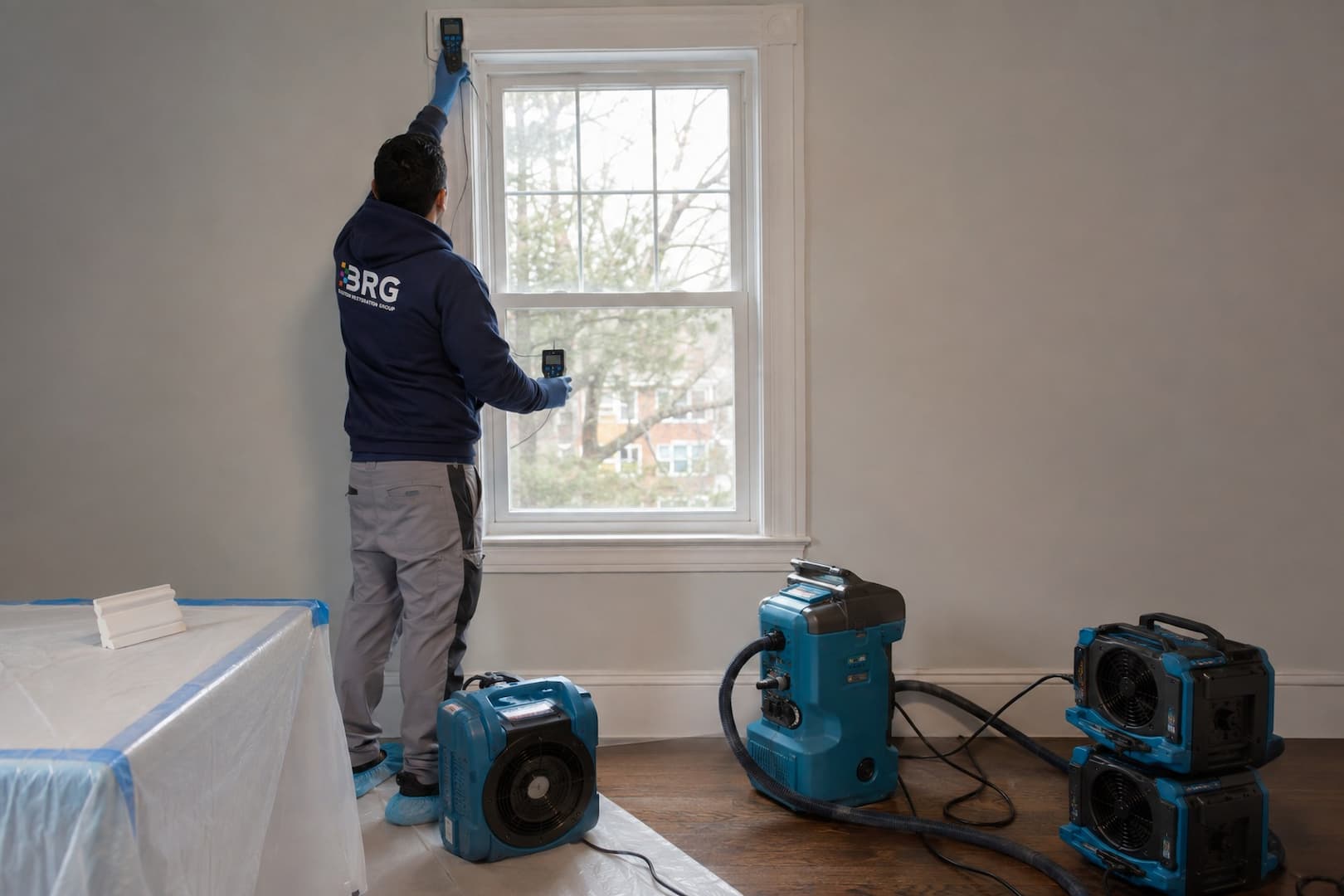
Protect the interior without hiding the evidence
Move dry contents away from the opening and place a stable container or absorbent material where it can be done safely. Do not climb outside, remove exterior components, open a wall near electricity, or stand beneath wet sagging finishes. Photographs and timing notes can help the envelope professional reproduce the condition.
Record the weather
Note wind direction, rain intensity, duration, and whether the leak appears only during certain storms.
Record the emergence point
Head, jamb, sill, lower wall, floor, ceiling below, or adjacent window patterns narrow the investigation.
Report building type
Wood siding, brick, stucco, curtain wall, replacement window, and historic trim create different interfaces.
The window finish may conceal several wet layers
Restoration decisions distinguish decorative damage from moisture inside the enclosure.
Wood trim and sill
Inspect
Finish, swelling, open joints, staining, rot, paint condition, and moisture at connections.
Drywall or plaster
Inspect
Surface bond, soft areas, repeated staining, wall-cavity moisture, and insulation behind the finish.
Insulation and framing
Inspect
Access, saturation, air path, hidden growth, sheathing interface, and ability to dry before closure.
Floor and room below
Inspect
Baseboard, flooring edge, subfloor, radiator or electrical details, and vertical migration.
The repair professional and restoration crew answer different parts of the leak
Exterior investigation identifies and corrects entry; interior moisture records show what the water affected.
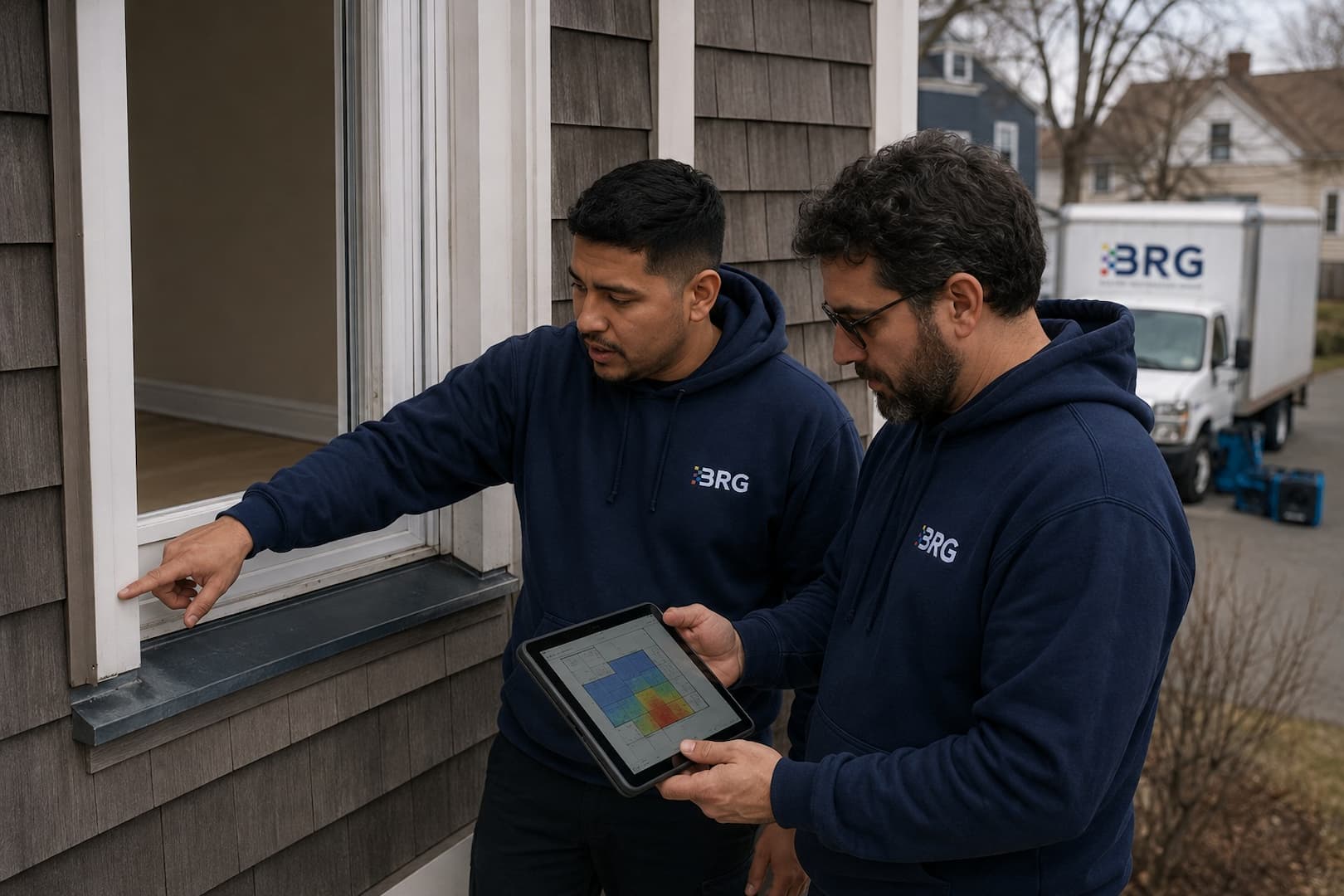
Dry the wall only after the entry path has a repair plan
Temporary exterior protection may be necessary when permanent work cannot occur immediately. Its limits and reinspection needs should be documented.
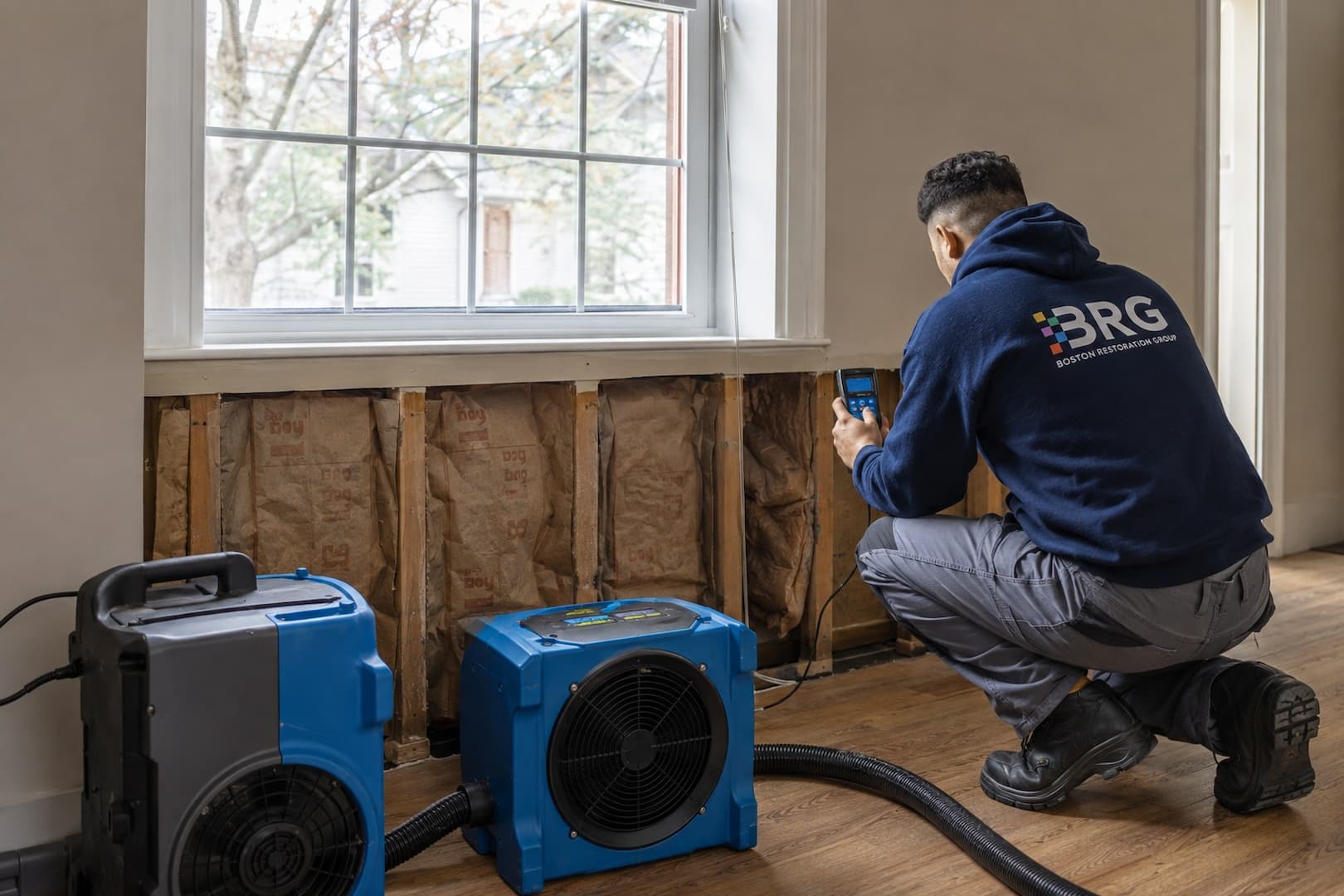
Document weather and source clues
Record opening, elevation, wind exposure, prior repairs, active entry, and rooms or floors affected.
Protect contents and interior finishes
Move vulnerable property, control accessible water, and isolate unsafe ceilings or electrical areas.
Map the wall and connected materials
Measure above, beside, below, at the base, in the floor, and in the level below where applicable.
Coordinate envelope repair and drying access
Share findings with the qualified exterior trade and open or remove interior material only where justified.
Verify through changing conditions
Track material drying and confirm the envelope repair according to the repair professional’s testing or weather observation plan.
The record should connect weather, exterior repair, and interior material condition
Repeated leaks are easier to diagnose when each occurrence and repair is not treated as an isolated note.
When the leak occurs
Date, duration, wind direction, intensity, interior emergence point, and photographs.
What was inspected or repaired
Window, flashing, sealant, siding, masonry, roof interface, temporary protection, and responsible trade.
What was restored
Wall, insulation, trim, floor, room below, readings, drying, removal, and finish repair.
Confirm the wall is dry and the exterior path is corrected
New paint or trim can conceal recurring water until the next storm. The envelope repair and the interior moisture condition should each have a clear completion point before the assembly is closed.
- Keep photos from active-weather events
- Retain repair invoices and test information
- Recheck after the next comparable rain when directed by the repair professional
Window leak cleanup questions
The visible wet trim and the true exterior entry can be separated by several feet.
Does water at the sill mean the window itself failed?
Not always. Water can enter above or beside the opening through flashing, sealant, siding, masonry, roof-wall transitions, or facade details and emerge at the sill.
Can BRG repair the exterior leak?
BRG handles interior mitigation and can provide temporary protection where safe and appropriate. A qualified window, roofing, siding, masonry, or building-envelope professional should diagnose and complete the permanent exterior repair.
Should wet window trim be removed immediately?
Not automatically. Material integrity, finish, repeated wetting, moisture behind it, access, and salvage value determine whether careful removal, in-place drying, or replacement is appropriate.
Why does the leak happen only with wind?
Wind pressure can drive rain upward or sideways through interfaces that do not leak during calm vertical rainfall. Direction and intensity are useful diagnostic evidence.
Can the wall be closed before the next rain?
The interior should be dry and the exterior repair should have a documented verification plan. Depending on the repair, testing or observation during comparable weather may be appropriate.
Request window leak water damage cleanup
Tell BRG which window or elevation is involved, where water appears inside, whether the leak is active, what recent storms or repairs occurred, and which walls, floors, contents, or lower rooms are affected.
617-202-3772- Stay away from wet electrical areas and sagging finishes
- Photograph the leak from indoors during safe conditions
- Provide condo, facade, roof, or property-management contacts
Request Window-Leak Help
The opening, weather pattern, and interior route help us plan the assessment.