
Kitchen Sink Leak Cleanup in Boston, MA
Water under a kitchen sink may come from a pressurized supply, faucet, drain, disposal, dishwasher connection, filter, or recurring splash. BRG helps identify the resulting moisture path, protect cabinetry and flooring, dry accessible materials, and document the plumbing repair and building work separately.
- Sink base, cabinet, and toe-kick moisture
- Supply and drain water-path assessment
- Flooring and ceiling-below inspection
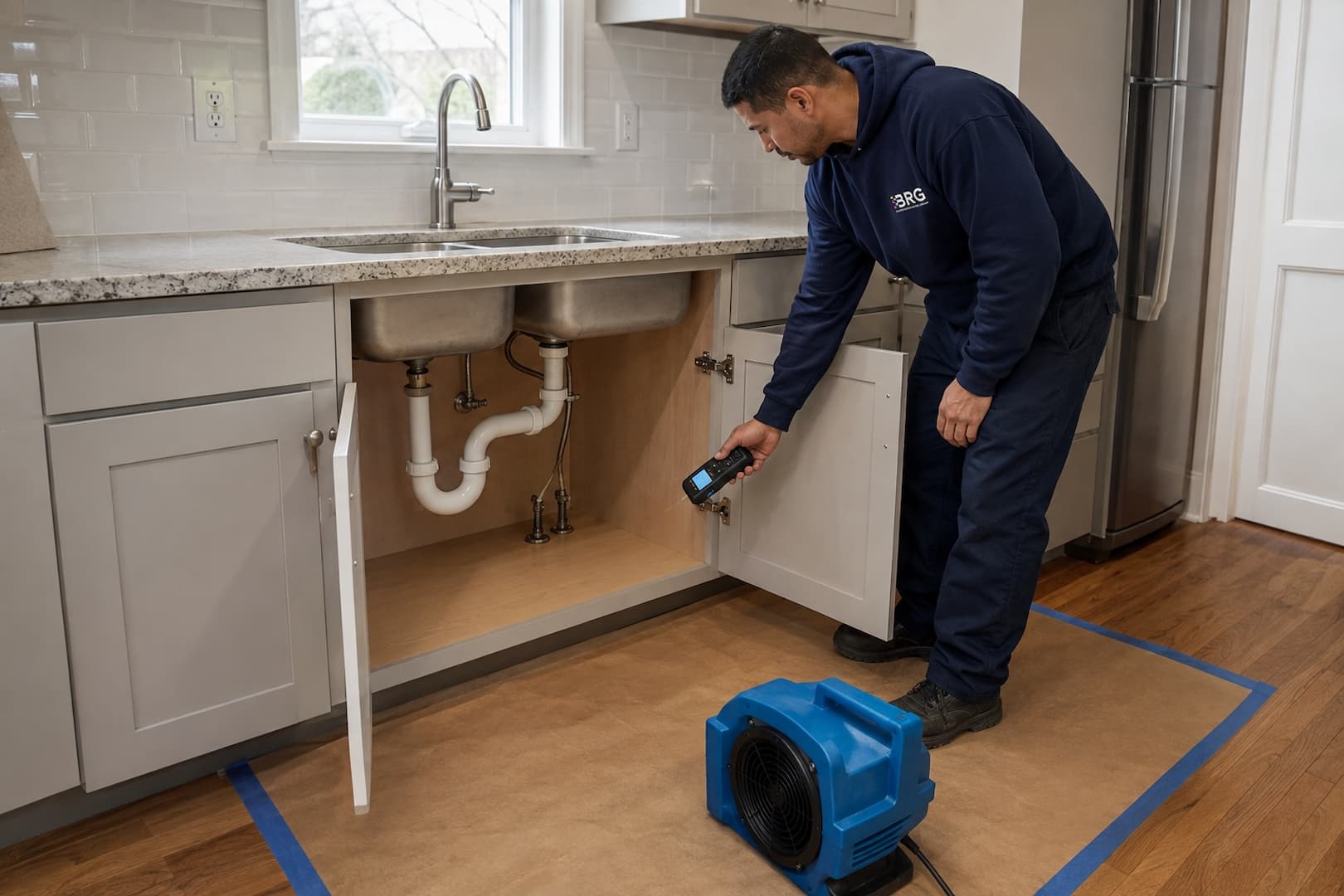
Pressurized clean supply and waste-side leakage create different timing and cleaning questions.
Cleaning products, food, and wet household items are separated before the cabinet base is evaluated.
Water can travel under the cabinet, behind toe-kicks, and beneath finished flooring.
Sink plumbing openings can route water into the wall or ceiling of the room below.
A supply leak and a drain leak do not create the same cleanup condition
A supply connector can release water under pressure even when the sink is not used. A drain, disposal, or dishwasher connection may leak only during flow and may contact food residue or cabinet contents. Turn off a known safe valve or stop using the sink, then arrange plumbing repair.
Pressurized supply or faucet
Watch for active spray, shutoff failure, water inside the wall, and rapid migration to flooring or the level below.
Drain or disposal
Stop sink and dishwasher use, report odor or residue, and do not run water merely to reproduce a leak over wet materials.
Filter, dishwasher, or accessory
Trace all connected tubing and equipment so a secondary source is not missed after the first repair.
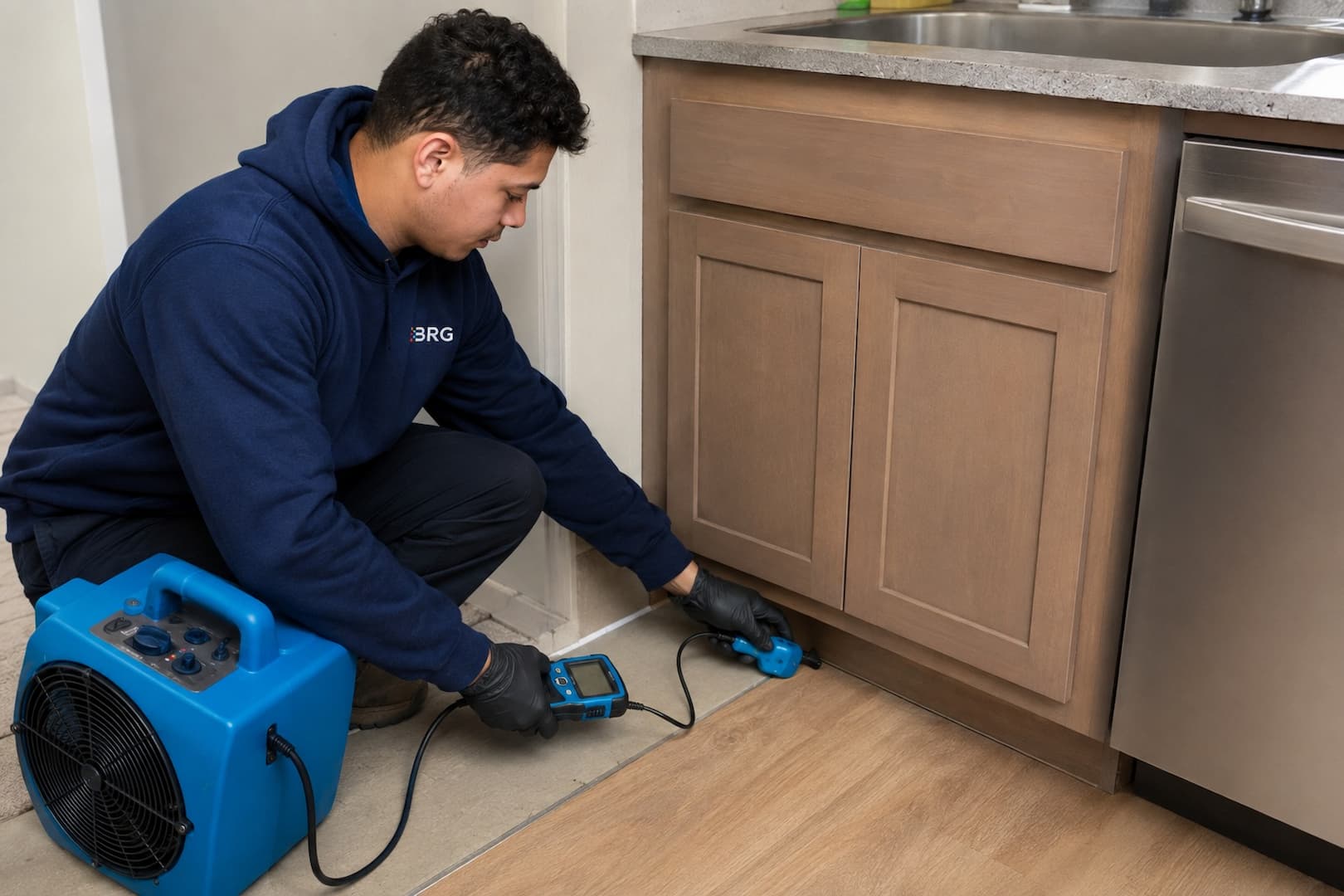
Toe-kicks and cabinet bases can conceal the longest-wet materials
The cabinet deck may catch water while joints and plumbing holes send it behind the back panel or beneath the box. Water can spread along the wall base, under the toe-kick, into a floating floor, or through the subfloor below.
BRG checks the cabinet material, back and side panels, wall interface, toe-kick void, floor seams, nearby appliance recesses, and ceiling below. Small controlled access is considered where it will answer a specific moisture question.
- Remove dry contents and identify any leaking chemicals
- Inspect both sides of the sink wall when accessible
- Check flooring transitions and the room below
Save the finishes that can remain sound and verifiably dry
Cabinet and flooring layers require separate evaluation even when they touch the same puddle.
Cabinet deck and panels
Decide
Cleanability, swelling, finish separation, structural strength, odor, and access to the wall behind.
Toe-kick and wall base
Decide
Detachable trim, hidden cavity moisture, drywall wicking, insulation, and drying-air access.
Finished flooring
Decide
Wood response, laminate edge swelling, resilient seams, tile substrate, underlayment, and trapped water.
Ceiling below
Decide
Insulation, staining, electrical fixtures, sagging, and whether a small access point can support drying.
Coordinate plumbing access with cabinet and floor restoration
The plumber may need the cabinet open before BRG can establish final drying access. The sequence should avoid repeated removal and unnecessary damage.
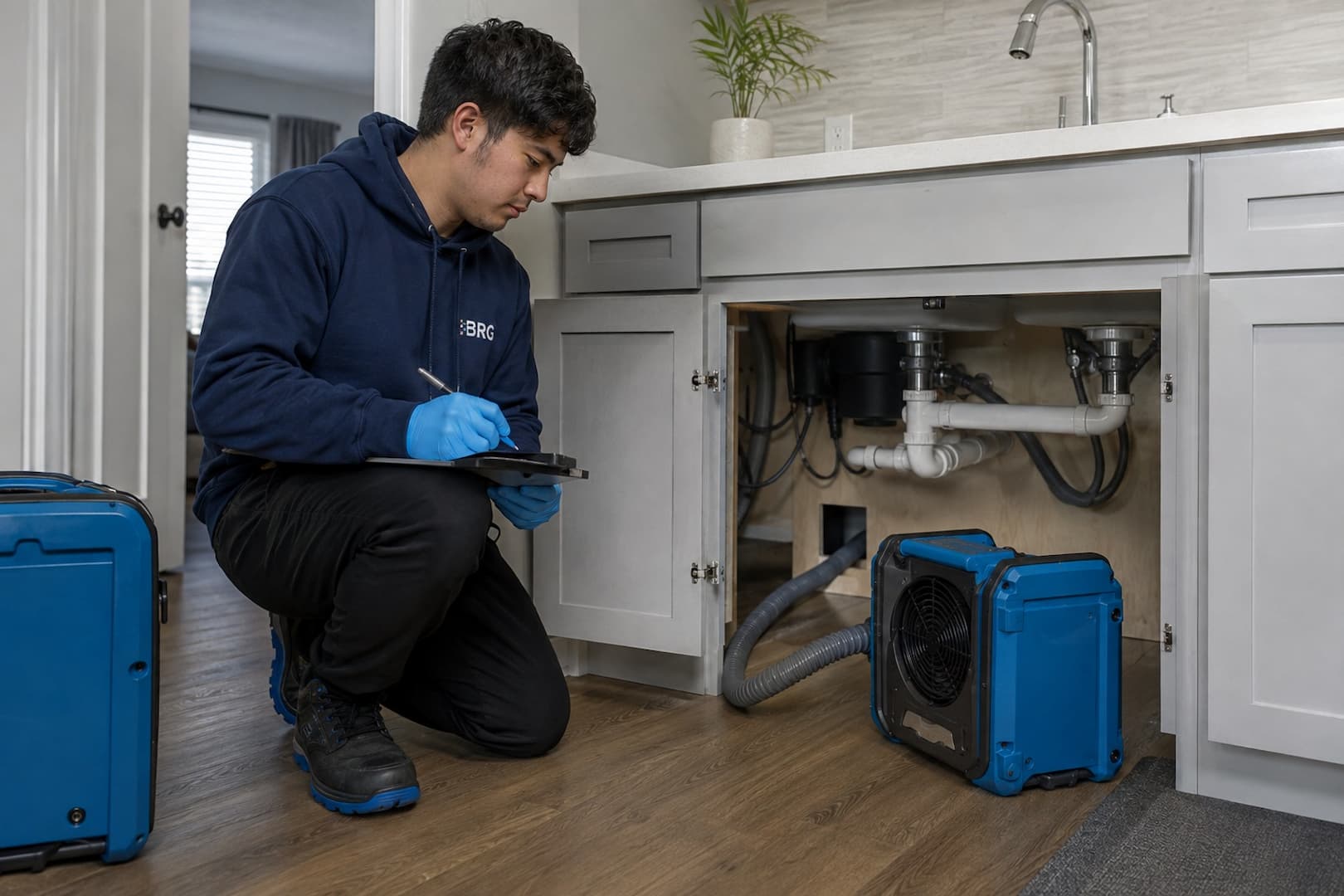
Stop use and repair the source
Confirm supply, faucet, drain, disposal, filter, dishwasher, or unknown source with the appropriate trade.
Remove wet contents and accessible water
Separate cleaning products or food items, protect the kitchen, and extract where needed.
Map cabinet, wall, floor, and lower level
Use readings and visual condition to define the complete affected boundary.
Create targeted access and dry
Remove detachable toe-kick or failed materials as approved, then direct equipment at retained wet layers.
Verify before cabinet and finish repairs
Record source correction, moisture progress, retained components, replacement needs, and reset requirements.
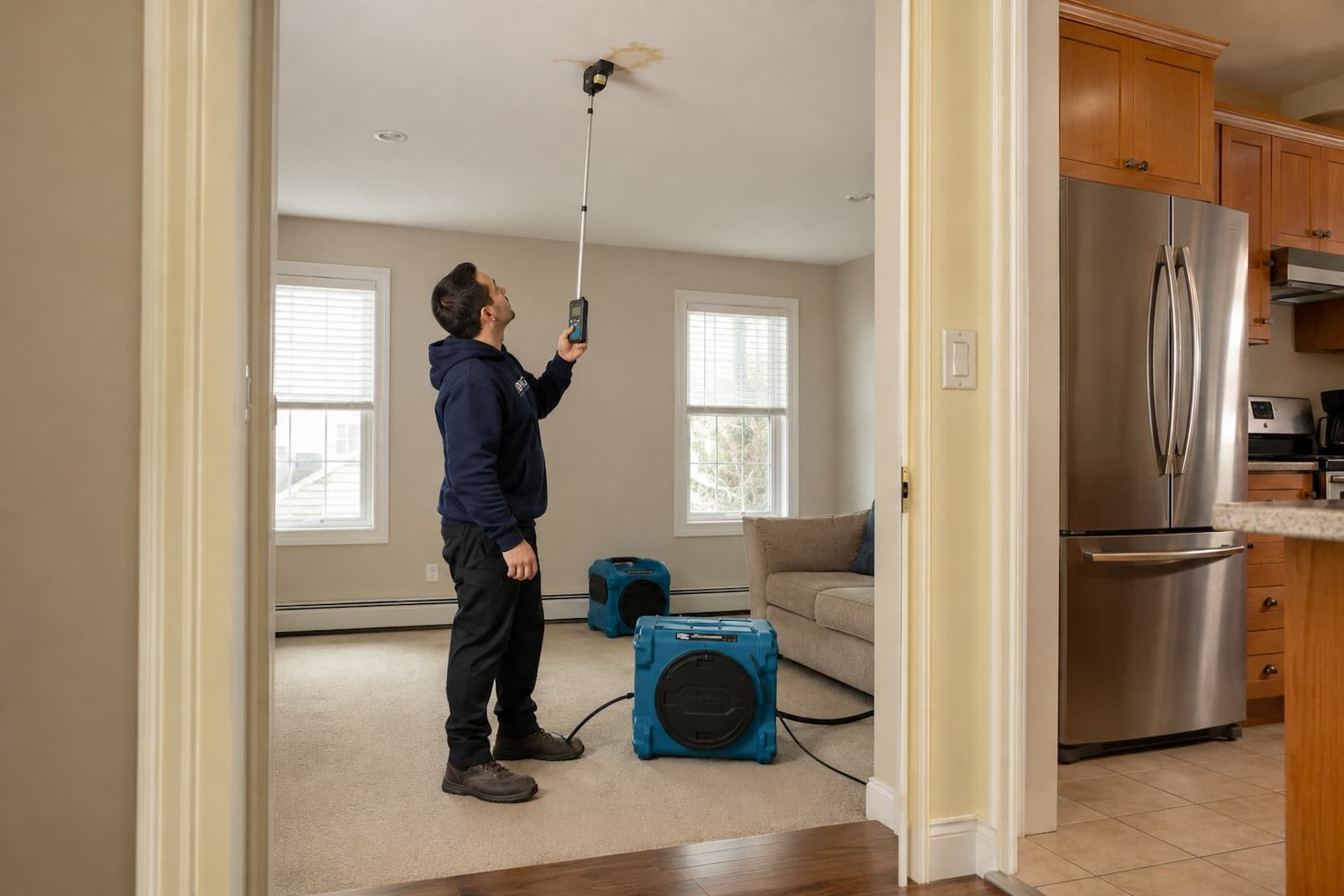
A cabinet leak can connect the kitchen floor to the ceiling below
The vertical route is checked before a small upstairs puddle is classified as an isolated surface spill.
Separate plumbing, cabinetry, and finish decisions
Each responsible party should be able to see what was repaired and what still needs restoration.
Source condition
Supply, drain, disposal, faucet, filter, dishwasher connection, repair, and safe-use status.
Material condition
Contents, cabinet parts, wall, toe-kick, flooring, subfloor indicators, and readings.
What remains
Drying, cabinet components, flooring, drywall, paint, appliance reset, and lower-ceiling work.
Confirm the repair under normal flow without re-wetting the cabinet
The plumber should verify supply and drain connections, disposal, accessories, and any dishwasher tie-in. The cabinet should remain accessible until the source and surrounding material conditions are clear.
- Keep wet cleaning products or food separate
- Save source photographs and the plumber’s invoice
- Report any recurring drip, odor, or cabinet swelling
Kitchen sink leak cleanup questions
The right response begins by distinguishing supply, drain, cabinet, and floor conditions.
Can I keep using the sink if it only leaks a little?
No. Stop use until the source is identified and repaired. Intermittent drain leaks can repeatedly wet hidden cabinet and floor materials.
Should everything in the sink cabinet be discarded?
No. Separate dry items from wet or contaminated items. Food, porous packaging, chemicals, and products contacted by waste-side water require condition-specific decisions.
Can the cabinet be dried in place?
Sometimes. Material type, swelling, residue, wall access, toe-kick construction, and measurable drying progress determine whether it can remain.
Why inspect beside the dishwasher?
Sink, disposal, and dishwasher connections share nearby cabinetry and floor routes. Water may travel into the appliance recess or the dishwasher may be the actual source.
Who reconnects the plumbing after cabinet work?
A qualified plumber or appropriate appliance professional should reconnect and test plumbing components. BRG coordinates restoration access and documents the handoff.
Request kitchen sink leak cleanup
Share the source status, plumber findings, cabinet material, flooring type, affected contents, adjacent appliance area, and any water or staining on the level below.
617-202-3772- Stop using a leaking drain or disposal
- Do not operate wet electrical outlets or appliances
- Provide building, parking, elevator, and kitchen-access details
Request Sink-Leak Help
The connection type and affected materials guide the first visit.