
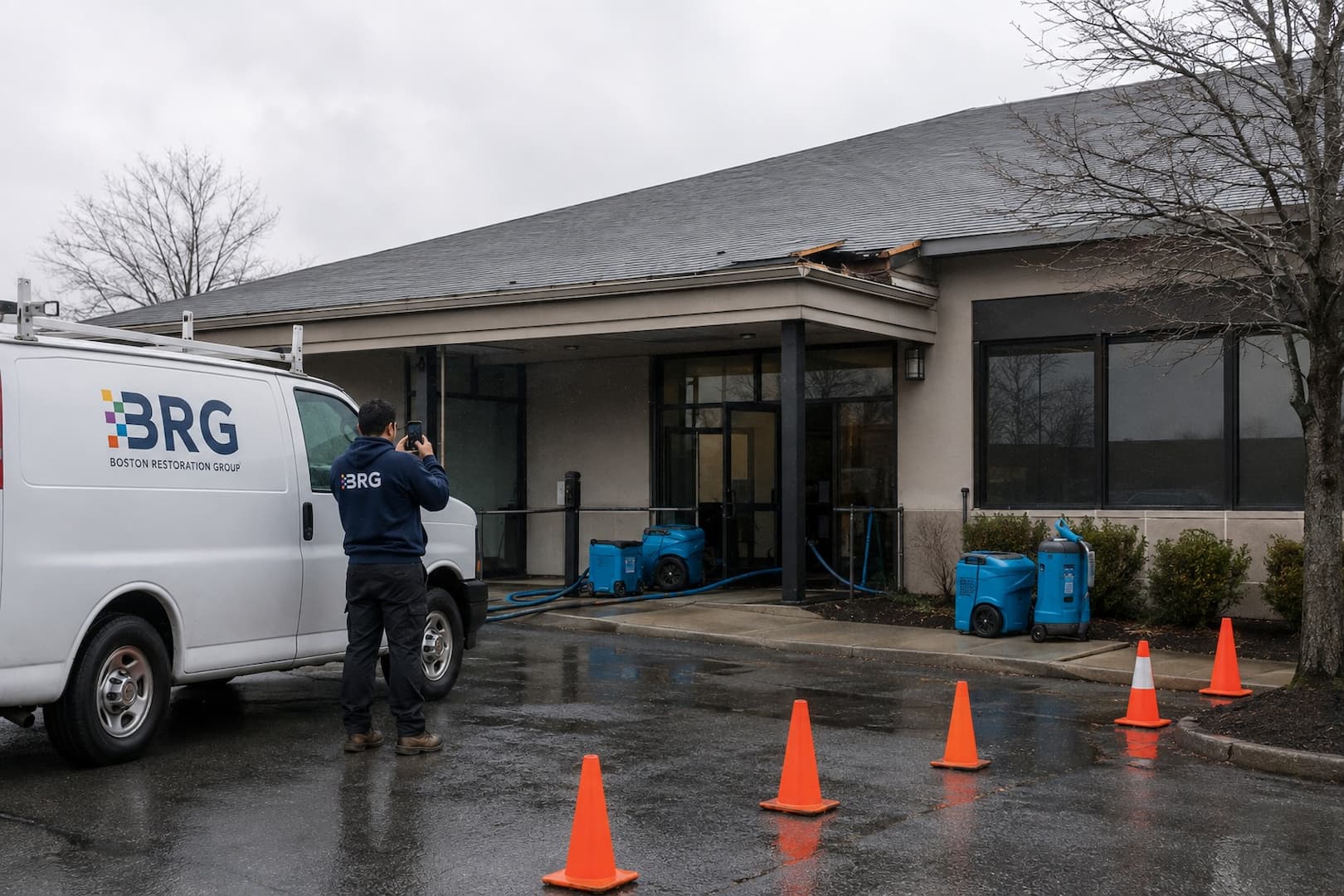
Commercial Weather Damage Restoration in Greater Boston
Weather damage can affect a roof, storefront, loading area, occupied units, inventory, and lower floors in one event. BRG helps commercial owners and managers establish safe zones, limit additional exposure, remove water, protect contents, and coordinate a repair-ready record without losing sight of how the property operates.
Emergency, utility, structural, and municipal restrictions control entry after severe weather.
Accessible openings are protected with documented limits until permanent repair.
Rain, snowmelt, floodwater, and broken systems require different cleanup controls.
Critical operations and safe unaffected areas are separated from active restoration.
Classify the condition before choosing the cleanup method
Weather is the event. The actual restoration scope depends on how the building was affected.
Openings and impact
Roof-edge damage, broken glazing, doors, signs, debris, and facade components may create both access and water-entry hazards.
Envelope water
Water can travel along roof decks, wall systems, windows, insulation, shafts, and ceilings beyond the exterior defect.
Freeze and ice
Frozen piping, ice dams, rooftop drainage, and snow load can produce interior water and structural concerns.
Flooding and backup
Surface water, overwhelmed drainage, sump failure, and sewage require source-specific contamination controls.
Temporary protection must fit the building and its routes
A commercial board-up or weather covering has to account for egress, deliveries, fire protection, storefront security, roof drainage, public sidewalks, tenants, and the expected duration before permanent repair. A panel or tarp that solves one opening but creates another hazard is not a complete plan.
BRG documents accessible openings, installed protection, restricted areas, and limitations. The property team receives a clear list of permanent roofing, glazing, door, facade, structural, or utility work that remains outside the temporary measure.
- Maintain required exits and emergency access
- Separate customer, tenant, and equipment routes
- Schedule reinspection when weather or building conditions change

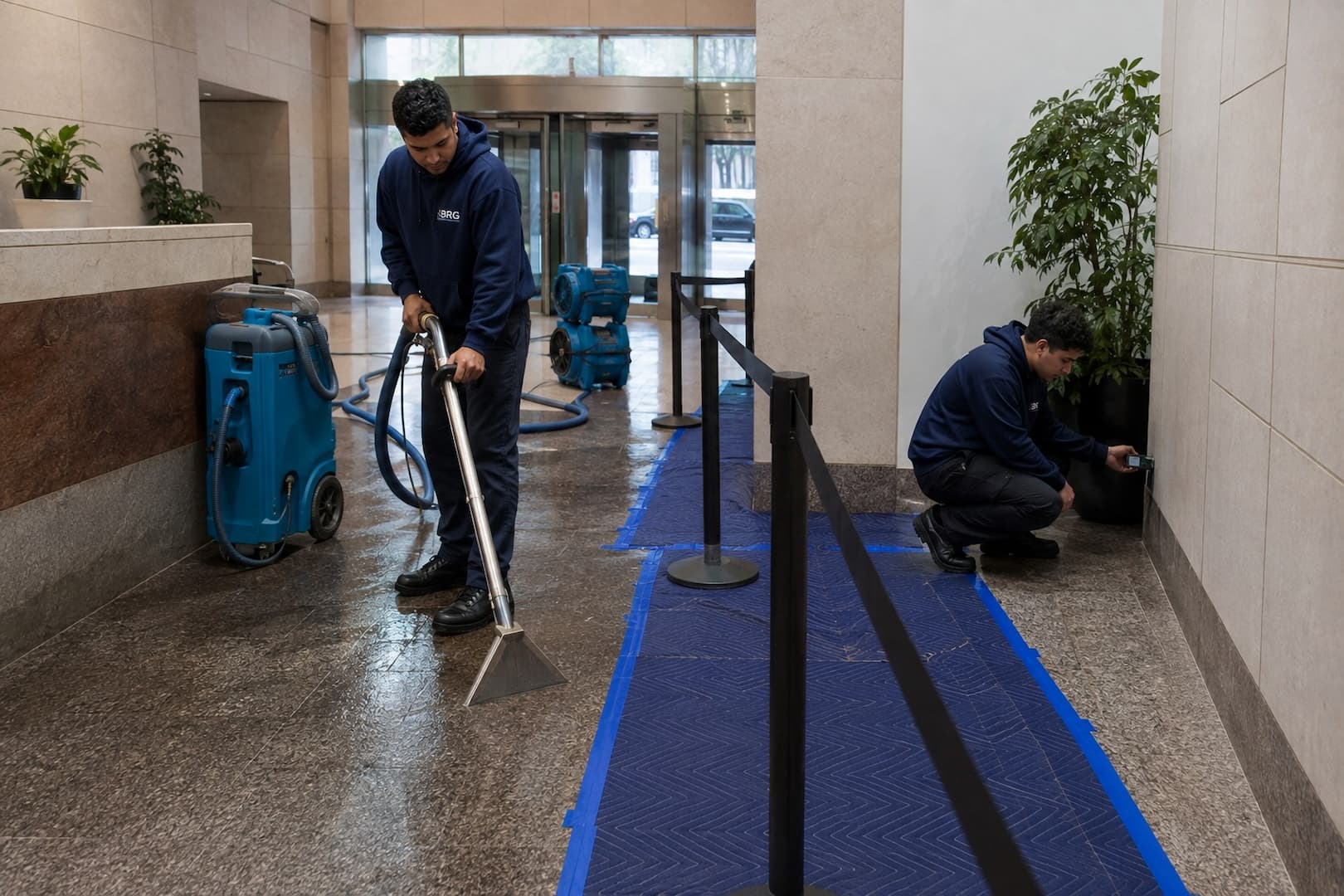
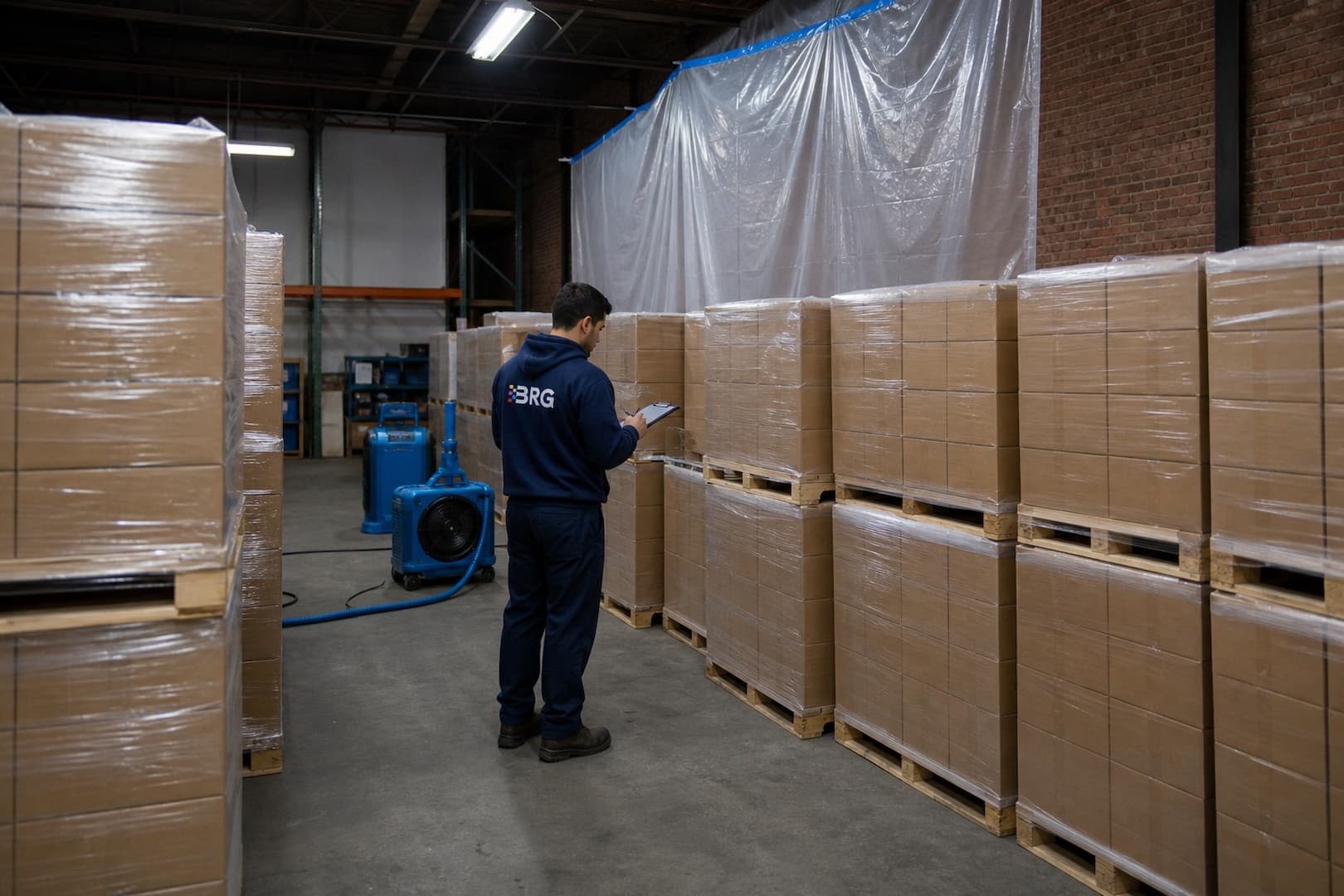
Extract water and protect inventory without spreading the work
The wet area, dry route, contents staging, and operating areas should remain visually and operationally distinct.
Prioritize by safety, water movement, and business consequence
The largest-looking stain is not always the first operational priority. Active water above an electrical room, a roof opening over inventory, contaminated water near food service, or moisture crossing tenant boundaries may require earlier action than a larger but stable cosmetic area.
Critical systems and services
Protect power, alarms, data, refrigeration, resident services, records, and other property-specific functions within safe authority boundaries.
Occupied and public areas
Control slip hazards, falling material, glass, dust, noise, and unauthorized entry while the property manages communication.
Materials and contents
Map wet assemblies, move vulnerable inventory when authorized, and document salvage, cleaning, disposal, or specialty referral.
Move from safe access to a repair-ready property record
Continued weather, authority releases, roofing availability, utilities, tenants, and material response can alter the order. The project plan is updated as those conditions change.

Establish the incident picture
Record weather-related openings, hazards, water sources, affected floors, utilities, occupancy, operations, and access restrictions.
Protect and control
Install feasible temporary protection, barriers, contents covering, extraction, and debris controls.
Map assemblies and contents
Trace water above, beside, and below the visible entry; separate clean rain entry from floodwater or backup conditions.
Dry, clean, and monitor by zone
Match equipment and methods to materials while preserving designated dry areas and operational routes.
Hand off permanent repairs
Document temporary work, remaining restrictions, retained or removed materials, and building-envelope or structural repairs still required.
Connect exterior failure, interior damage, operations, and permanent repair
BRG’s records can include exterior and interior photographs, temporary measures, affected rooms, moisture information, equipment, contents protection, debris, and scope changes. The carrier determines policy coverage; the property and qualified trades approve and complete permanent repair.
- Weather opening and temporary measure
- Interior water path and affected materials
- Business areas released, restricted, or awaiting repair
Commercial weather restoration questions
The correct answer depends on safe access, building systems, and continued weather.
Can a damaged business stay open during restoration?
Possibly, when authorities and the property team approve occupancy and the building can maintain safe egress, utilities, separation, air controls, and customer or tenant routes. Some losses require partial or full closure.
Can BRG permanently repair the roof or storefront?
BRG can provide emergency protection and related interior mitigation. Permanent roofing, glazing, structural, electrical, or facade work may require the appropriate qualified trade under a separate scope.
Why does stormwater source matter?
Rain through an intact roof opening differs from surface floodwater or a drainage backup. The route determines potential contamination, affected materials, protective equipment, and cleaning controls.
How are multiple tenants documented?
The project can use floor, unit, room, and zone records so damage, access, contents, work, and release status are not blended across occupants.
What if more rain is forecast?
Temporary protection and interior controls are selected for current safe conditions and inspected as feasible. The property should keep restricted areas closed and arrange reinspection after severe weather changes.
Request commercial weather damage help
Tell BRG the property type, affected elevations or floors, current water entry, public or tenant areas, critical operations, temporary measures already taken, and any fire, utility, building, or engineering restrictions.
617-202-3772- Keep people away from damaged roofs, glass, trees, and energized water
- Mention floodwater, drains, sewage, or water crossing floor levels
- Provide loading, security, roof, elevator, and after-hours access details
Request a Commercial Weather Call
Share current conditions and the person authorized to coordinate the site.