
Water Heater Leak Cleanup in Boston, MA
Fast water removal and structural drying for basements and utility areas—without the chaos.
A leaking water heater can start quietly and then turn into a floor-wide flood. In Boston basements, water spreads along low points, under storage, and into framing zones that stay damp far longer than the visible puddle.
Boston Restoration Group helps you regain control: we remove water, stabilize humidity, and dry surrounding materials with verification. You’ll know what was affected, what was saved, and what should be repaired next.
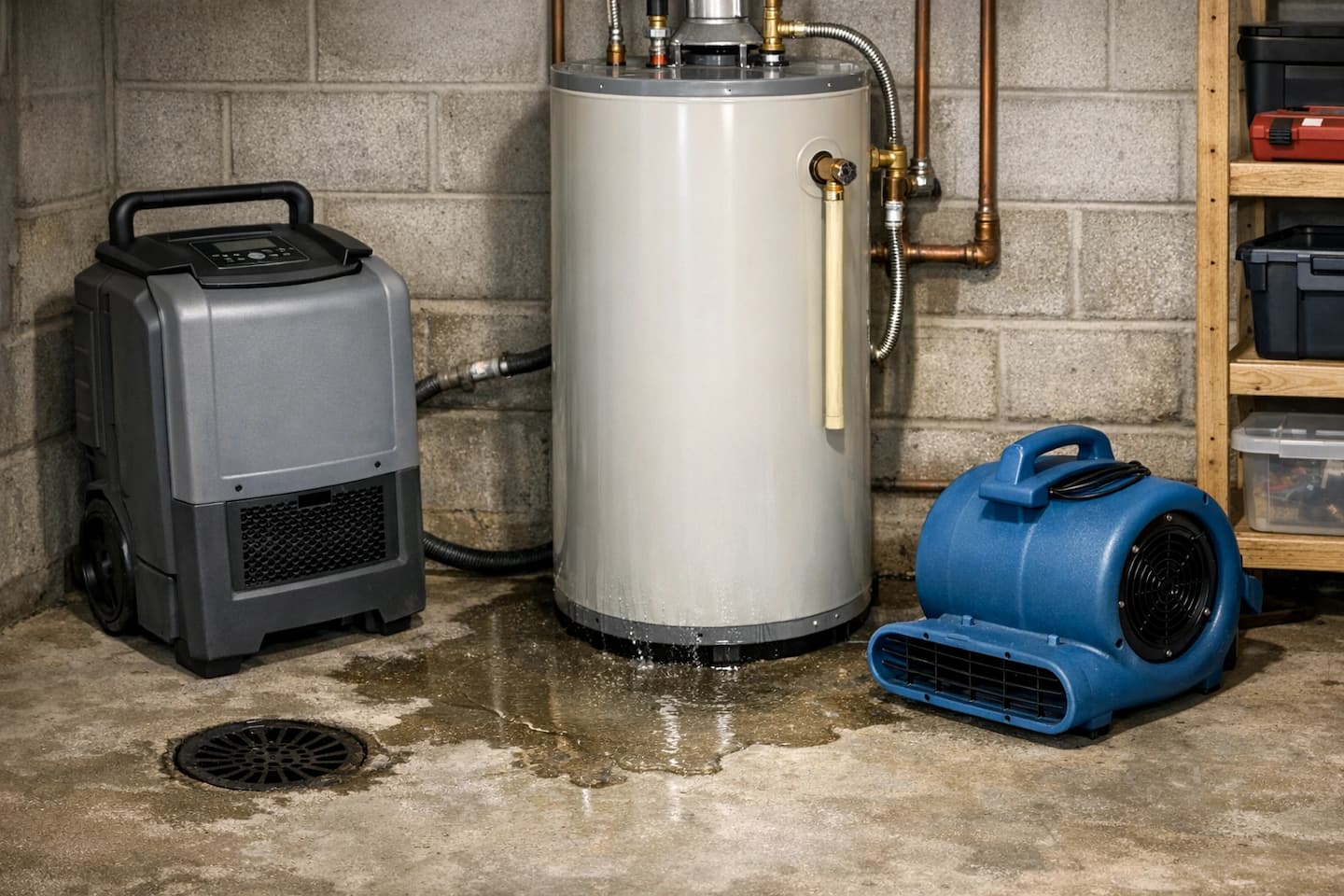
First priorities when a water heater leaks
Before you think about repairs, the home needs stabilization. The biggest risk isn’t only the water you see—it’s moisture that migrates into edges, seams, and porous materials.
Wet basements and electricity don’t mix. If outlets or cords are nearby, treat the area as hazardous until it’s safe.
Standing water can wick into trim and lower wall zones quickly. Early extraction reduces the amount of material that becomes “soft” or swollen.
Drying works best when guided by readings. Otherwise, basements can feel “dry” while trapped moisture remains in layers.
What we typically address around a leaking heater
Even a contained leak can spread under items and along slab edges. Our focus is to prevent long-tail issues like odor, rusting hardware, and damp framing that never truly dries.
We remove standing water, then use targeted extraction in low points and along floor transitions.
Concrete doesn’t “ruin” easily, but it can hold moisture and keep the basement humid. We control conditions so surrounding wood and drywall aren’t constantly re-wetted.
We monitor progress and adjust placement so drying is effective, not just loud.
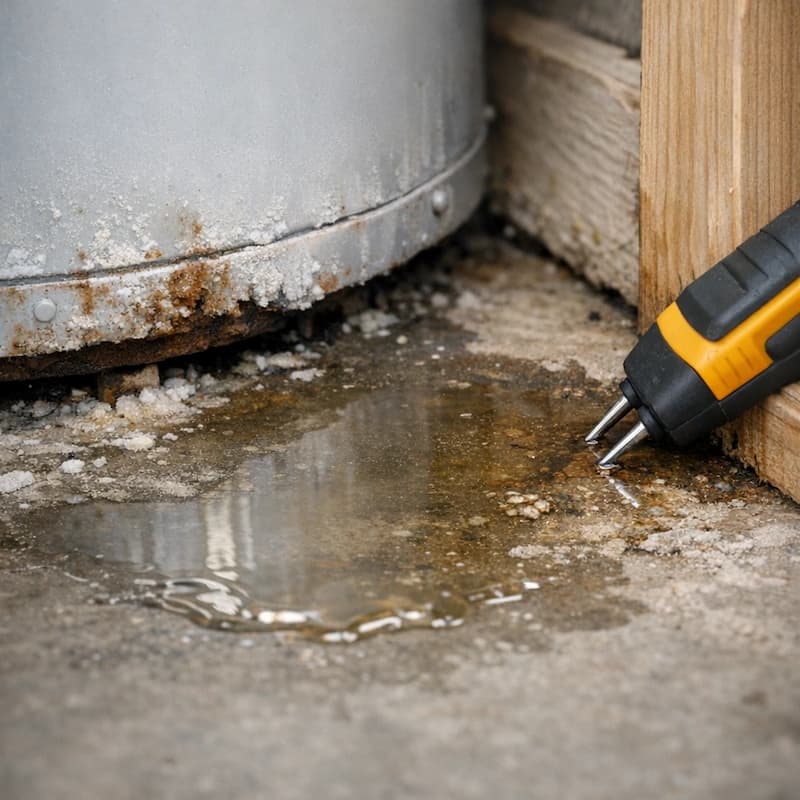
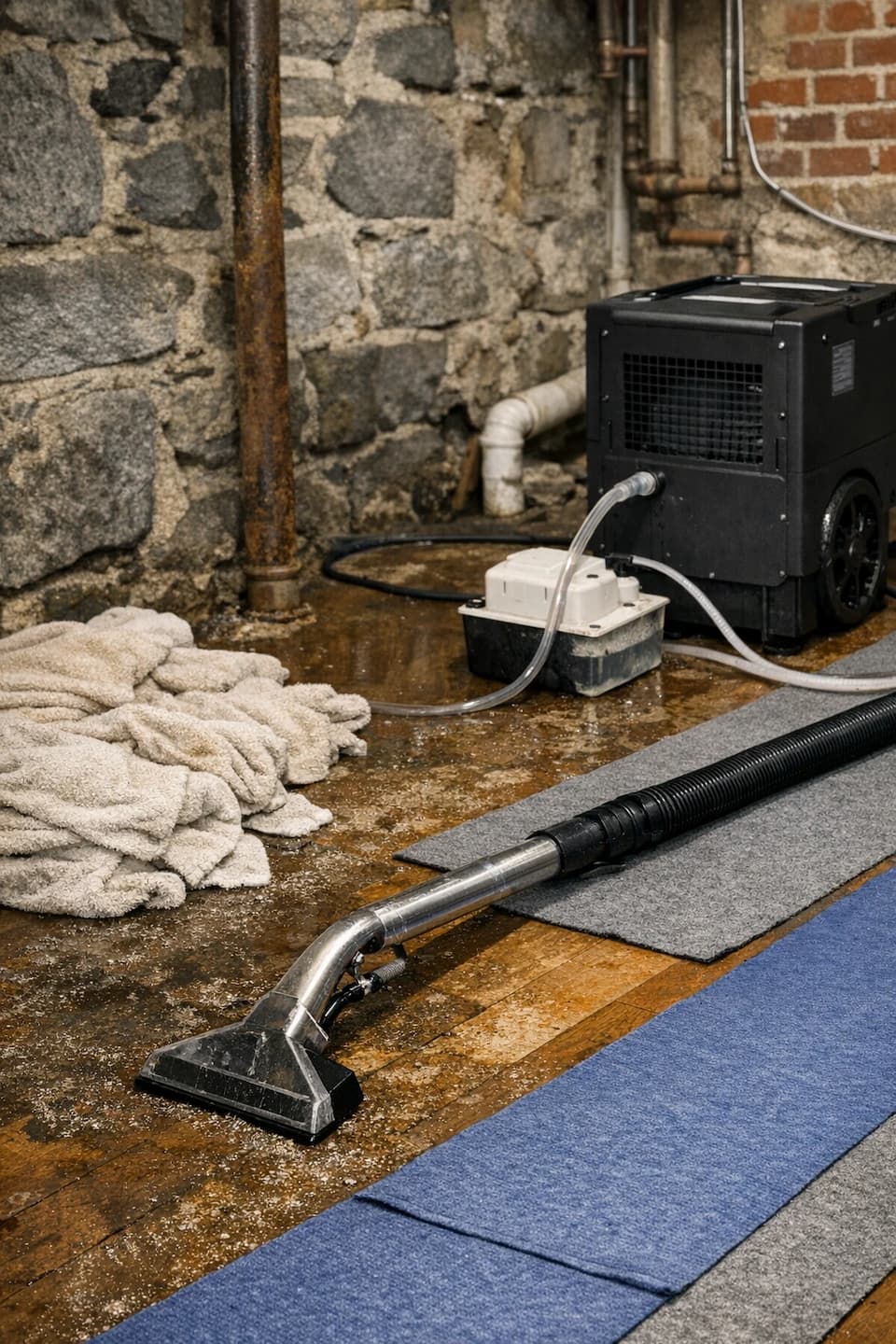
Common “secondary damage” we prevent
- Swollen baseboards and trim near utility corners
- Damp stored items and cardboard boxes that keep humidity high
- Musty odor from moisture held at slab edges
- Flooring separation where materials meet (vinyl-to-concrete, laminate seams)
What to do while you’re waiting
- If safe, stop the water source and keep people off wet areas
- Move valuables off the floor and open access paths for equipment
- Avoid blasting heat without ventilation—warmth alone can spread humidity
- If the leak is active, coordinate replacement/repair with the right trade
Our Advantages

Basement humidity control
We manage humidity and airflow so drying doesn’t stall and the basement doesn’t stay “clammy” after the visible water is gone.
Clean, organized workflow
Utility areas get crowded fast. We protect traffic paths and keep equipment staging tidy so you can still access essentials.
Material-focused drying
We pay attention to what actually gets damaged: trim, wood framing, storage, and flooring transitions—not just concrete.
Practical documentation
Photos and moisture notes help you coordinate the repair plan and support insurance conversations when needed.
FAQ
Is a slow leak as serious as a burst?
Sometimes more. Slow leaks can soak materials for longer, which increases odor risk and raises the chance of swelling in wood and trim.
Can you start if the water heater is still leaking?
We can stabilize and reduce spread, but stopping the source is always best. If replacement is scheduled, we coordinate cleanup around that timeline.
Do you handle the replacement of the water heater?
Our focus is restoration—water removal, drying, and stabilization. If plumbing work is needed, we’ll help you understand what to ask for.
Need water heater leak cleanup today?
Call BRG for fast water removal and verified drying in Boston.