
Roof Leak Water Damage Cleanup in Boston, MA
Roof water may pass through shingles or membrane, flashing, penetrations, decking, insulation, framing, and ceiling surfaces before it becomes visible indoors. BRG protects the interior, maps the wet assembly, removes accessible water, and coordinates drying with the qualified roofer’s temporary and permanent source repair.
- Attic, ceiling, and wall moisture mapping
- Interior protection and structural drying
- Roofing repair and restoration handoff
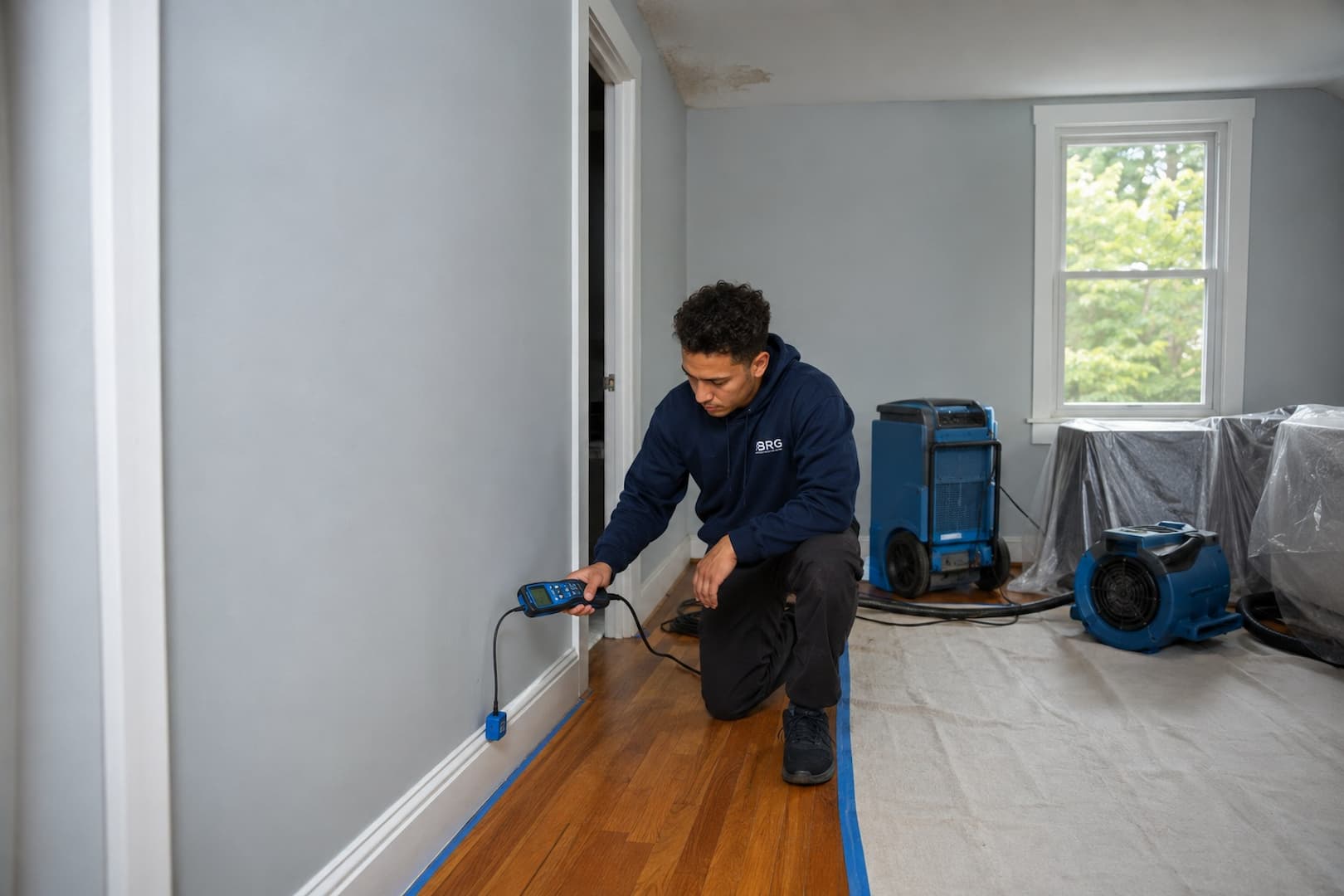
Wet, icy, wind-damaged, or structurally questionable roofs require trained, properly equipped professionals.
Water-loaded finishes can release suddenly and may involve wiring or insulation.
Interior emergence does not locate the exact exterior defect.
Temporary covering, permanent roof repair, interior drying, and finish work have distinct completion points.
Do not stand below a bulging, cracking, or dripping ceiling
Keep occupants and contents away from the area. Do not puncture the ceiling, operate wet lights, enter an attic without a safe platform, or climb onto the roof. Call emergency services or the utility for immediate structural or electrical hazards, and use a qualified roofer for exterior access.
Active ceiling release
Create a no-entry zone beneath the affected area and report lights, outlets, cracking, bulging, and sound changes.
Attic access
Insulation can hide framing and ceiling surfaces; walking outside established decking can cause a fall through.
Exterior access
Rain, wind, ice, slope, edge conditions, damaged decking, and darkness can make roof inspection unsafe.
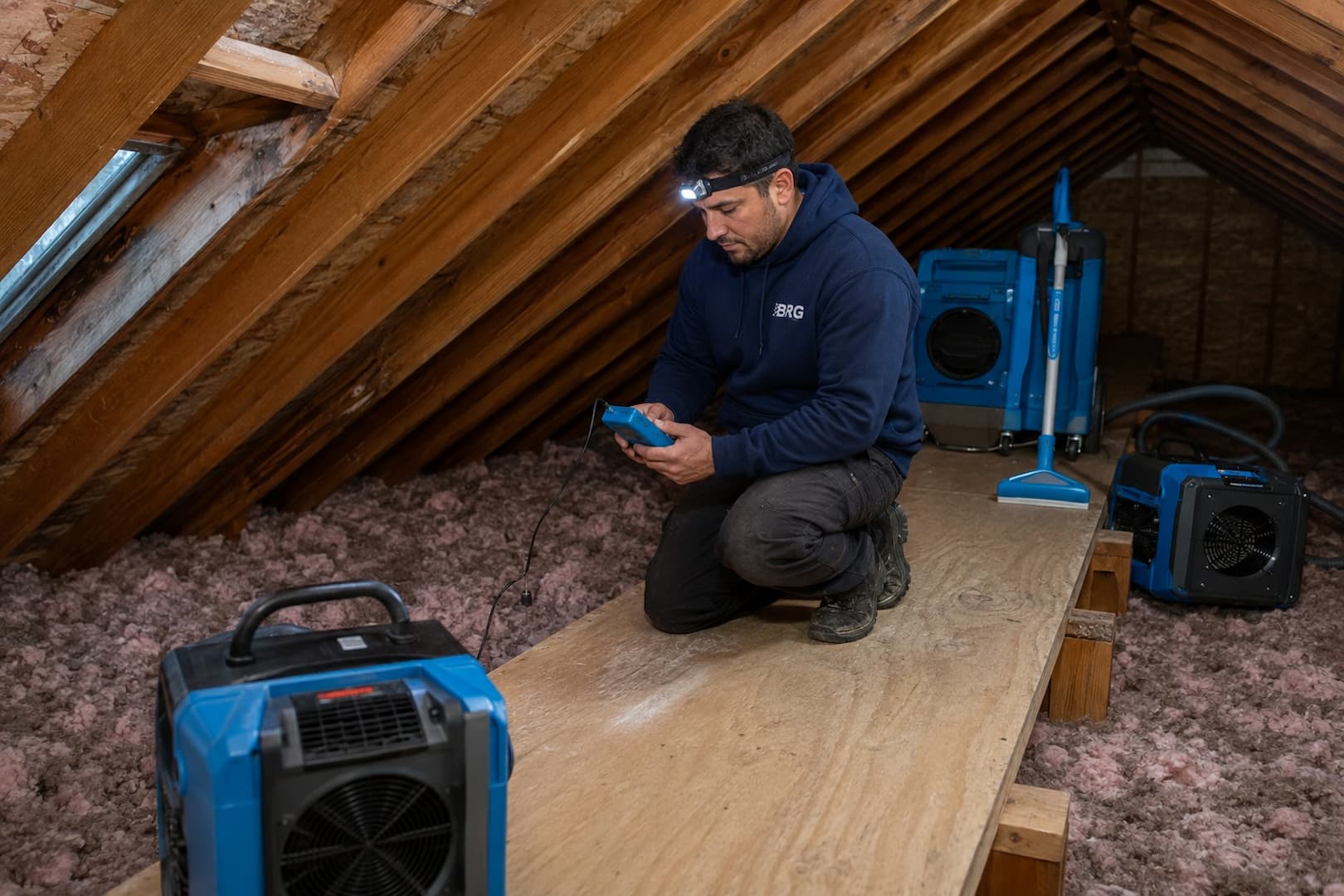
A roof leak moves along layered construction before gravity wins
Water can enter at flashing, a penetration, damaged covering, drain, parapet, valley, skylight, or ice-related backup. It may run along decking, rafters, fasteners, vapor layers, insulation, or the top of the ceiling until it reaches a joint or opening.
BRG maps interior moisture at the ceiling, wall, attic or plenum, floor, and rooms below as indicated. The roofer uses exterior expertise and testing to locate and correct the entry. Both findings belong in the project chronology.
- Note which wind and rain conditions reproduce the leak
- Share prior roof repairs, snow, ice, or drainage issues
- Check insulation and connected wall cavities
Interior protection should reduce damage without concealing danger
A stable collection and exclusion zone can protect the room while roof access is arranged; sagging ceilings remain off limits.
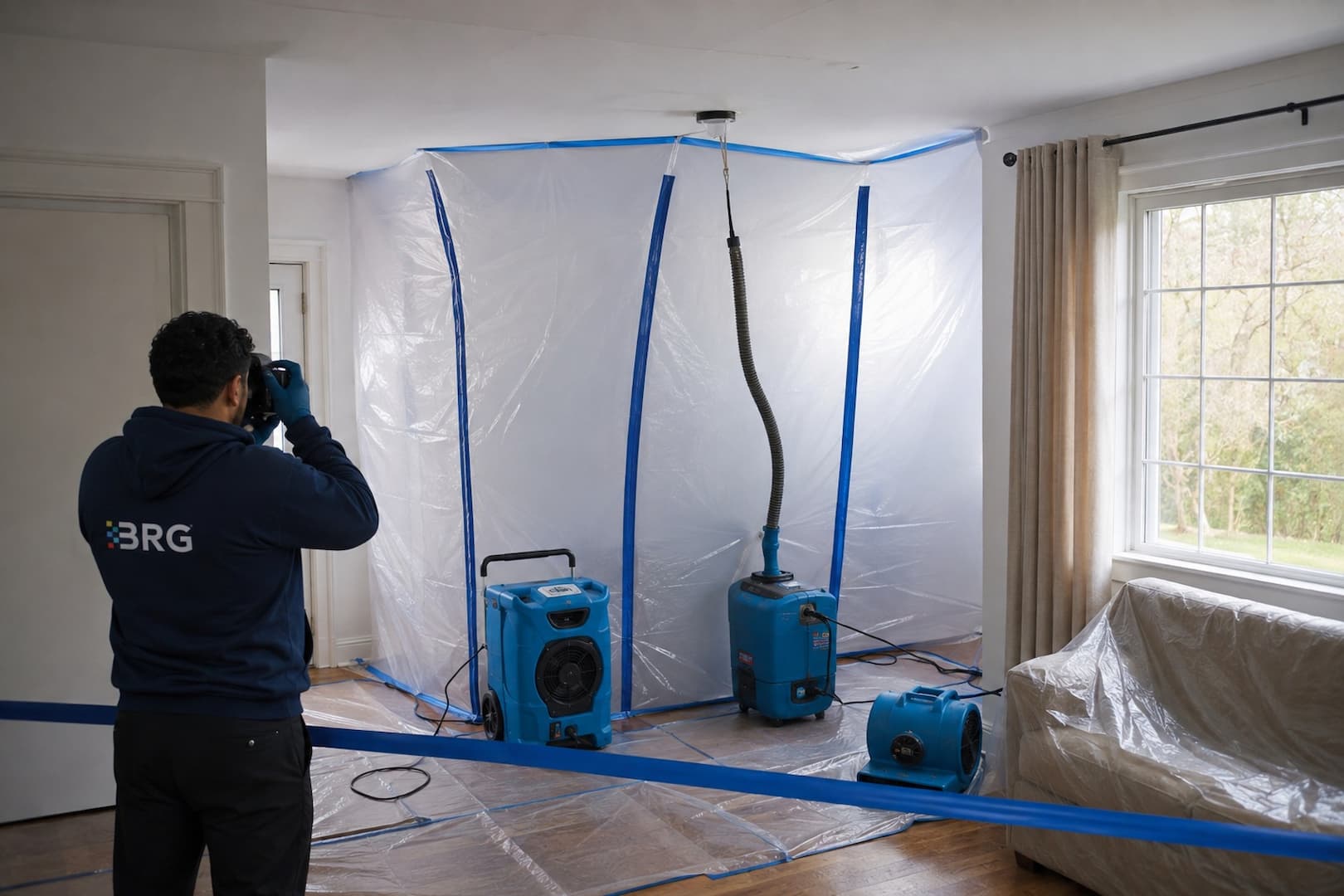
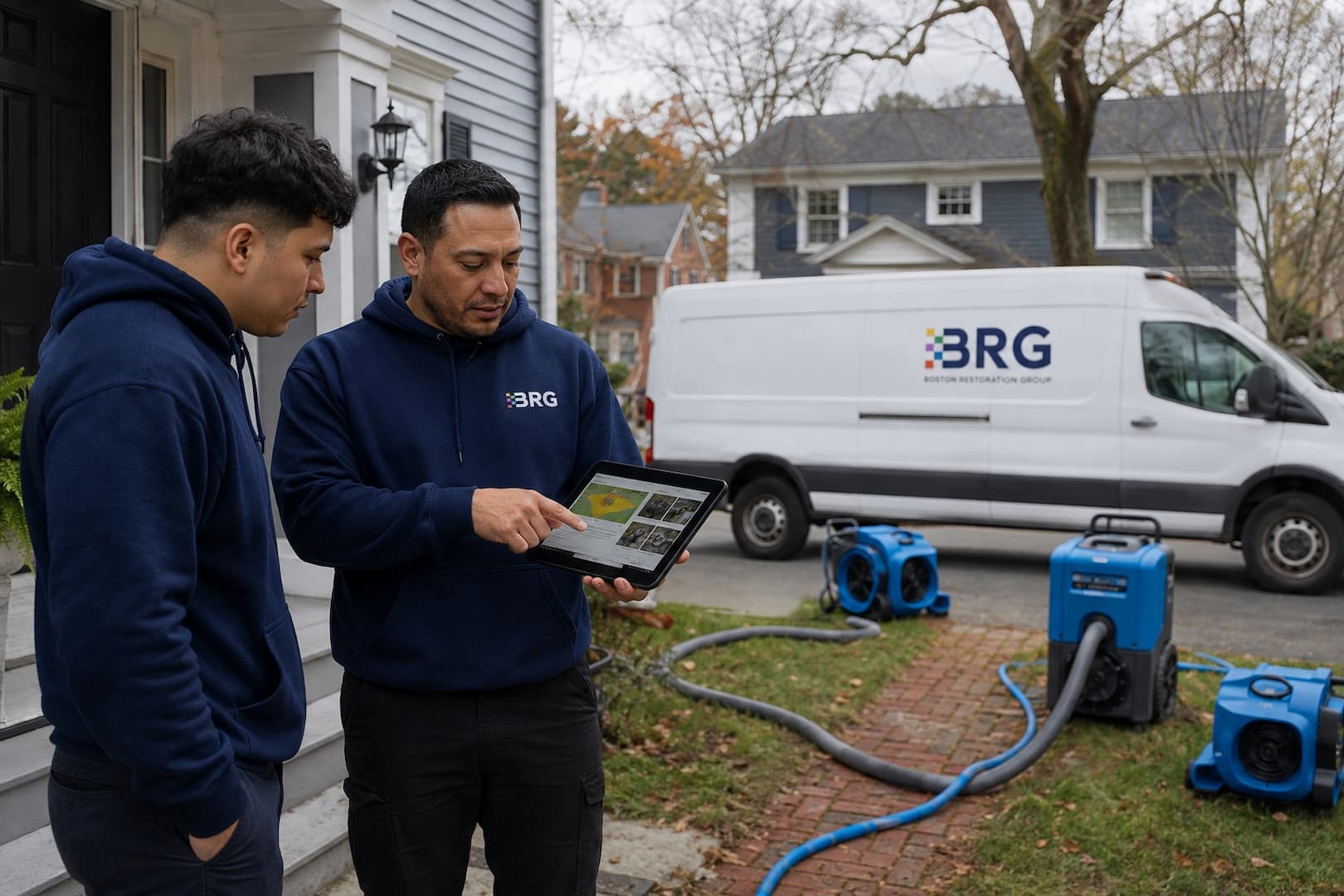
Insulation, ceilings, walls, and finishes need separate decisions
The leak path can cross materials with very different drying and structural behavior.
Roof deck and framing
Coordinate
Roofer or structural professional assesses exterior covering, deck condition, flashing, penetrations, and structural repair.
Attic insulation
Evaluate
Saturation, compression, contamination, access, vapor layers, drying feasibility, and removal boundary.
Ceiling and walls
Evaluate
Integrity, sagging, staining, hidden moisture, plaster or drywall construction, and electrical components.
Interior contents and floors
Protect
Furniture, rugs, electronics, finishes, and rooms below from active drips, debris, and migration.
Link weather protection, roof repair, and interior drying
Continued rain may require temporary controls before a permanent repair is possible. BRG records which source measures are provisional.
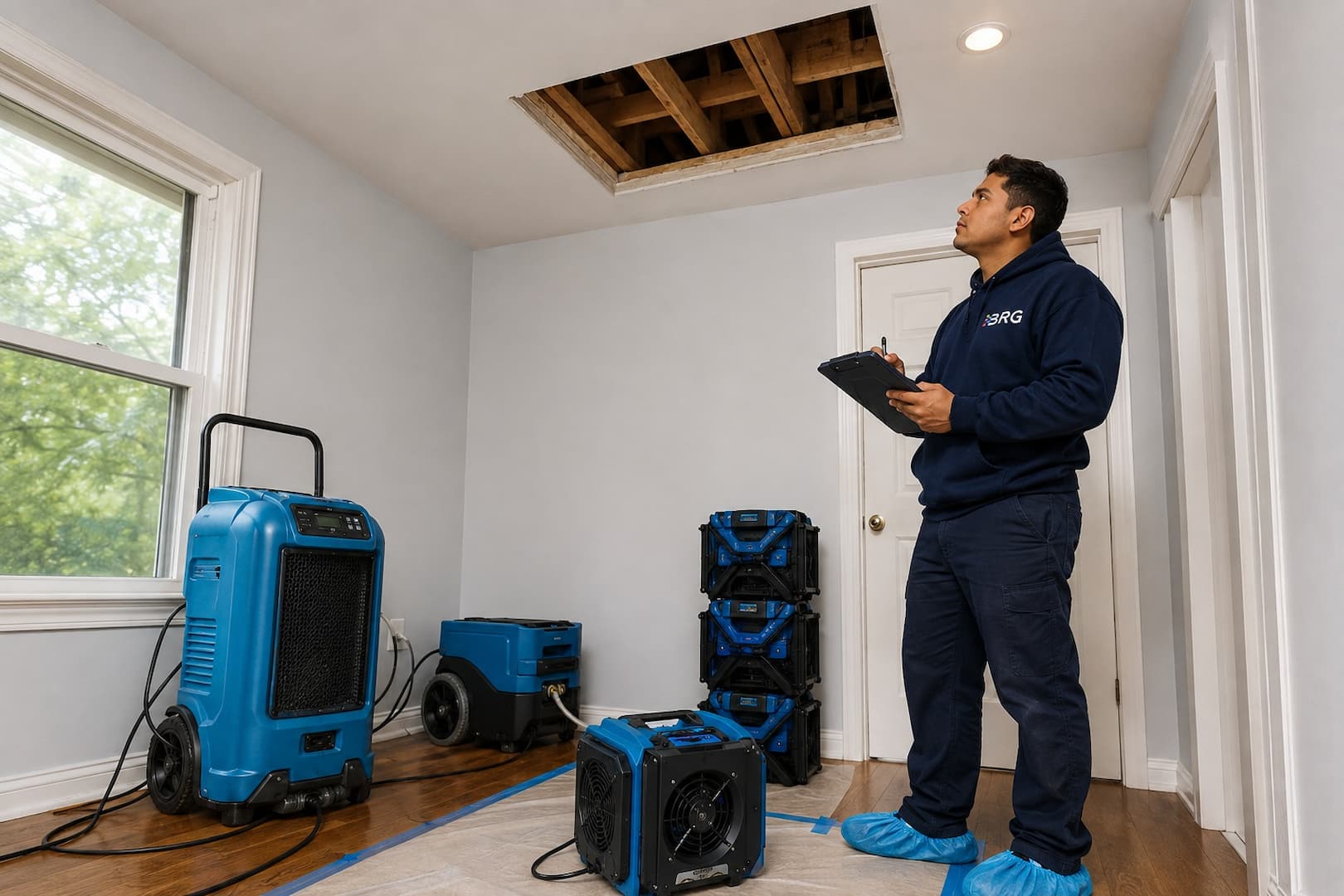
Establish safe interior and exterior boundaries
Record ceiling, electrical, attic, roof, structural, weather, and occupancy restrictions.
Protect contents and control accessible water
Move vulnerable items, create an exclusion zone, collect safe drips, and extract water where appropriate.
Coordinate source protection and repair
Share interior evidence with the qualified roofer and document temporary or permanent roof action.
Map, access, and dry the interior assembly
Inspect insulation, ceiling, walls, floors, and lower rooms; remove failed material or create access as justified.
Verify both sides of the handoff
Confirm material drying and retain the roofer’s repair or test documentation before finish closure.
Connect the storm pattern, roof action, and wet materials
A ceiling stain is more useful when it is tied to weather and source repair history.
When entry occurred
Dates, wind, rain, snow, ice, drainage, active locations, and safe interior photographs.
Protection and repair
Roofer findings, affected detail, temporary measure, permanent repair, and verification plan.
Restoration scope
Attic, insulation, ceiling, wall, contents, readings, drying, removal, and finish repair.
Require a clear source status and dry interior assembly
Replacing insulation or repainting too early can hide recurring entry and trap moisture. Coordinate the roofer’s completion point with BRG’s material-drying record and any required building review.
- Retain roof photographs and invoices
- Document temporary measures and inspection dates
- Recheck after comparable weather when directed by the roofer
Roof leak cleanup questions
Interior emergence does not locate the exterior failure by itself.
Should I puncture a bulging ceiling to drain it?
No. Stay clear and keep others out. The ceiling may release suddenly and can conceal wiring, insulation, or contamination. Let qualified responders establish safe access.
Can BRG find and permanently repair the roof leak?
BRG maps interior water and provides related mitigation. A qualified roofer or building-envelope professional should diagnose, protect, repair, and verify the roof source.
Why is water showing up far from the roof damage?
It can run along decking, framing, fasteners, insulation, and ceiling surfaces before exiting at a seam or penetration.
Does wet insulation need removal?
Saturation, type, compression, contamination, access, vapor layers, and ability to dry and verify determine the decision.
Can repairs begin before the next rain?
Interior finishes should wait for source correction and dry materials. The roofer may use testing or comparable-weather observation to verify the repair depending on the roof system.
Request roof leak water damage cleanup
Tell BRG when the leak appears, the roof or top-floor location, whether a roofer has installed temporary or permanent protection, and which ceilings, walls, rooms, or contents are affected.
617-202-3772- Stay away from sagging ceilings and wet electrical areas
- Do not climb onto a wet, icy, or damaged roof
- Provide attic, roof, condo, tenant, and parking access details
Request Roof-Leak Help
Weather history, source status, and interior route guide the assessment.