
Ice Dam Removal in Boston, MA
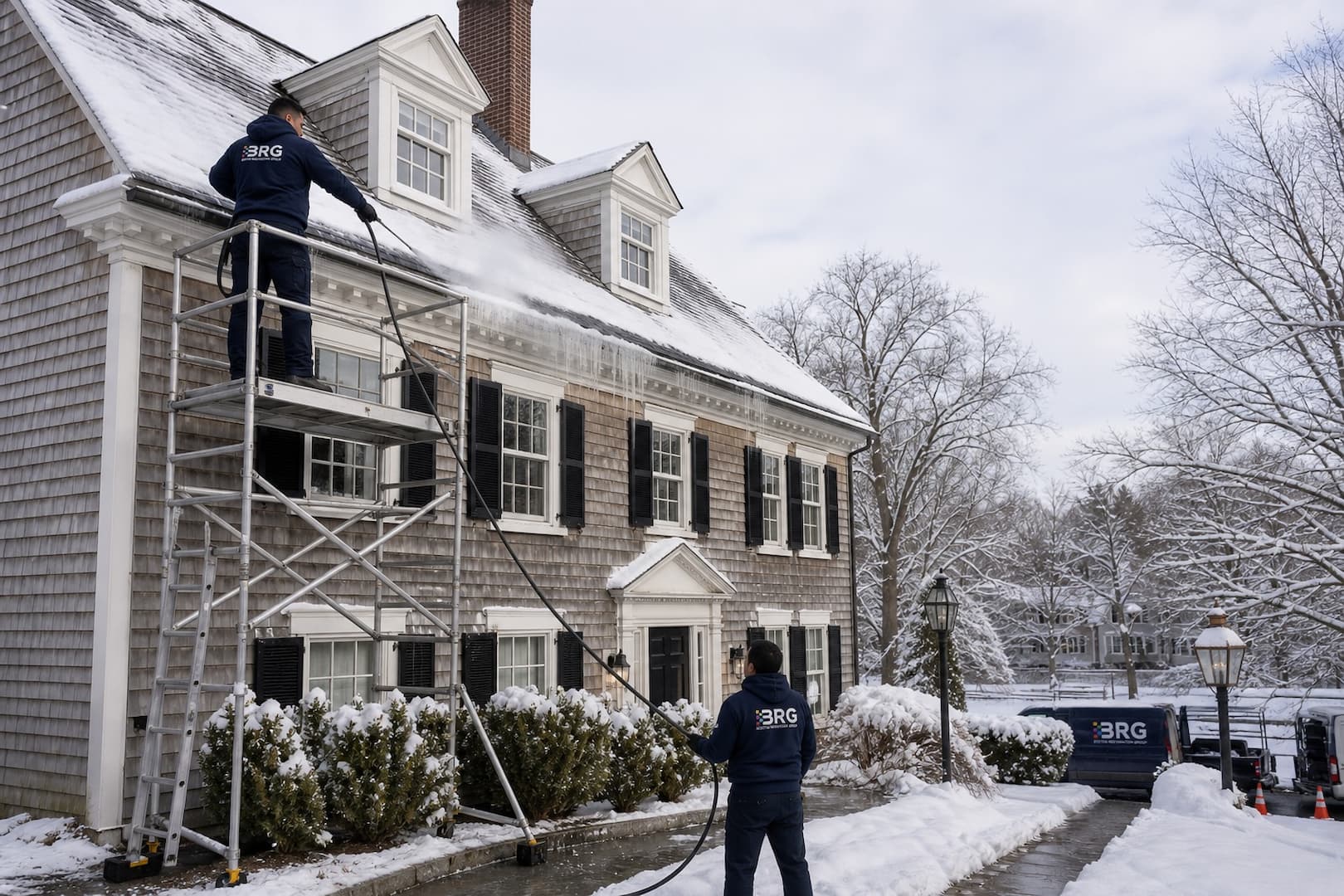
An ice dam holds meltwater at the eaves, valleys, or roof transitions. BRG evaluates access and the drainage path, then uses controlled removal methods appropriate to the roof and conditions instead of aggressive chopping that can damage shingles, flashing, and gutters.
Locate the blocked edge
Eaves, valleys, dormers, transitions, and downspouts can trap water in different ways.
Choose safe access
Roof pitch, height, snow load, ice, power lines, and ground conditions determine whether work can proceed.
Open drainage deliberately
The aim is to relieve trapped water while limiting impact on roofing and metalwork.
Separate the hidden loss
Interior moisture mapping and drying are a distinct scope when water has entered the building.
The visible ice is the result; heat and drainage conditions are the system
Snow melts on a warmer roof surface, moves toward a colder edge, and freezes. Repeated cycles build a ridge that can hold later meltwater above the normal drainage plane. Complex valleys, low-slope transitions, clogged outlets, insulation gaps, and air leakage may concentrate the problem.
Emergency removal relieves the immediate obstruction. It does not by itself correct attic air leakage, insulation, ventilation, roof detailing, or gutter geometry. BRG records the observed locations so the owner can direct the right roofing or building-envelope follow-up after winter conditions allow it.
Removal should fit the roof, not a slogan
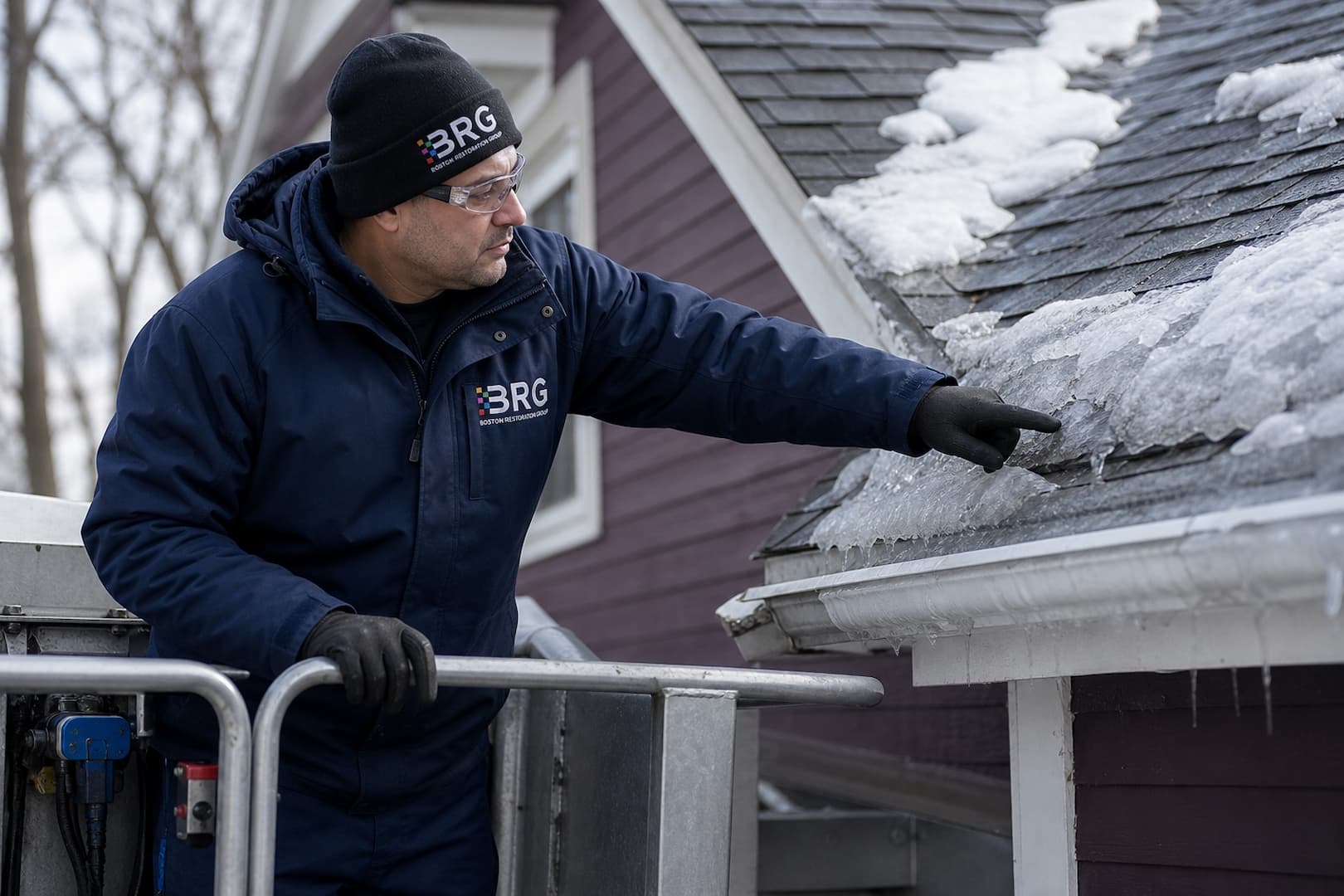
Steam can provide controlled melting on many ice ridges, but access, roof material, temperature, ice thickness, and equipment positioning must be evaluated at the property.
| Condition | Why it matters | BRG decision point |
|---|---|---|
| Heavy ridge at an asphalt-shingle eave | Force can loosen granules, puncture shingles, or bend metal edges | Use controlled channels and staged removal from safe access where conditions permit |
| Ice around a valley or flashing transition | Water may be trapped above several intersecting drainage paths | Map the likely release direction before opening channels |
| Slate, wood, metal, membrane, or specialty roofing | Attachment, surface strength, heat response, and walkability differ | Confirm material and involve the appropriate roofing specialist when needed |
| High roof, steep pitch, limited ground access | Worker and public safety may make immediate removal impractical | Select lift or platform access, create an exclusion zone, reschedule, or refer based on conditions |
| Active interior leak | Water may already be inside insulation, walls, and ceilings | Pair roof-side relief with a separate interior water-damage assessment |
The crew plans where released water will go before melting the dam
Opening ice without a drainage and ground-control plan can move the problem from the roof to the walkway or interior.
Remote review and arrival plan
BRG collects roof height, pitch, ice locations, leak status, access, overhead-line, and ground information before mobilizing.
Access and exclusion zone
The crew confirms stable equipment placement and keeps occupants, vehicles, and pedestrians outside falling-ice and discharge areas.
Roof-edge assessment
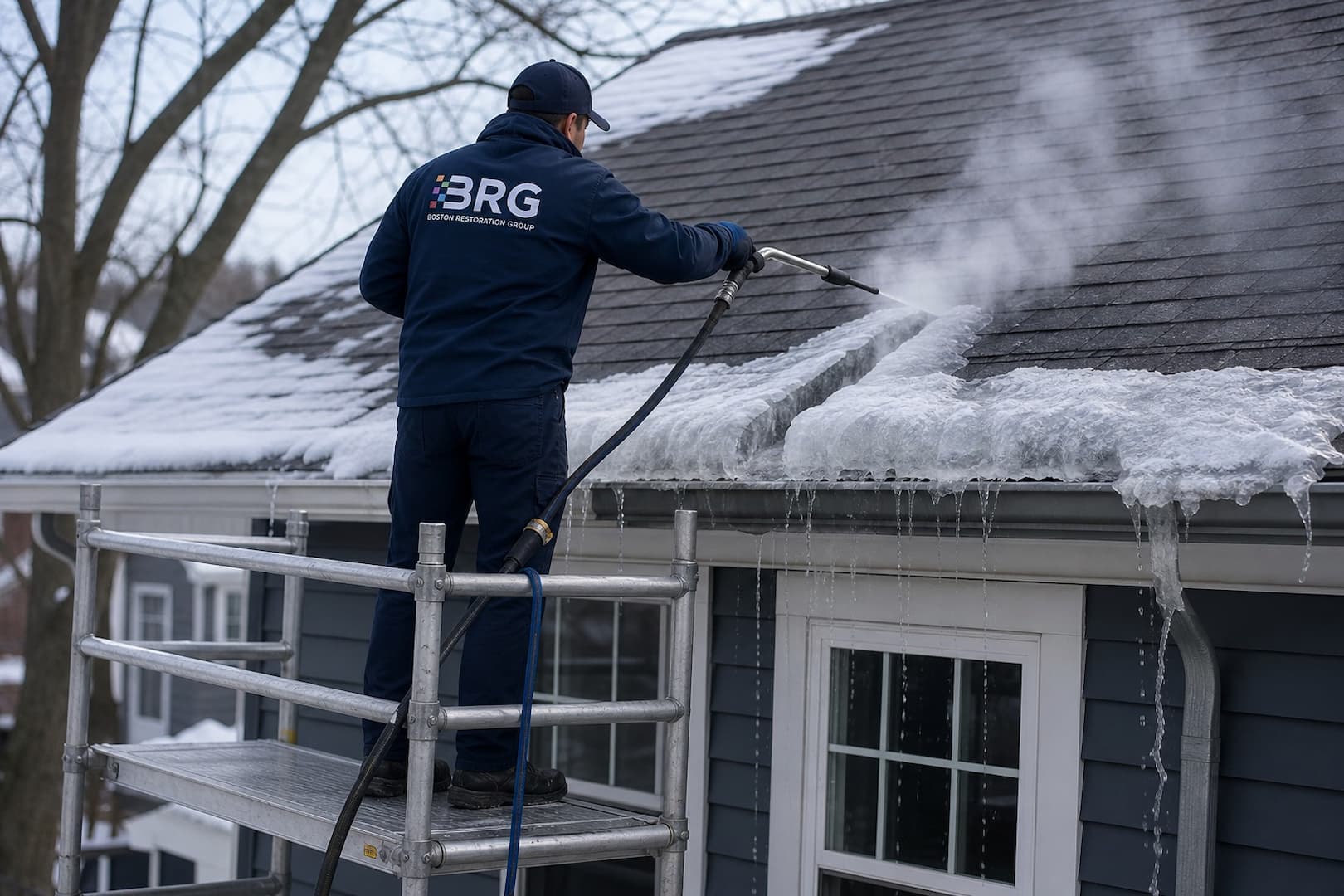
Ice thickness, roofing material, valleys, gutters, flashing, outlets, and likely trapped-water direction are documented.
Controlled drainage relief
Selected channels or sections are opened in an order that relieves water without indiscriminate impact to the roof edge.
Condition record and follow-up
BRG records treated areas, visible roof concerns, interior leak reports, and recommended roofing or building-envelope review.
Removing the dam does not dry the ceiling below it
A ceiling stain may represent wet insulation, roof decking, wall cavities, trim, or flooring on the level below. After drainage is restored, retained water can continue moving through an assembly and surface later.
Use the ice dam water damage cleanup scope for interior moisture mapping, controlled access, material decisions, drying, and repair documentation. Keeping the scopes distinct makes it clear which work occurred on the roof and which work occurred inside.
- Place a container only if the area below is safe.
- Do not puncture a bulging ceiling or approach wet fixtures.
- Move dry, reachable contents away from the drip path.
- Photograph new stains and note when dripping changes.
Use the removal record to investigate recurrence
A roofer or building-envelope professional may need to evaluate roof details, attic bypasses, insulation, ventilation, and drainage. BRG documents the event and immediate removal; it does not diagnose every heat-loss condition from the exterior ridge alone.
Treated eaves, valleys, transitions, and outlets are identified.
Observable shingle, flashing, gutter, and edge concerns are recorded.
Known stains or active leaks are flagged for the separate cleanup scope.
Ice dam removal questions
Weather and safe access can change the removal plan even after a visit is scheduled.
Does BRG use steam for every ice dam?
No single method is appropriate for every roof and condition. BRG evaluates material, ice thickness, access, temperature, drainage, and equipment position before choosing controlled removal.
Should I chip the ice or use salt?
Aggressive tools can damage shingles, flashing, and gutters, while deicers can affect roofing, metal, plants, and runoff areas. Keep clear of the eaves and request a professional assessment.
Can removal happen during any storm?
No. Wind, falling snow or ice, lightning, visibility, temperature, roof load, and access can make roof-edge work unsafe. The crew may need to delay or change the access method.
Will ice dam removal stop future dams?
It relieves the immediate obstruction. Recurrence may require roofing, insulation, air-sealing, ventilation, or drainage corrections after the emergency.
Who handles the wet ceiling inside?
BRG can assess the interior under the separate ice dam water damage cleanup scope, which includes moisture mapping, material decisions, drying, and repair planning.
Request ice dam removal in Greater Boston
Call if water is actively entering. Send the property address, roof height and type if known, ice location, interior leak status, ground access, and photos taken from a safe position.
617-202-3772- Do not climb onto an icy roof or place a ladder below the ridge.
- Move vehicles and people away from the eaves.
- Mention overhead wires, steep grades, narrow driveways, and limited lift access.
Describe the roof-edge condition
A clear exterior photo and the leak location help the team review access.