
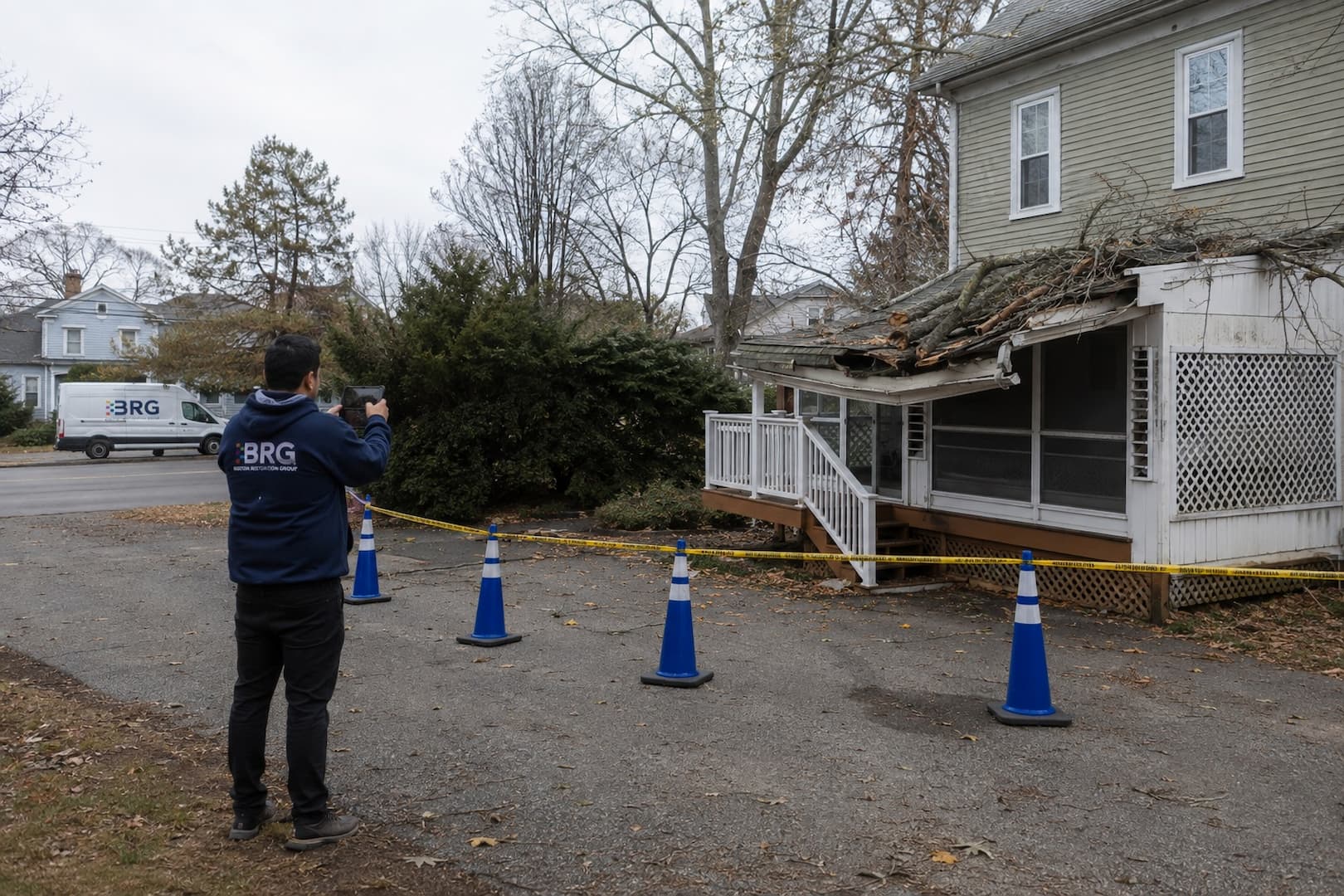
Structural Damage Restoration Services in Greater Boston
When a wall, roof, floor, opening, or framing system is damaged, the first decision is whether anyone can safely enter—not how quickly finishes can be replaced. BRG helps control the exposed area, protect contents, document conditions, and coordinate the transition from emergency mitigation to qualified structural repair.
Emergency responders and building officials take priority when a structure may be unsafe.
Board-up, roof covering, barriers, and controlled access can reduce additional exposure.
Engineers, inspectors, and licensed trades address conditions within their authority.
Records identify emergency work completed and permanent repairs still required.
Who determines whether a damaged structure can be entered?
BRG can identify visible hazards and establish a controlled restoration work area, but a restoration contractor does not replace the authority of the fire department, utility, building official, engineer, or licensed trade. If there is active movement, collapse, fire, gas odor, exposed electrical service, or another immediate threat, stay out and call the responsible emergency authority.
Emergency authority
Fire, police, utility, and municipal responders address immediate public and life-safety hazards.
Structural evaluation
An engineer or other authorized professional may be needed to evaluate load paths, shoring, framing, foundations, or occupancy.
Restoration scope
BRG can protect contents, control water and debris, establish containment, and document emergency measures after access is authorized.
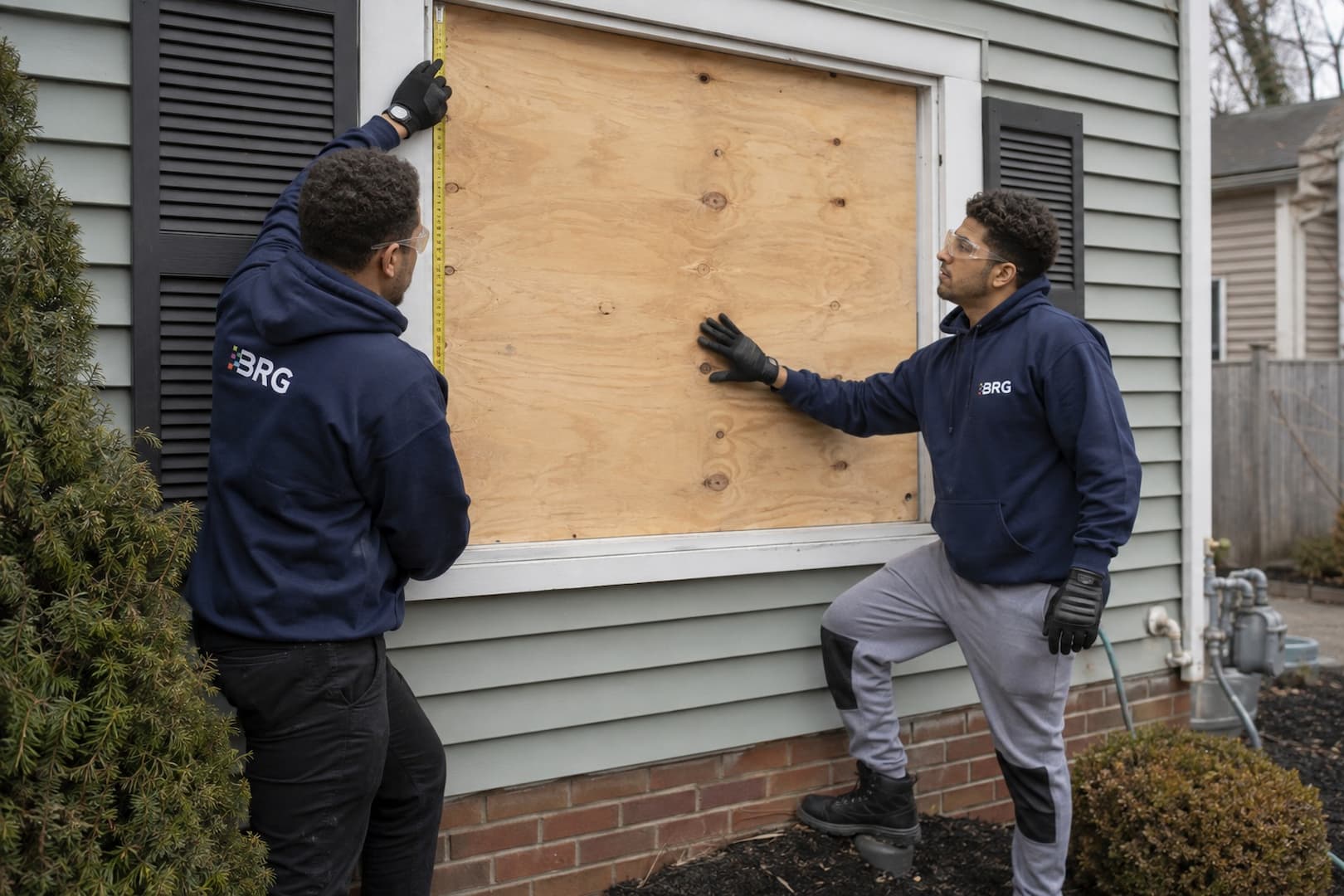
Board-up and weather protection reduce exposure; they do not finish the repair
A damaged opening can admit rain, wind, animals, and unauthorized entry. Temporary board-up, roof covering, barriers, and limited water control can help protect the property while structural decisions and materials are arranged.
The protection method must fit the opening, substrate, weather, access, and expected duration. A tarp that channels water into another assembly or fasteners placed into unstable material can worsen the problem. BRG documents what was covered, how access is controlled, and what remains vulnerable.
- Measure and protect openings without damaging sound adjacent finishes
- Keep egress and emergency access clear
- Reinspect temporary protection after severe weather when safe
Structural losses create connected restoration problems
The permanent repair may be structural, but the emergency scope often crosses several building systems.
Rain and suppression water
Open roofs, damaged windows, plumbing breaks, and firefighting can wet insulation, ceilings, wall systems, and contents.
Char, smoke, and corrosive deposits
The crew separates safety evaluation from residue removal, odor work, contents handling, and reconstruction.
Broken finishes and unstable materials
Controlled debris handling follows access authorization and protects occupants, public areas, and unaffected property.
How a structural restoration project moves forward
The order changes with the authority having jurisdiction and the condition of the building. The useful constant is a clear boundary between emergency action, professional evaluation, selective removal, and permanent repair.
Secure the scene
Confirm emergency release, establish no-entry areas, identify utilities and access limits, and protect people from the affected zone.
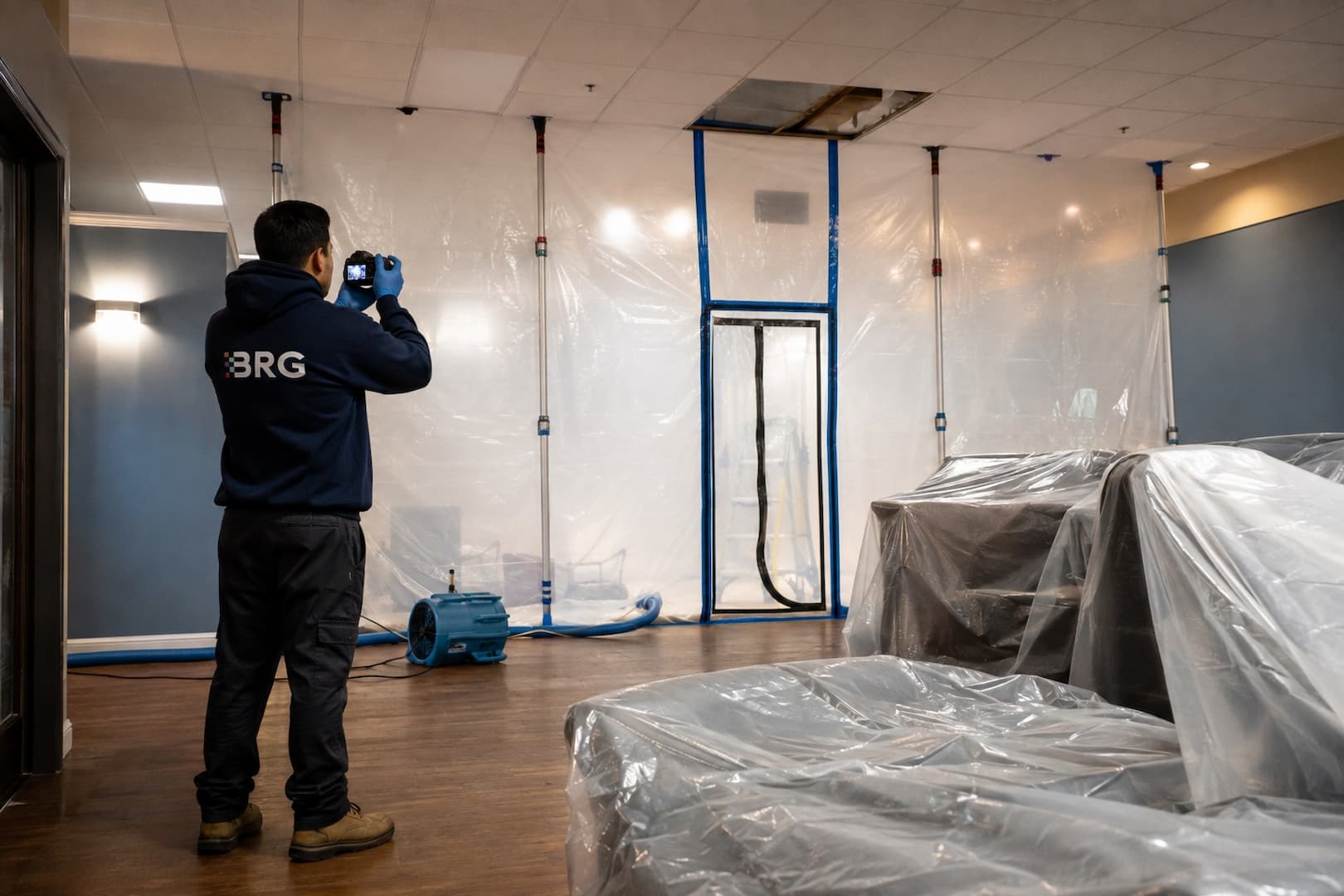
Reduce additional damage
Install appropriate temporary protection, manage accessible water, and move or cover contents where conditions allow.
Obtain required evaluations
Coordinate engineers, inspectors, roofers, electricians, plumbers, or other qualified parties according to the observed condition.
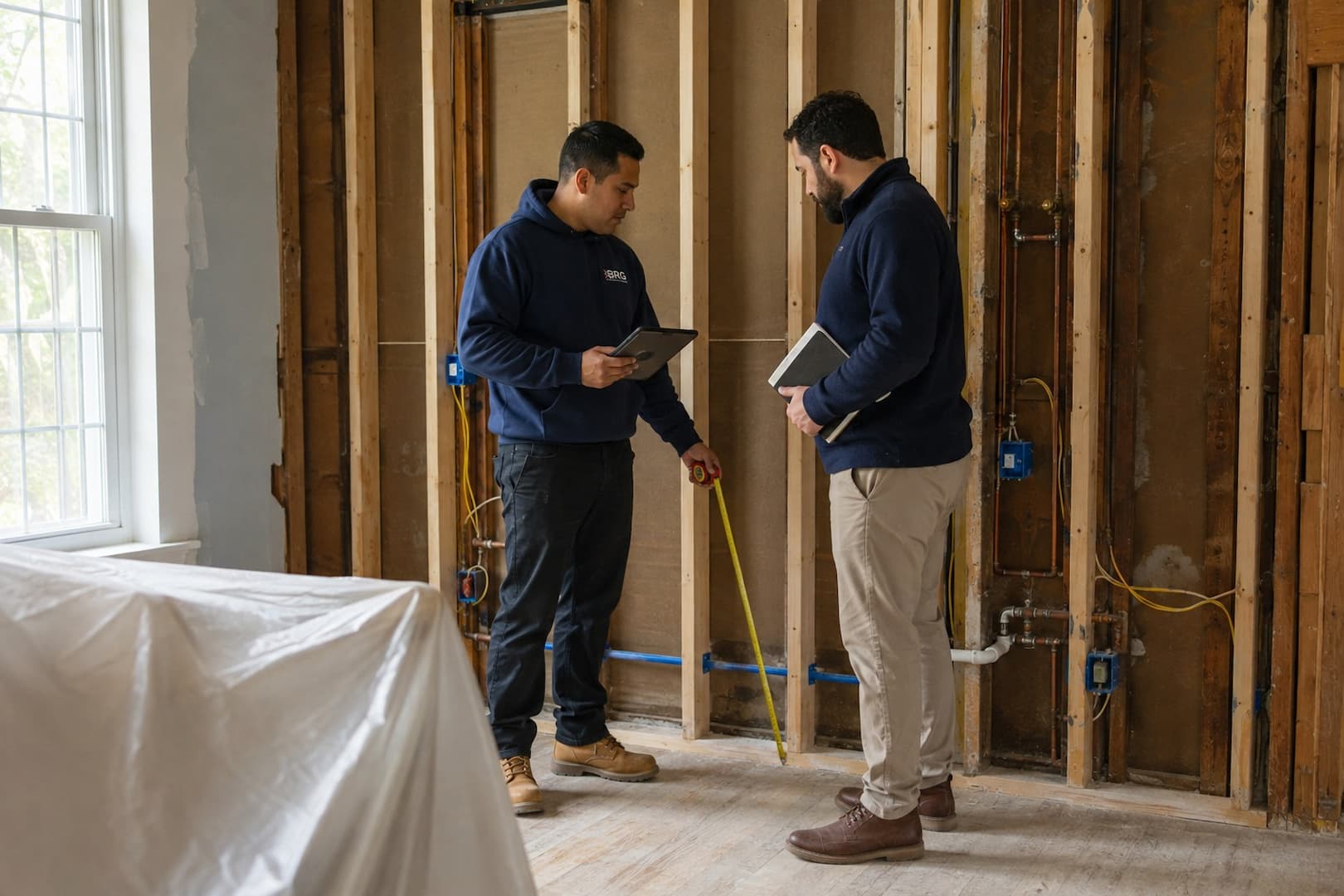
Define the selective scope
Photographs, measurements, moisture information, and authorized recommendations identify what must be removed, retained, supported, cleaned, or dried.
Prepare the repair handoff
The final mitigation record describes temporary measures, remaining restrictions, exposed assemblies, and reconstruction work still open.
Occupied space and contents need their own plan
Access paths, dust, weather, debris, security, and storage can affect rooms that were not part of the original impact.
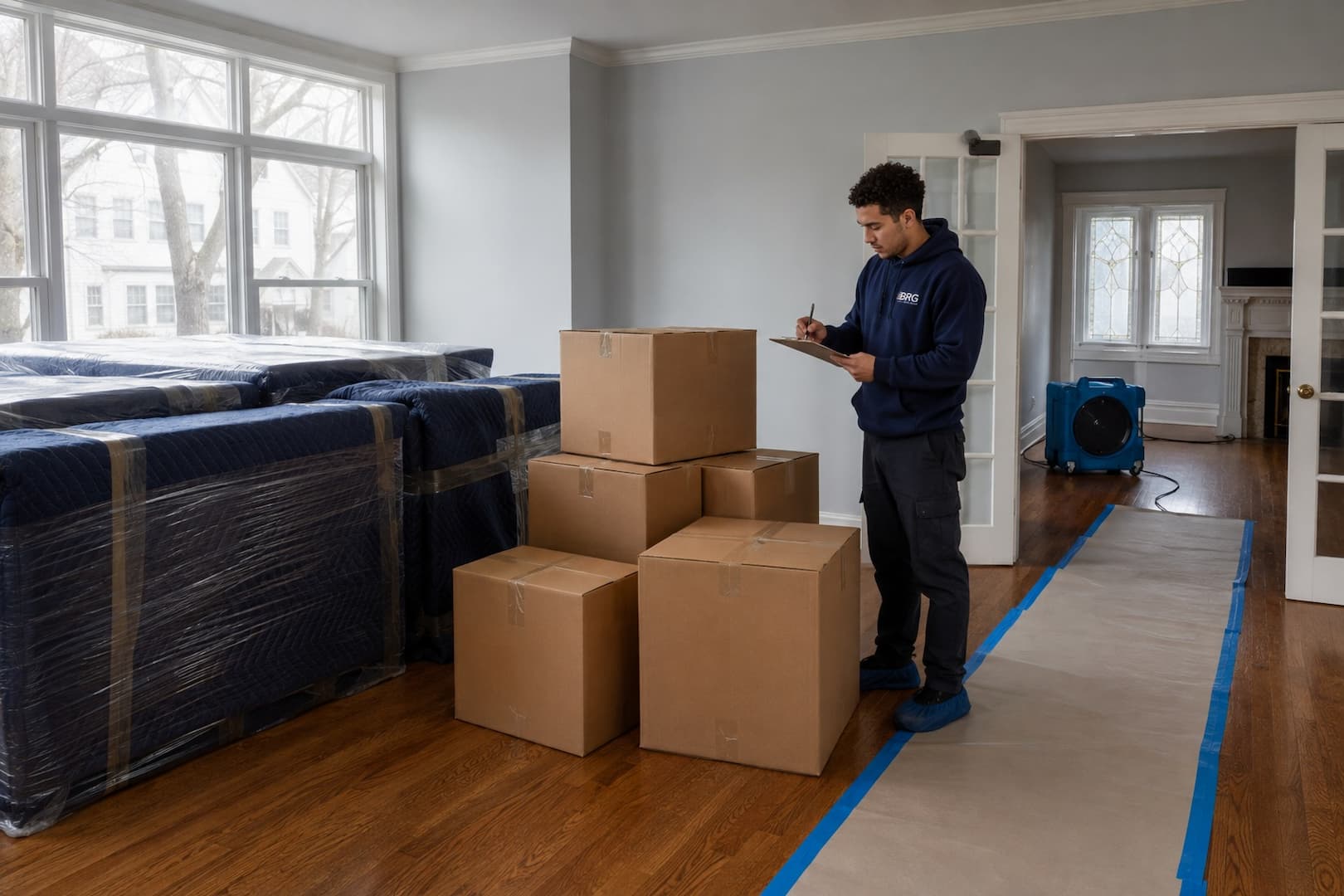
One project file, several responsible parties
BRG records observed damage, emergency controls, material conditions, moisture, contents movement, equipment, and selective removal. Engineering conclusions, code decisions, utility releases, and trade repairs remain attributed to the professional or authority that issued them.
- Emergency conditions and access restrictions
- Temporary protection and inspection dates
- Restoration work completed versus permanent repair pending
Structural restoration questions
Safety authority, stabilization, and permanent repair are separate decisions.
Can BRG tell me whether the building is structurally safe?
BRG can document visible concerns and keep restoration work out of an unsafe area. A structural engineer, building official, fire department, utility, or other authorized professional may be required to determine safe entry or occupancy.
Is a board-up considered a permanent repair?
No. Board-up and roof coverings are temporary protective measures. The damaged opening, framing, weather barrier, roofing, and finishes still require an appropriate permanent repair scope.
Can contents be removed before the structural evaluation?
Only when the area is authorized for entry and a safe route exists. Contents handling should not place workers beneath unstable materials or interfere with an official investigation.
Who coordinates the engineer and licensed trades?
Coordination depends on the project and authorization. BRG can share documented conditions and schedule restoration access, while the owner, manager, carrier, or contractor may retain the required professional.
What should be documented after emergency stabilization?
Useful records include affected areas, access limits, temporary measures, dates, photographs, wet materials, contents movement, debris handled, and permanent repairs still required.
Request structural damage stabilization
If anyone may be in immediate danger, call 911 or the responsible utility first. After the scene is released, tell BRG what happened, which areas are restricted, what is open to weather, and which authorities or professionals are already involved.
617-202-3772- Do not enter beneath sagging ceilings, shifted framing, or damaged roof areas
- Share municipal, fire, utility, or engineering access conditions
- Mention rain entry, fire residue, water, debris, and exposed contents
Request a Structural-Damage Call
Provide the property address, safe callback number, and current access status.