
Trauma and Crime Scene Cleanup in Boston
After law enforcement, the medical examiner, or another authority releases the property, BRG can establish a private work zone, remove affected materials under the agreed scope, clean reachable surfaces, and document the restoration handoff. The team treats the people involved and their information with care.
- Certified restoration specialists
- Privacy-focused work planning
- Blood and bodily-fluid cleanup
- Property and contents documentation
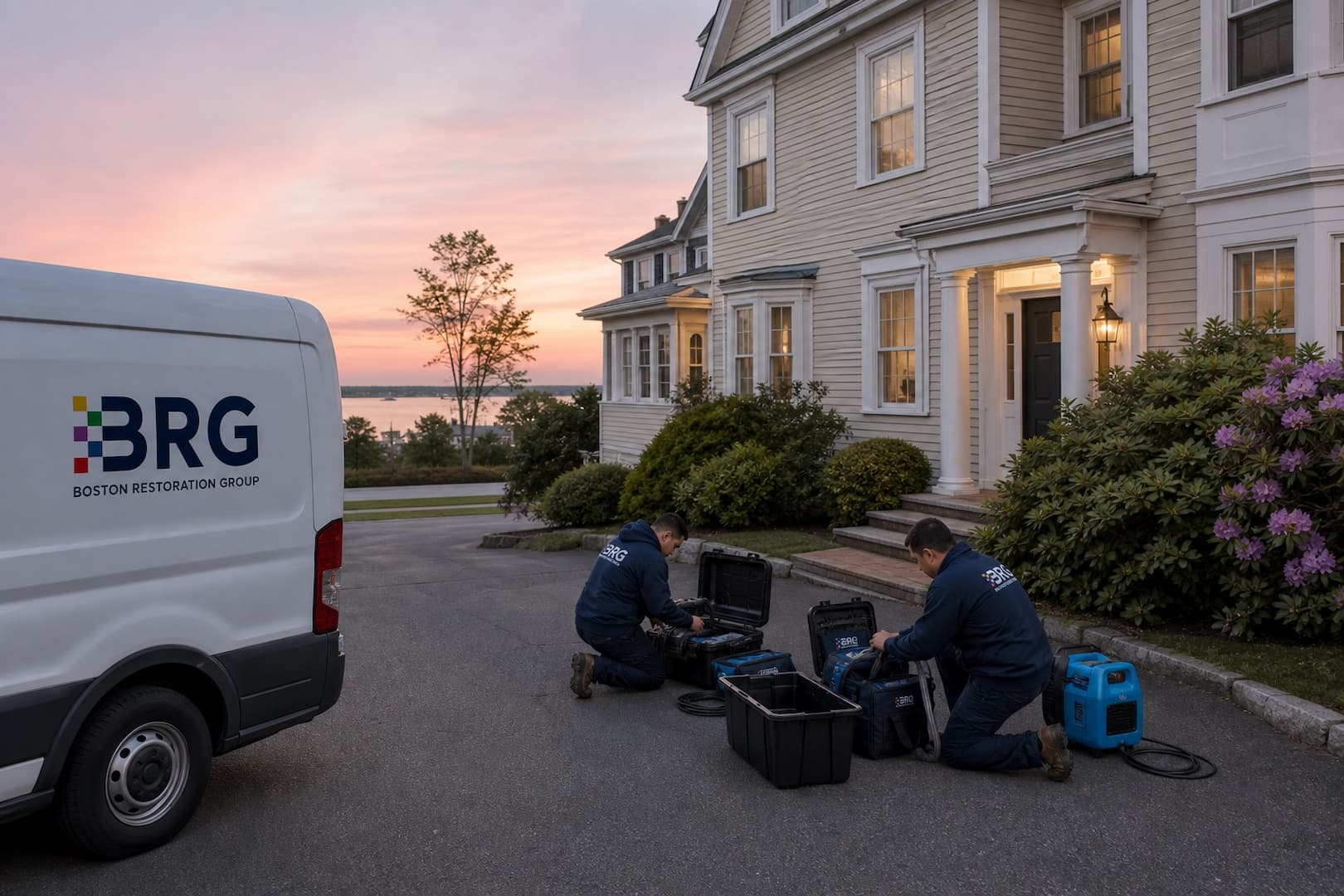
Permission comes first
Work begins only after the scene is released and an authorized person approves access and scope.
A defined work zone
Entry, privacy, PPE, waste movement, and unaffected rooms are planned before cleanup.
Materials decide the method
Sealed flooring, subfloor, upholstery, drywall, and contents cannot be treated as one surface.
Respectful records
Documentation contains what the owner, manager, carrier, and repair trades need without unnecessary detail.
BRG needs authority to enter and a clear point of contact
A family member, property owner, manager, estate representative, insurer, or public agency may be involved. One authorized contact should approve access, contents decisions, and the scope.
Scene status
Confirm that law enforcement, the medical examiner, or the controlling authority has formally released the property for cleanup.
Authorized contact
Identify who can approve work, receive updates, make contents decisions, and communicate with the insurer or property stakeholders.
Privacy and access
Discuss neighbors, tenants, shared corridors, parking, keys, pets, security, and the route for supplies and removed materials.
Immediate hazards
Tell BRG about sharps, firearms, chemicals, drugs, structural damage, utilities, or other conditions that require another authority or specialist.
The work is practical, quiet, and limited to the released area
BRG does not investigate the event, remove evidence before release, provide counseling, or certify medical safety. The restoration team deals with property conditions: visible biological material, affected finishes, contents, odor sources, access, and repairs.
Certified specialists select PPE, barriers, tools, cleaning products, and disposal procedures for the documented scope. Work practices account for potential exposure to blood and other potentially infectious materials. Owners who want to understand the federal workplace framework can review OSHA’s bloodborne-pathogen resources.
If the scene has not been released
Do not move, clean, photograph, or discard anything. Ask the controlling authority when an authorized cleanup contractor may enter.
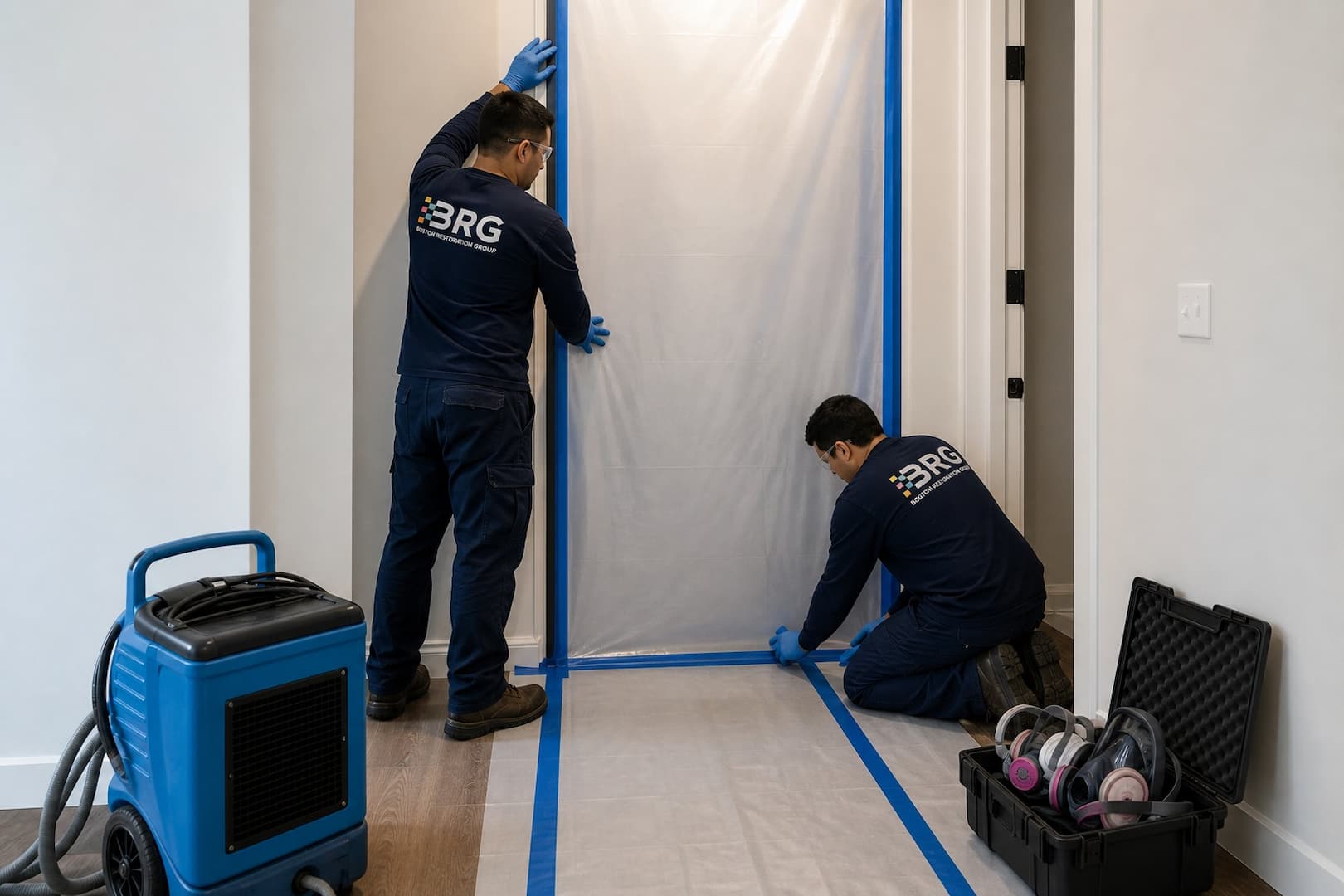
Each step protects the people outside the work zone
The project is organized so that unaffected rooms, common areas, occupants, and private information do not become part of the cleanup unnecessarily.
Release, authorization, and walkthrough
BRG confirms scene release, identifies the authorized contact, documents the affected boundary, and notes hazards or specialist needs.
Privacy, containment, and PPE
The team controls views into the area, protects access routes, establishes the work zone, and uses task-appropriate protective equipment.
Removal and detailed cleaning
Affected porous materials and contents are evaluated. Reachable retained surfaces are cleaned with methods suited to the material and condition.
Odor-source and hidden-area review
The crew checks seams, subfloor, wall bases, furniture, and other locations where residue or moisture may remain concealed.
Documentation and repair handoff
The completion file identifies affected materials, work performed, remaining repairs, and any items referred to a specialist.
The service is defined by the property condition, not the headline
A private residence, rental unit, vehicle-access area, office, or managed building may require different access and communication, even when the cleanup methods overlap.
| Situation | Property concerns | BRG focus |
|---|---|---|
| Unattended death or decomposition | Hidden migration, odor source, porous materials, contents, and extended time | Boundary assessment, material decisions, cleaning, odor-source removal, and repair handoff |
| Suicide or accidental death | Family privacy, scene release, affected finishes, personal items, and multiple decision-makers | Controlled access, respectful contents handling, cleaning, and concise documentation |
| Blood or bodily-fluid incident | Surface porosity, seams, sharps, shared space, and occupational exposure | PPE, containment, removal or cleaning, and release of the work area |
| Crime scene after release | Evidence boundaries, owner authorization, security, common areas, and damage from the event | Work only after release; document restoration conditions without investigating the incident |
| Hoarding with biohazards | Blocked access, unstable piles, pests, sharps, human or animal waste, and owner priorities | Phased access and hazard cleanup under a separately defined scope |
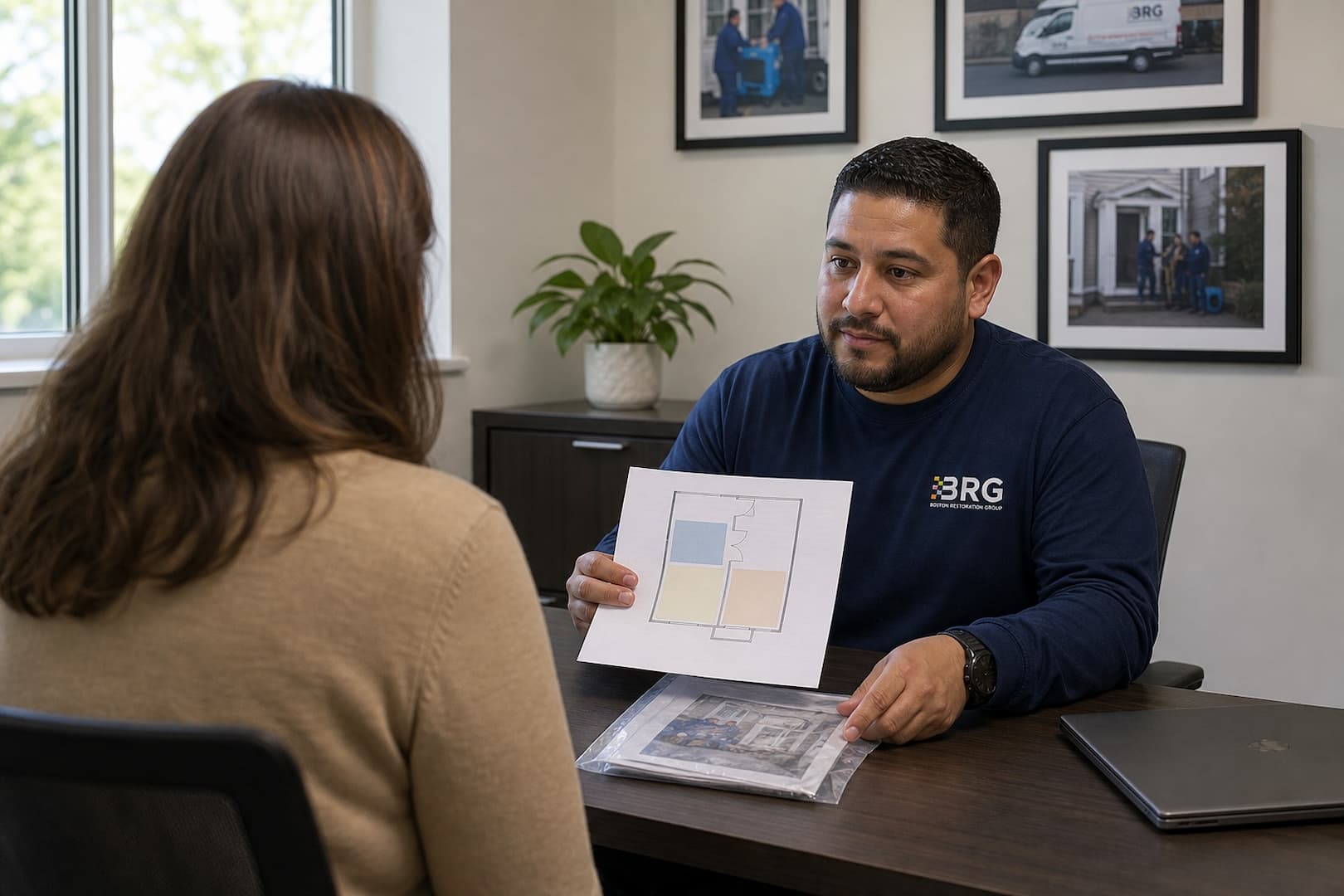
A useful file does not need to retell the event
Property documentation can identify rooms, materials, affected boundaries, removal, cleaning, equipment, and repairs without including graphic descriptions. BRG limits distribution to the authorized project contacts and the information required for the job.
Insurance coverage varies. Some property policies may respond to cleanup or resulting damage, while limits, deductibles, exclusions, and contents treatment remain carrier decisions. BRG can prepare an itemized scope and supporting photographs appropriate to the claim discussion.
- Choose one authorized contact for approvals.
- Identify personal items that require a family decision before handling.
- Tell BRG which records may be shared with a manager, carrier, or repair contractor.
- Keep scene-release and authority contact information with the project file.
Ask who will be on the job and what qualifications apply
All BRG employees are certified restoration specialists. For a sensitive cleanup, the company can also explain the training, PPE, supervision, waste handling, and documentation practices assigned to the specific project rather than relying on a generic badge.
One contact coordinates the scope, access, updates, and owner decisions.
PPE, barriers, tools, cleaning steps, and waste movement fit the documented condition.
The completion record focuses on property work and remaining repairs.
Private questions about trauma cleanup
You do not need to describe graphic details in the first message. The property type, scene status, affected area, access, and authorized contact are enough to begin.
Can BRG enter before police release the scene?
No. Cleaning, moving contents, or altering the area must wait until the controlling authority releases it and an authorized property representative approves access.
Do police or the medical examiner perform the cleanup?
Those authorities handle investigation and removal within their role. Property cleanup is generally arranged by the owner, manager, estate representative, insurer, or another authorized party after release.
Will family belongings be discarded automatically?
No. BRG identifies affected items and separates urgent safety decisions from personal or high-value contents that require authorization and discussion.
Can you guarantee that a room is sterile?
No responsible restoration contractor should describe an ordinary property as sterile. BRG completes the agreed removal and cleaning scope using products and procedures suited to the materials and conditions and documents the work performed.
Does insurance pay for trauma cleanup?
Some policies may cover parts of cleanup or resulting property damage, but coverage varies. BRG provides an itemized scope and relevant documentation; the carrier decides coverage.
Are BRG employees certified?
Yes. All BRG employees are certified restoration specialists. Qualification information for the assigned team can be provided for the project.
Speak privately with the BRG project team
Call for urgent help. You can begin with the property type, town, affected room, scene-release status, authorized contact, access needs, and whether other occupants are present.
617-202-3772- Do not move or clean anything before formal release.
- Tell BRG about sharps, weapons, chemicals, drugs, animals, or structural hazards.
- Identify personal items that must not be handled without direct authorization.
Request a private call
Keep the message brief. A project lead can collect sensitive details by phone.