
Flood Damage Restoration in Boston, MA
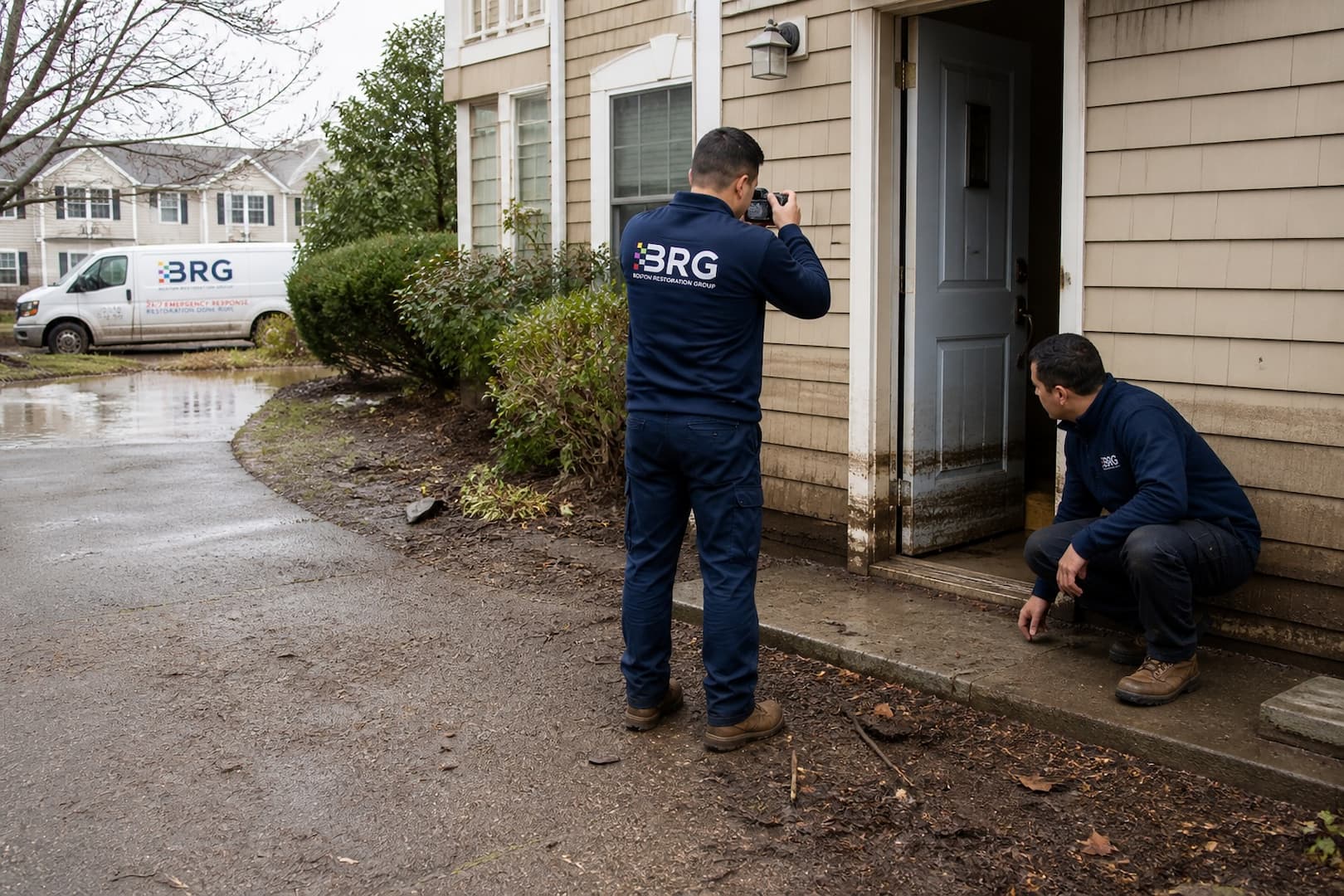
Floodwater can enter through doors, foundations, below-grade openings, failed drainage, or storm-damaged building components. BRG first determines whether entry is safe, then documents the water line, contamination risk, affected assemblies, and practical route to cleanup and repairs.
- Storm and surface-water entry
- Basements and ground floors
- Contamination-aware cleanup
- Drying and repair scope
Approach safely
Electrical, structural, gas, and contamination hazards are considered before people enter.
Read the water line
Mud, residue, wicking, and material joints show where the flood reached.
Open only what is needed
Access follows evidence about trapped water and unsalvageable materials.
Build back from a dry record
Repair planning starts after cleanup boundaries and remaining materials are documented.
The source changes the cleanup plan
Rain through a damaged roof, groundwater at a foundation joint, and surface floodwater through a door may all leave a wet room. They do not carry the same contamination risk or affect the same assemblies.
Surface and storm floodwater
Water crossing soil, pavement, streets, or landscaping may carry sediment and contaminants. Porous finishes at the water line need careful evaluation.
Foundation and below-grade entry
Water may move through cracks, window wells, bulkheads, utility penetrations, or failed drainage. The active building-envelope source must be identified.
Wind-driven rain
Rain can enter around roofing, flashing, siding, windows, or storm-created openings and travel inside assemblies before staining appears.
Interior clean-water release
A pipe or appliance loss may be called a flood in everyday speech, but its source and material decisions can differ from outdoor floodwater.
Inspection follows height, direction, and connected materials
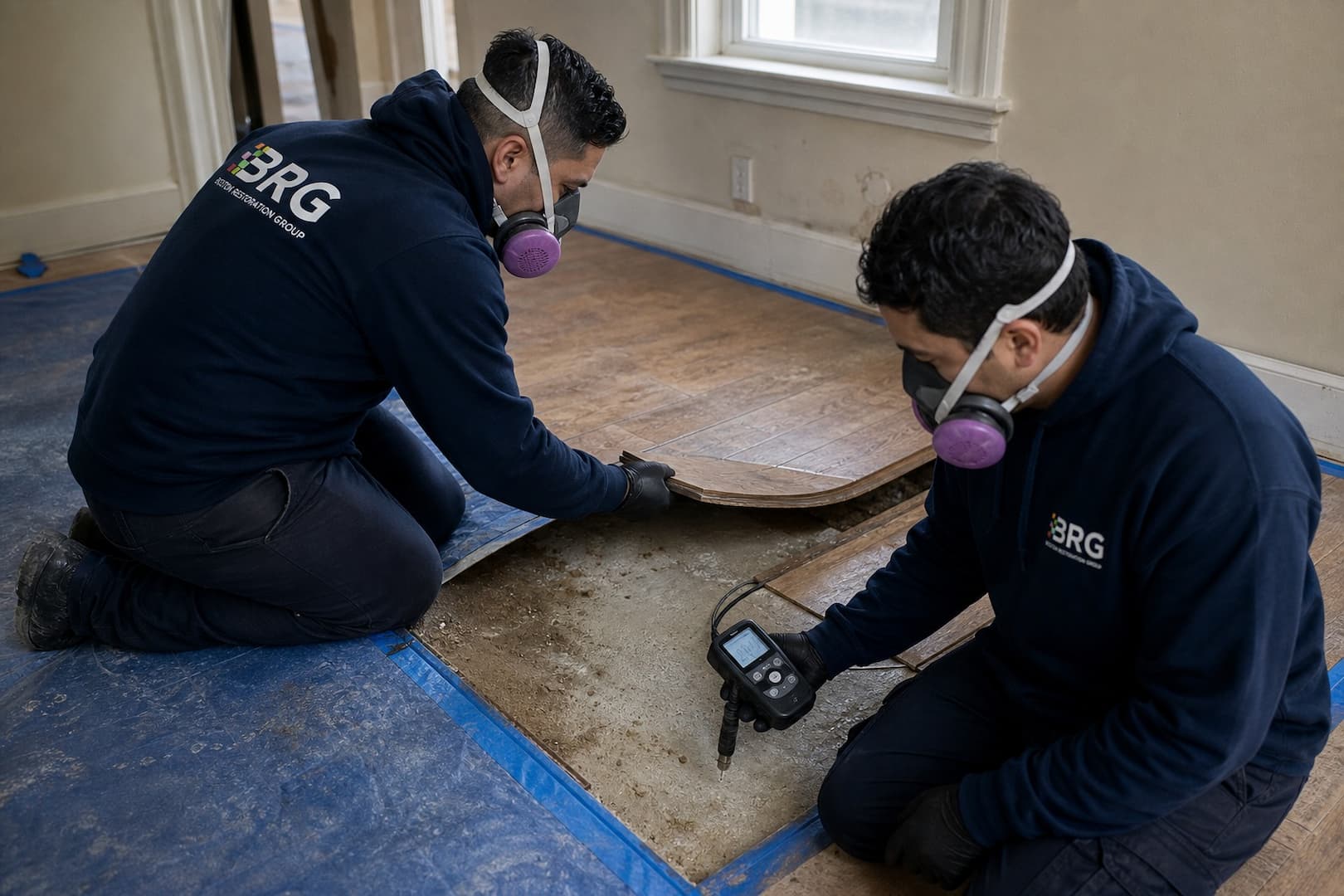
Floodwater leaves more than a puddle. It can wick above the visible line in drywall, settle under cabinets, enter floor seams, soak insulation, and deposit silt behind baseboards. A basement may also contain a furnace, water heater, electrical equipment, stored contents, and finished wall systems that complicate access.
BRG records the highest visible line, checks materials beyond it, and compares suspect readings with unaffected areas. The crew also notes drainage, sump activity, exterior openings, and any temporary pumping already performed.
- Do not re-energize wet equipment.
- Do not enter if the floor, stairs, ceiling, or foundation appears unstable.
- Do not assume clear-looking floodwater is sanitary.
- Keep wet cardboard and textiles from being carried through clean rooms.
Cleanup moves by elevation, assembly, and contamination boundary
The scope is built around what the flood touched and where water remained after the visible level dropped.
Safety and source assessment
BRG reviews entry conditions, utilities, water source, exterior openings, and whether another trade or authority must act first.
Water and sediment removal
Accessible water is extracted. Sediment and loose debris are removed so the underlying surfaces can be evaluated.
Material triage
Porous finishes, insulation, flooring, cabinetry, and contents are assessed by exposure, condition, and cleanability.
Cleaning and structural drying
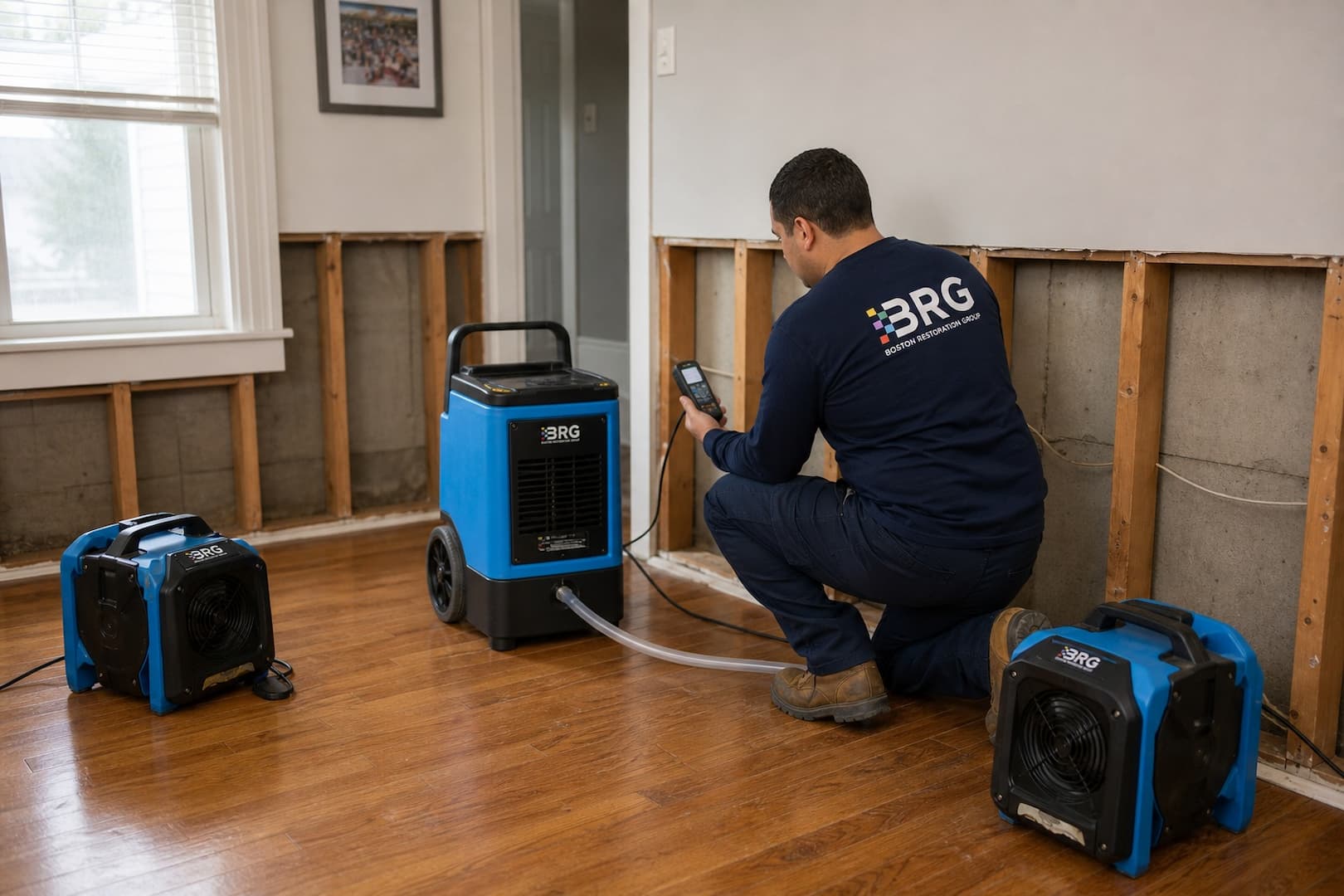
Exposed surfaces are cleaned as the scope requires. Airflow and dehumidification target the retained structural materials.
Repair and prevention handoff
The record identifies the remaining building-envelope, drainage, mechanical, and finish repairs. BRG does not hide an unresolved entry source behind new finishes.
A material can be dry and still be unsuitable to keep
Moisture readings answer whether a material remains wet. They do not prove that a contaminated porous material is clean, structurally sound, or worth saving. Flood restoration therefore combines moisture data with exposure history, surface condition, porosity, delamination, swelling, odor, and access.
Hard surfaces may often be reached and cleaned. Carpet pad, insulation, swollen composite trim, and waterlogged gypsum may not support the same decision. Valuable contents deserve item-by-item documentation rather than a blanket answer.
Flood insurance is separate from restoration scope
BRG can prepare loss documentation and an estimate. The policyholder and carrier determine whether the event falls under flood insurance, property insurance, or another source of payment.
A dry building still needs the source addressed
Drainage, grading, roofing, flashing, foundation openings, sump systems, plumbing, and site conditions may require separate correction. BRG identifies observed conditions in the project record and coordinates the restoration handoff without presenting every source repair as part of mitigation.
Roof, wall, window, door, and foundation entry points.
Surface flow, wells, bulkheads, drains, and sump behavior.
Floor, wall, ceiling, insulation, cabinetry, and contents.
Flood restoration questions that affect the first visit
Tell BRG where the water came from, whether it is still entering, and which utilities or building systems may be involved.
Can I enter after floodwater has gone down?
A lower water level does not remove electrical, structural, gas, contamination, or slip hazards. Do not enter if utilities or building stability are uncertain.
Will all flooded drywall be removed?
The scope depends on the water source, flood height, wicking, insulation, material condition, and access. BRG records the affected line and removes only the material required by the approved cleanup plan.
Can hardwood floors be saved after a flood?
Sometimes, but the answer depends on contamination, construction, finish, swelling, subfloor exposure, and how quickly water is removed. Outdoor floodwater can change the decision even when boards appear intact.
Does BRG repair the foundation or drainage system?
BRG handles the agreed cleanup and restoration work. Foundation waterproofing, excavation, plumbing, electrical work, or site drainage may require the relevant specialist.
What documentation will I receive?
The project record can include photos, room and material notes, moisture readings, equipment information, removed-material details, and an itemized scope or estimate.
Ask BRG to assess the entry path and affected materials
Call for an active loss. If the water has receded, send the property address, deepest water level, rooms affected, likely source, and whether utilities are on.
617-202-3772- Mention a basement, crawl space, elevator, mechanical room, or tenant area.
- Do not discard damaged high-value contents before they are photographed.
- Tell the team about mud, sewage odor, fuel, chemicals, or unknown residue.
Send the flood details
BRG will use the information to plan safe access and the first inspection.