
Mold Inspection and Testing in Boston
A useful mold assessment starts with the building: where water came from, how air and moisture move, what materials are affected, and what decision the owner needs to make. BRG inspects those conditions first and recommends sampling only when a result can change the next step.
- Visual and moisture assessment
- Targeted sampling when useful
- Clear scope and limitations
- Residential and managed properties
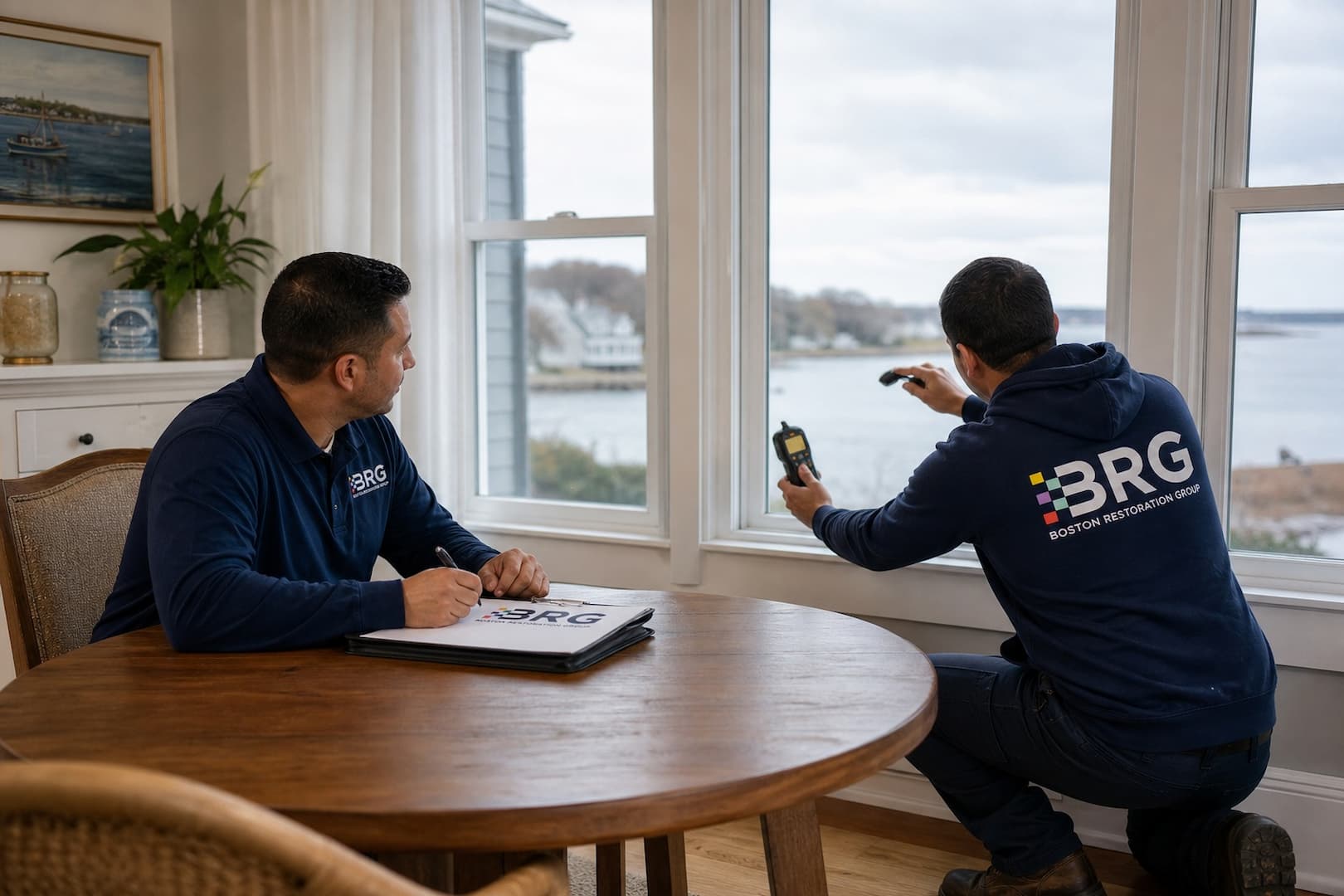
Define the question
Testing has value only when the result will inform a scope, dispute, transaction, or verification decision.
Read the moisture history
Leaks, condensation, humidity, drainage, ventilation, and prior cleanup matter more than color alone.
Sample with context
Location, method, controls, conditions, laboratory analysis, and limitations belong in the same record.
Choose the next action
The finding may support monitoring, source correction, targeted access, remediation, or independent review.
Visible growth, a musty odor, and a purchase concern are different assignments
The inspection plan should match the decision you need to make after the report.
Visible suspect growth
Document material, area, moisture source, surrounding assemblies, and likely extent. Routine sampling may not add useful direction when growth is already visible.
Odor with no visible source
Follow moisture history, pressure and air pathways, concealed spaces, drains, contents, and HVAC conditions before choosing a sample location.
After a leak or flood
Map materials that stayed wet, review drying records and access hidden layers. Moisture condition may determine the need for remediation without broad air testing.
Transaction or dispute
Define who relies on the result, the required protocol, access limits, laboratory needs, and whether an independent assessor is the better choice.
An air sample cannot explain a building by itself
Air sampling captures conditions at a particular time and place. Windows, HVAC operation, weather, occupant activity, dust, and sampling duration influence the result. A number without inspection context does not locate a moisture source, determine every hidden condition, or establish a universal safe or unsafe threshold.
BRG reviews the complaint, building use, leak history, previous work, ventilation, drainage, finishes, and accessible suspect areas. Moisture readings and direct observation help determine where targeted access or sampling could answer a defined question.
The U.S. Environmental Protection Agency notes that visible mold often does not require sampling and that no federal limits have been established for indoor mold or spores. Property owners can review the EPA page Is Sampling/Testing for Mold Necessary?.
BRG does not diagnose health conditions
If an occupant has symptoms or a medical concern, consult a qualified healthcare professional. The property assessment addresses moisture, materials, visible conditions, and the restoration decision.
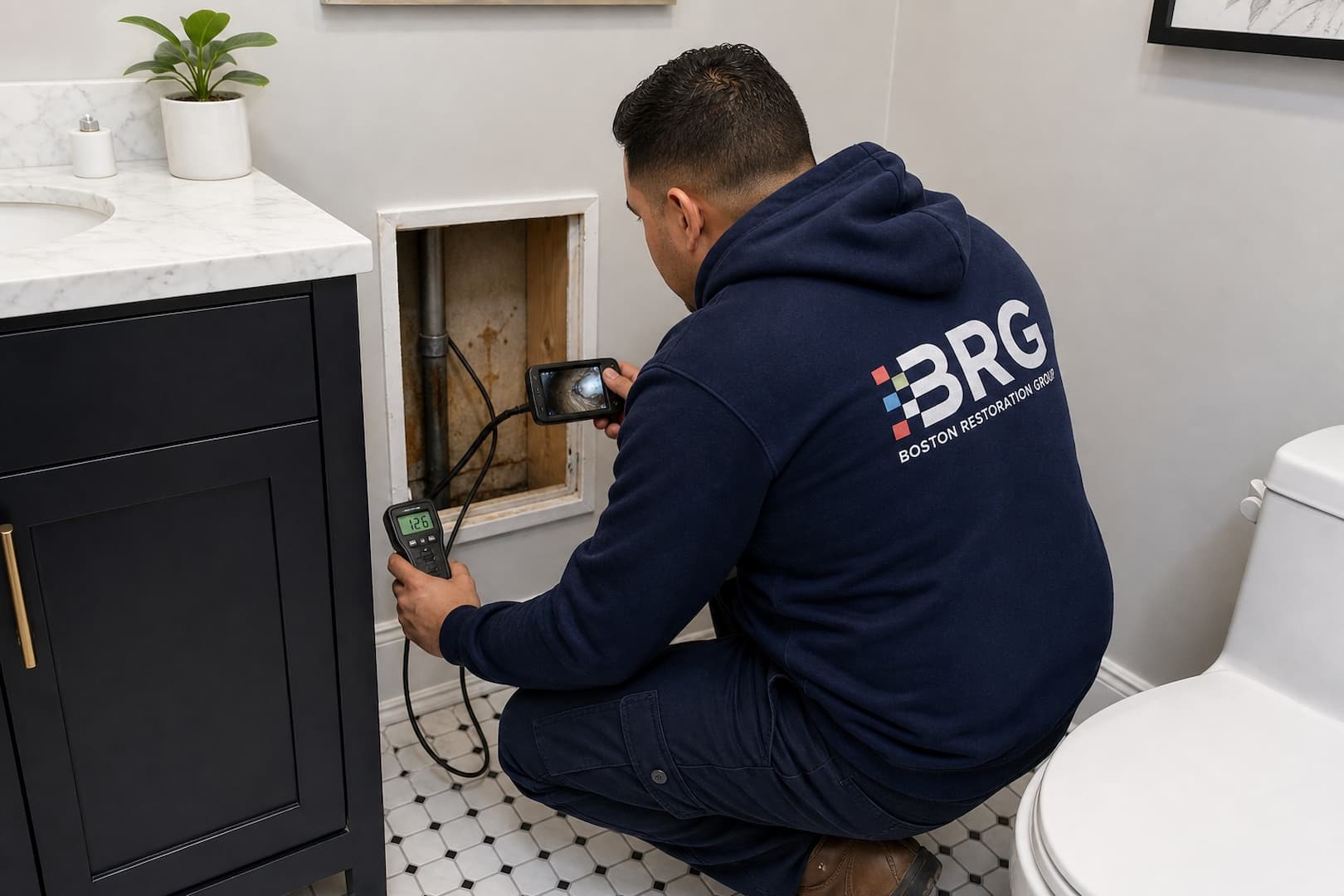
Every sample should have a reason before it has a label
A written objective prevents a collection of numbers from replacing an actual investigation.
Question and history
The inspector records the concern, timing, rooms, occupants, leaks, odor, seasonal changes, HVAC use, and prior cleaning or construction.
Visual and moisture assessment
Accessible surfaces, penetrations, wall bases, attics, basements, bathrooms, windows, mechanical areas, and dry comparisons are reviewed as relevant.
Sampling decision
BRG explains what a surface, bulk, or air sample could answer, what it cannot answer, and whether no sample is the more useful recommendation.
Collection and laboratory transfer
Selected samples are identified by location and method, handled under the laboratory process, and tied to site-condition notes.
Interpretation and next step
The report connects observations and laboratory information to moisture correction, additional access, remediation, monitoring, or independent review.
Inspection, sampling, and remediation verification are not interchangeable
The owner should know what evidence supports each conclusion.
| Method | Useful for | Important limitation |
|---|---|---|
| Visual and moisture inspection | Finding visible conditions, wet materials, source clues, construction pathways, and areas needing access | Cannot see every concealed surface or identify organisms by sight alone |
| Surface sample | Characterizing suspect material at a specific reachable location or supporting a defined cleaning question | Represents that sampled surface, not the whole building |
| Air sample | Comparing defined locations under a documented protocol when airborne information will change a decision | A time-limited snapshot affected by building operation and sampling conditions |
| Bulk material sample | Laboratory examination of a specific material when identification is relevant to the decision | Requires disturbing and submitting that material; it does not map the full extent |
| Post-remediation evaluation | Reviewing whether scope conditions are met after cleanup and source correction | The protocol and decision criteria should be established before remediation; independent review may be appropriate |
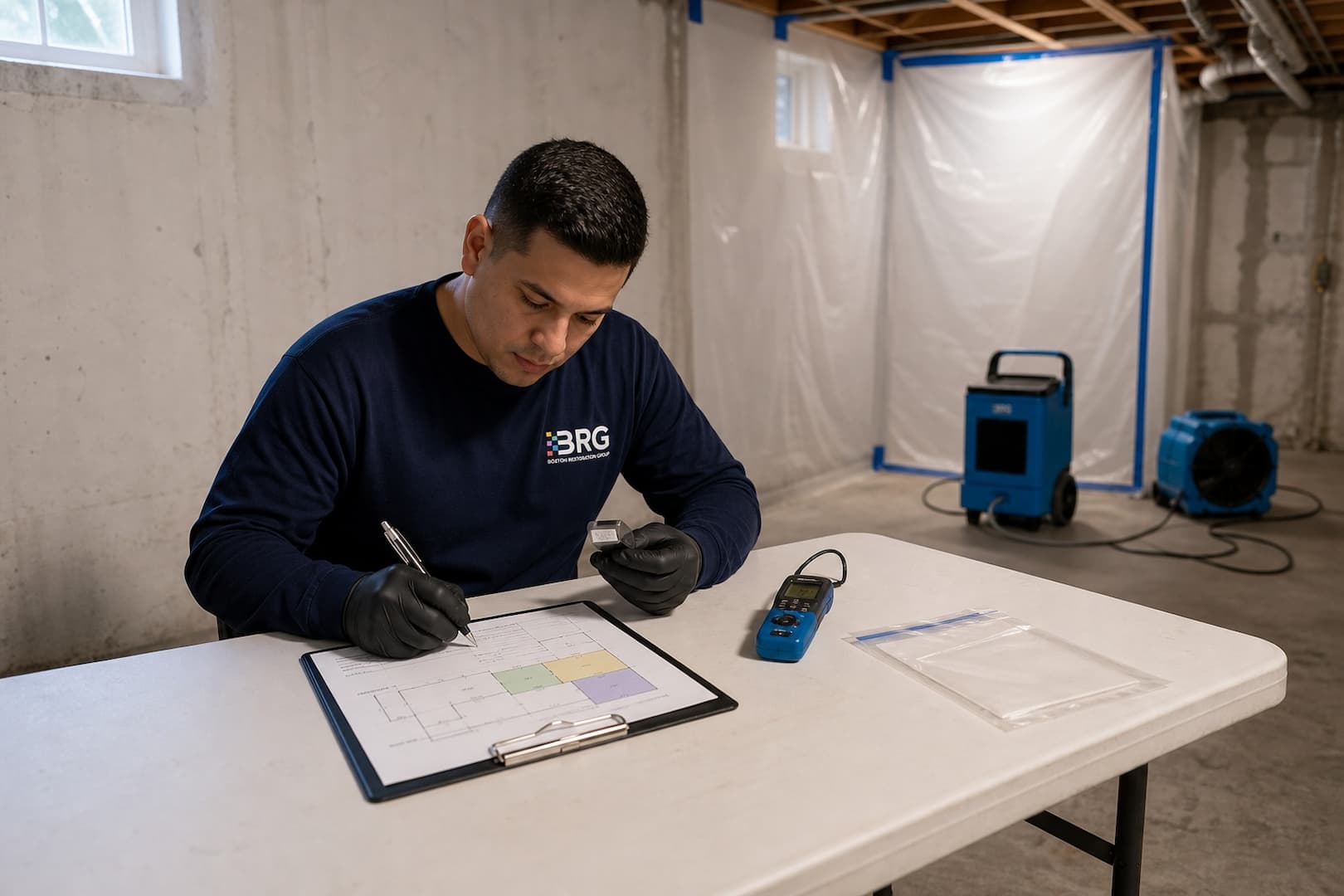
The conclusion should separate observation, inference, laboratory result, and limitation
A practical report identifies inspected rooms, inaccessible areas, observed suspect growth, moisture readings, source clues, sample locations and methods, laboratory findings, photographs, and recommended next actions. It should not convert a single number into a medical diagnosis or claim to prove that every concealed space is clear.
If BRG could also perform remediation, that relationship should be visible. Owners who need litigation support, a regulatory protocol, a real-estate opinion, or independent post-remediation verification may choose a separate qualified assessor. The goal is a defensible decision, not a mandatory sale of cleanup.
- Ask what question each sample will answer.
- Confirm which areas will not be accessible.
- Keep laboratory data with location and site notes.
- Set any post-remediation criteria before cleanup begins.
Not every inspection ends with a remediation proposal
Conditions may support monitoring after source correction, focused access to investigate a hidden area, or a defined remediation scope. The report should explain why.
No active material problem is identified, but a moisture or maintenance item needs observation.
A concealed space, source, or specialist question must be resolved before cleanup is scoped.
Affected materials, boundaries, controls, source work, and verification needs can be defined.
Mold inspection and testing questions
The most useful first message explains the concern, moisture history, rooms, timing, and decision you need to make.
Do I always need mold testing before remediation?
No. When visible growth and the affected materials are already clear, inspection and moisture assessment may provide enough direction. Testing is useful when it answers a defined question that changes the plan.
Can an air test prove that my home is safe?
An air sample is a time-limited measurement, and there is no federal pass-fail indoor mold threshold. Results need sampling conditions, controls, inspection findings, and qualified interpretation. BRG does not make medical safety determinations.
Can you find mold behind every wall?
No inspection can see every concealed surface without opening the building. History, moisture, odor, construction pathways, borescope access, and targeted openings can identify areas where further investigation is justified.
Should the remediation contractor perform clearance testing?
The owner should decide the level of independence the project requires. For disputes, regulated work, transactions, or higher-stakes verification, an independent qualified assessor may be preferable.
Are BRG employees certified?
Yes. All BRG employees are certified restoration specialists. BRG can explain the qualifications and role of the specialist assigned to the inspection.
Request mold inspection and testing in Greater Boston
Send the property type, rooms of concern, visible conditions or odor, leak and humidity history, prior work, access restrictions, and whether you need inspection, sampling, documentation, or remediation planning.
617-202-3772- Do not disturb suspected hidden growth before the inspection.
- Mention occupant health concerns without asking BRG for a medical diagnosis.
- Tell BRG if the assignment involves a tenant, transaction, claim, dispute, or post-remediation review.
Describe the concern and the question
A focused objective produces a more useful inspection plan.